Blog

All Jacksonville Volkswagen Dealer Tom Bush Volkswagen Jacksonville Volkswagen Service Tom Bush Volkswagen Service Things To Do In Jacksonville Jacksonville Amenities Jacksonville Entertainment Jacksonville Used Cars Jacksonville Eateries Jacksonville Parks Fun in Jacksonville Jacksonville Car Repair Jacksonville Restaurants Jacksonville Family Fun Tom Bush Family of Dealerships Oil Change in Jacksonville Tom Bush Volkswagen Collision Jacksonville Volkswagen Collision Center Date Night Jacksonville Fitness Getaways Jacksonville Auto Finance Things To Do Near Jacksonville Volkswagen Atlas Jacksonville Beaches Road Trips Jacksonville Finance Tom Bush Volkswagen Finance Florida Weddings Vegetarian Foodies Volkswagen ID.4 Volkswagen Taos

Volkswagen DSG Transmission Guide for Daily Driving

A Volkswagen DSG transmission uses two clutches to manage separate gear paths within one automatic gearbox. What does that mean during a drive? The gearbox can prepare another ratio before the current shift finishes. Therefore, each gear change can happen with little interruption in engine power. DSG stands for Direct Shift Gearbox. It blends automatic control with clutch based gear changes. However, it does not work like a conventional automatic that uses a torque converter. That difference shapes how the car shifts, launches, and moves through slow traffic. Volkswagen has used several DSG designs across different years and models. For this reason, service needs must match the exact car. Therefore, the owner manual, maintenance schedule, and vehicle identification number provide the correct starting point. How Does a Volkswagen DSG Transmission Work? A DSG uses two clutches, with each clutch connected to a separate set of gears. One side handles odd numbered gears. The other side handles even numbered gears. While one gear moves the car, the gearbox prepares another gear on the second path. Then, the clutches trade their roles during the shift. As a result, the next ratio can engage quickly. Furthermore, the gearbox reads accelerator input, road speed, engine speed, and the selected drive setting. Therefore, light throttle may produce early upshifts. Firmer throttle may hold a lower gear longer. Manual selection does not change the internal design. Instead, it gives the driver more control over shift timing. The gearbox still manages clutch action and protects the drivetrain from an unsuitable gear request. This design works well during steady acceleration. Moreover, rapid shifts can keep the engine near the desired speed range. The same clutch based layout also explains why parking lot movement may feel different. DSG Versus a Traditional Automatic Transmission Is DSG the same as a traditional automatic? No. Both can select gears without a clutch pedal, but their internal parts move power differently. Many conventional automatics use a torque converter. Fluid inside that unit transfers engine power during a launch. Therefore, the car may creep forward smoothly when the brake pedal is released. A DSG uses clutches to connect engine power to the selected gear path. Consequently, the gearbox must engage and release those clutches during low speed movement. That action may feel more direct than torque converter movement. Both designs can provide smooth travel. Still, they reach that result through different parts and control methods. A driver moving from one design to another may notice the contrast most during parking, reversing, or heavy traffic. Manual mode and steering wheel paddles also change driver input, not gearbox construction. They let the driver request a gear. However, the DSG still completes the clutch work. What Should DSG Feel Like at Low Speeds? A DSG may feel more deliberate while starting, reversing, or crawling. The clutches must engage at low speed, much like a clutch in a manual gearbox. Therefore, light hesitation or a firmer engagement may appear during certain movements. Stop and go traffic places the gearbox through repeated launch cycles. Holding the car with gentle accelerator pressure may keep a clutch partly engaged. Instead, firm brake use can give the gearbox a clearer stop. Drivers should still pay attention to changes. A mild trait that remains steady differs from a hard impact that becomes worse. Warning lights, burning odors, repeated slipping, or severe shaking deserve prompt inspection. A test drive should include a cold start, parking lot movement, several stops, and steady acceleration. In addition, the driver should try reverse and moderate highway speed. These steps provide a broader view than one quick trip. No article can diagnose a gearbox from a single sensation. Therefore, a Volkswagen technician should inspect any new, severe, or worsening concern. Volkswagen DSG Maintenance and Service Questions Does every DSG need the same service? No. Volkswagen has used more than one DSG design, and service details can vary. Some DSG units require fluid and filter work at set points. Other versions may follow a different schedule. For this reason, owners should not rely on one universal interval found online. The exact model year, engine, gearbox, and vehicle identification number matter. A service advisor can use those details to locate the correct maintenance information. In addition, prior invoices can show whether required work was completed. Fluid condition matters because the gearbox depends on proper lubrication and hydraulic control. A correct service also uses the specified fluid and procedure. Therefore, substitute fluids or incomplete work can create new concerns. Used vehicle shoppers should ask for transmission records before purchase. They should also review warning light history, prior repairs, and any open recalls. Moreover, a pre purchase inspection can reveal leaks, stored faults, or unusual clutch operation. Current owners can use the Volkswagen maintenance schedule for their exact year. They can also review service reminders and schedule a visit when work is due. DSG Use in the Golf GTI and Jetta GLI The Golf GTI and Jetta GLI connect DSG operation with quick gear changes and direct response. However, shoppers should still judge the gearbox during ordinary travel. A GTI test drive should include slow traffic, a parking maneuver, steady acceleration, and a highway merge. These situations show how the gearbox responds across several speeds. In addition, manual mode can show how quickly it follows a gear request. A GLI review should follow the same pattern. The sedan should move cleanly from a stop and shift without warning lights or severe jolts. Service records should also match the exact model year and gearbox. Tom Bush Volkswagen shoppers can compare available GTI and GLI models before a test drive. Therefore, they can review trim, mileage, records, and transmission details together. Current owners with shifting concerns need a different route. They can contact Tom Bush Volkswagen service in Jacksonville for maintenance questions or an inspection. A technician can review fault codes, fluid history, clutch operation, and road test findings. A Volkswagen DSG transmission rewards informed review. Learn how it shifts, notice how it feels, and confirm the correct service plan. Those steps support a clearer vehicle choice and better maintenance decisions.
How Long Do Volkswagens Last Across Popular Models

How long do Volkswagens last when mileage, model, and maintenance history are considered together? A Volkswagen may reach 150,000 to 200,000 miles with steady care. Some vehicles travel farther, while others need costly repairs sooner. Therefore, an odometer reading cannot predict the remaining life of one car. A clear answer starts with records, current condition, prior repairs, and the way the car was driven. Model year and powertrain also matter. In addition, a careful inspection can reveal wear that mileage alone cannot show. Owners should follow the maintenance schedule written for their exact Volkswagen. Volkswagen Lifespan Across Popular Models Volkswagen produces sedans, c ompact SUVs, larger SUVs, and hatchbacks. Each body style may face a different driving pattern. Therefore, one mileage estimate should not carry equal weight across every model. A Jetta may spend much of its life commuting on highways or city streets. Smooth highway miles may place less strain on brakes than constant stop and go travel. However, service records still need close review. Oil changes, cooling work, tire wear, and transmission operation can shape the sedan’s future. A Tiguan may carry passengers, cargo, and family gear through mixed driving. Therefore, shoppers should inspect tires, brakes, suspension parts, and available all wheel drive service records. Turbocharged engine care also deserves attention. A quiet test drive should include low speed turns, highway travel, and firm braking. An Atlas carries more weight and may spend years handling family trips. As a result, tire wear, brake condition, suspension noise, and cooling history deserve a careful look. A shopper should also review towing history when the vehicle has a hitch or related equipment. Golf models may serve as commuters, road trip cars, or compact cargo carriers. By contrast, GTI models may have seen more spirited driving. Both need clear oil, cooling, brake, and transmission records. GTI shoppers should also inspect tire wear and signs of modifications. No single model earns a guaranteed mileage number. Instead, each Volkswagen should be judged through its records, condition, and upcoming service needs. Is 100,000 Miles Too High for a Volkswagen? No fixed mileage makes every Volkswagen a poor choice. A cared for car with 110,000 miles may present fewer concerns. A neglected car with 70,000 miles may present more. Therefore, 100,000 miles should begin a deeper review. Below 60,000 miles, shoppers should confirm routine oil service, tire rotation, brake checks, and recall work. In addition, the vehicle should drive smoothly without warning lights, leaks, or unusual noises. From 60,000 to 100,000 miles, more wear items may need attention. Tires, brakes, batteries, suspension parts, and fluids deserve close review. Furthermore, transmission service records may matter for certain model years and gearboxes. Beyond 100,000 miles, the inspection should become more detailed. A technician can check for fluid leaks, worn mounts, cooling concerns, suspension play, stored fault codes, and uneven tire wear. Service invoices can also show whether larger repairs were completed. Past 150,000 miles, repair timing matters as much as current mileage. A recent cooling repair, brake replacement, or suspension repair may reduce near term needs. However, missing records may leave major questions unanswered. Maintenance Records That Support Volkswagen Longevity Which records give the clearest view of remaining life? Service invoices, inspection reports, repair receipts, and model specific maintenance records provide the strongest evidence. Volkswagen publishes maintenance information by model year and vehicle. Therefore, owners should use the schedule tied to their exact car. A general mileage chart cannot replace that source. Several records deserve close attention: Oil service records show whether the engine received routine care at the expected times. Cooling and fluid records reveal whether age related service or repairs were completed. Transmission records show whether the gearbox received any required fluid service. Brake, tire, and suspension invoices reveal how the vehicle handled normal wear. Diagnostic and recall records show whether known concerns received attention. Oil protects internal engine parts and turbocharger parts from heat and friction. Therefore, long gaps between oil changes deserve scrutiny. Cooling service also matters because steady temperature control protects many engine parts. Transmission care varies by gearbox and model year. For this reason, shoppers should confirm the exact transmission before judging the records. A DSG, traditional automatic, and manual gearbox do not share one service plan. Tire wear can also reveal more than tread depth. Uneven wear may point to suspension wear, wheel concerns, or poor tire rotation history. Brake invoices may show whether the car received routine care or needed repeated repairs. What Should You Check Before Buying a Used Volkswagen? A used Volkswagen review should combine records, inspection findings, and a complete test drive. Mileage belongs in that review, but it should not control the whole decision. Before purchase, ask these questions: Do the service dates and mileage entries form a clear history? Were major repairs completed by a qualified repair facility? Does the car start, idle, shift, steer, and brake smoothly? Are any warning lights present or stored in the vehicle computer? Do tires show even wear across each tread? Does the vehicle have open recalls or missing ownership records? A pre purchase inspection can uncover leaks, worn parts, prior damage, and stored faults. Therefore, it is useful even when the car appears clean. The inspection can also help estimate which repairs may arrive during the next year. Certified Pre Owned status adds a documented inspection and program coverage. However, it does not promise an exact lifespan. Shoppers should still review the vehicle history report, warranty terms, service records, and current condition. Test drive length also matters. A brief trip around a parking lot may hide concerns. Instead, drive at low speed, highway speed, and through several stops. Listen for suspension noise, feel for rough shifts, and check steering response. Planning the Next Stage of Ownership Current owners should compare upcoming service with their plans for the car. How many miles will they drive each year? How long do they plan to keep it? Which repairs are due soon? A service visit can provide a current condition report. Therefore, owners can separate urgent repairs from items that may wait. That information supports a clearer keep or replace decision. Used vehicle shoppers can compare available Volkswagen models through Tom Bush Volkswagen in Jacksonville. Certified Pre Owned choices may add inspection records and program coverage. In addition, a test drive can show how each vehicle feels before purchase. Current owners can also contact the Tom Bush Volkswagen service department or schedule a visit online. A technician can review warning lights, fluid leaks, tire wear, brake condition, and upcoming maintenance. Volkswagen longevity comes from more than one mileage number. Records, repairs, inspection findings, and continued care provide the clearest picture. Therefore, each shopper or owner should judge the exact vehicle in front of them.

Tiguan vs CR-V: AWD, Interior Space, and Ownership Costs

The Tiguan vs CR-V comparison draws attention from compact SUV shoppers who want clear answers on AWD architecture, cargo room, and what each vehicle costs to keep on the road. Both vehicles share similar starting prices, yet they take different engineering paths to reach the driver. The Tiguan arrives with a turbocharged engine, a proactive all-wheel-drive mechanism, and a cabin that leans toward space and technology. The CR-V, by contrast, answers with a lighter powertrain and a reliability record that reflects Honda's long commitment to lower repair costs. So this comparison works through each area to give you a grounded basis for a confident decision. What's the Difference Between These Two AWD Approaches? All-wheel drive is not a single technology. The two AWD approaches in this comparison work through fundamentally different logic. That difference shapes how each SUV responds when roads become slick or unpaved. Since AWD architecture controls traction sequencing before a driver reacts, the design logic matters more than the badge. Volkswagen's 4MOTION uses an electronically controlled multi-plate clutch. It monitors vehicle data continuously and moves torque proactively between the front and rear axles before slip begins. Up to 50% of available torque can route to the rear wheels at any given moment. The mechanism reads speed, steering angle, and throttle input together, then adjusts distribution accordingly. As a result, the Tiguan delivers a composed response on wet pavement and loose gravel. Because the mechanism acts ahead of slip, the rear wheels are already engaged before traction is compromised. Honda's Real Time AWD works through a different sequence. It monitors the front wheels for slip and activates the rear-wheel connection after slip is detected. Torque transfer to the rear begins reactively. This design is lighter and more fuel-efficient when roads are clear. However, the rear wheels are not contributing until the front wheels have already begun to lose grip. Since the engagement is reactive, the mechanism trades proactive coverage for efficiency gains on clear pavement. A common question from compact SUV shoppers involves snow traction without winter tires. Neither AWD arrangement replaces winter tires. Still, 4MOTION's proactive engagement means the Tiguan distributes torque before slip reaches a threshold. Consequently, the driver encounters less initial loss of directional control on ice and packed snow. The CR-V's mechanism reacts to detected slip, so a driver may feel a brief moment of understeer before the rear wheels engage. Here is how the two AWD approaches compare on torque distribution: Volkswagen 4MOTION activates before slip occurs by reading steering angle, throttle position, and wheel speed data in real time, then routing up to half of available torque to the rear axle proactively. Honda Real Time AWD monitors front-wheel speed for slip and initiates rear-wheel torque transfer after that slip threshold is crossed, prioritizing front-wheel-drive efficiency when roads are clear. 4MOTION is standard on Tiguan SE and above trims, while Honda offers Real Time AWD across most CR-V trim levels, giving Honda a broader entry-level reach into AWD configurations. Both approaches deliver added traction over front-wheel-drive, and both are well-suited to mixed-weather driving in most climates. The distinction lies in sequencing: one acts first, and the other responds to what has already happened. Powertrain Delivery and Fuel Economy Engine architecture tells a clear story about what each compact SUV prioritizes. The Tiguan vs CR-V powertrain comparison reveals two distinct philosophies that produce different driving characters and fuel figures. While AWD architecture defines road traction, the powertrain defines how the vehicle moves in everyday traffic. The Tiguan runs a 2.0-liter turbocharged four-cylinder engine producing 201 horsepower and 207 lb-ft of torque. Power moves through an eight-speed automatic transmission. That gearbox provides precise ratio steps and a wider spread, which keeps the engine in its torque band across a broad range of speeds. Drivers who merge onto highways regularly or carry passengers will notice the difference in low-end pull. The CR-V uses a 1.5-liter turbocharged four-cylinder engine producing 190 horsepower and 179 lb-ft of torque. A continuously variable transmission handles all power delivery. The CVT prioritizes fuel economy over gear-feel by simulating a smooth ratio transition. Some drivers prefer this in city traffic. Others, however, find the absence of defined gear steps less engaging during quicker acceleration. Fuel economy splits clearly here. With AWD, the Tiguan returns 22 MPG city and 29 MPG highway. The CR-V AWD achieves 27 MPG city and 32 MPG highway. That gap of 5 MPG city and 3 MPG highway accumulates steadily. A driver covering 15,000 miles annually at a 50/50 city-highway split burns roughly 170 more gallons per year in the Tiguan. Consequently, at current fuel prices, that figure is worth factoring into any purchase decision. Honda also offers a CR-V Hybrid with AWD standard and a combined output of 204 horsepower. The CR-V Hybrid reaches up to 40 MPG city. For drivers who spend most of their time in stop-and-go traffic, the hybrid variant narrows the annual cost gap while adding electric-motor torque for city responsiveness. Furthermore, both powertrains are well-tested and straightforward to service. The Tiguan delivers more torque and a more traditional transmission character. By contrast, Honda's CR-V and its hybrid variant deliver stronger fuel economy with a powertrain built on decades of four-cylinder refinement. Interior Layout and Cargo Architecture Interior space is where these two compact SUVs diverge in ways that matter to families and frequent travelers. The Tiguan and the CR-V approach cabin design from different angles, and neither is a clear universal answer. Yet each vehicle reflects a coherent set of priorities that shapes the interior in a distinct direction. The Tiguan offers more second-row headroom, which is noticeable for rear passengers over six feet tall. Select Tiguan trims and model years include an optional third row. That row is compact and suited to shorter trips, yet it adds a seat for occasional passengers that the CR-V cannot provide. Available Tiguan features include a 15-inch touchscreen, ventilated front seats, and massage seats. VW's emphasis on cabin refinement shows clearly in that feature set. Cargo numbers favor the CR-V. Behind the second row, it offers up to 39.3 cubic feet of storage. With the rear seats folded, maximum cargo capacity reaches 76.5 cubic feet. By contrast, the Tiguan carries approximately 37.6 cubic feet behind the second row and approximately 59 cubic feet with seats folded. That 17-cubic-foot gap at maximum configuration is substantial for anyone hauling large items regularly. Shoppers who wonder which vehicle suits road trips will find honest tradeoffs on both sides. A larger flat-load floor on the CR-V makes loading and unloading straightforward. The Tiguan's third-row option, however, adds a seat for occasional passengers. Each layout serves a different set of priorities. Here is a direct look at cargo architecture between the two vehicles: The CR-V provides 39.3 cubic feet behind the second row and up to 76.5 cubic feet with the rear seats folded, giving it the largest maximum cargo footprint in this comparison. The Tiguan provides approximately 37.6 cubic feet behind the second row and approximately 59 cubic feet with rear seats folded, with the optional third row reducing rear cargo area when that row is deployed. The Tiguan's available ventilated front seats and massage seats add cabin comfort not found on the CR-V, and the available 15-inch touchscreen dominates the center dashboard without requiring a forward reach from the driver. Raw cargo volume goes to the CR-V. The Tiguan leads on cabin technology and available passenger seating. Your decision comes down to whether load space or cabin features matter more to your household. Technology and Driver Controls Technology integration in compact SUVs has advanced quickly over the past few model cycles. The Tiguan and CR-V reflect two distinct philosophies on how that technology should reach the driver. While both vehicles cover the core digital bases, the approach to interface design diverges sharply. Volkswagen equipped recent Tiguan models with its MIB3 infotainment platform. The available 15-inch touchscreen provides generous real estate for navigation, media, and vehicle settings. Touch-sensitive climate sliders replace physical knobs on recent models, consolidating controls into the screen interface. A digital cockpit is also available, replacing analog gauges with a fully configurable driver display. This layout signals where Volkswagen believes the in-car interface is heading: consolidated, screen-forward, and software-driven. Honda took a different path with the CR-V. It retained physical climate control knobs and buttons alongside a 9-inch touchscreen. For drivers who adjust temperature without looking away from the road, this layout has a clear advantage. Physical controls respond to touch without requiring a precise tap on a flat surface. The 9-inch screen is smaller but responsive. Moreover, its interface presents fewer layers than the MIB3. A question that arises in this comparison involves whether a bigger screen delivers a better daily interaction. The Tiguan's 15-inch display is visually expansive and allows more information to appear simultaneously. However, touch-sensitive climate sliders receive mixed feedback from long-term Tiguan owners who prefer tactile response for routine adjustments. The CR-V's physical controls score higher for intuitive daily interaction among drivers who keep their attention on the road. Both vehicles support wireless Apple CarPlay and Android Auto. Both include driver assistance packages covering lane-keeping, adaptive cruise, and forward collision warning. The distinction here is interface philosophy. The Tiguan leans on screen consolidation, while the CR-V preserves physical controls alongside its digital layer. Neither approach is strictly superior; the choice comes down to how you interact with your vehicle every day. Which One Costs Less to Own Across Five Years? Ownership cost separates vehicles that look similar on a window sticker. The financial picture becomes most consequential for anyone planning to hold their SUV for five or more years. Both vehicles start at comparable prices. The Tiguan begins at approximately $29,500 MSRP. The CR-V starts at approximately $31,000. That $1,500 difference at purchase is relatively minor. What diverges sharply, however, is what happens after purchase. The CR-V carries an average annual repair cost of approximately $407. The Tiguan's average annual repair cost runs approximately $730. That gap widens further when considering reliability scores: the CR-V holds an 89/100 reliability rating, while the Tiguan scores 68/100. Honda has built the CR-V's reputation on consistent, low-cost maintenance that holds up across the full ownership window. It does not fade after the first two years. Resale value also favors the CR-V. Honda's compact SUV is known for lower depreciation and stronger resale returns. Furthermore, the combination of reduced repair costs and stronger resale adds up to a material financial difference between the two vehicles. The Tiguan has a specific caveat worth understanding. Volkswagen's service interval requirements are strict, and deferred maintenance accelerates repair costs faster than it would for the CR-V. A Tiguan maintained on schedule at a VW-authorized service center achieves strong long-term results. Skipping scheduled services or using non-approved fluids, though, carries a higher financial penalty than the same shortcut in the CR-V. Thus, the Tiguan's annual cost advantage or disadvantage is closely tied to how strictly the service schedule is followed. Here is a look at the service and reliability structure for each vehicle: The CR-V averages approximately $407 per year in repair costs and holds a reliability score of 89/100, reflecting Honda's long track record of producing low-cost compact SUVs with strong resale returns. The Tiguan averages approximately $730 per year in repair costs and holds a reliability score of 68/100, with costs rising more steeply when manufacturer service intervals are skipped. Both vehicles offer service plans and extended warranty options through their respective dealership networks, which can reduce cost variability and provide predictability for budget-conscious owners. In financial terms, this comparison extends well beyond the sticker price. A well-maintained Tiguan offers a compelling drive and a more proactive AWD architecture. However, the CR-V delivers a stronger financial case across a full ownership cycle. For drivers evaluating the Tiguan at tombushvw.com, the path to controlling annual costs runs directly through the VW-certified service schedule. Keeping to that schedule rewards an owner with confident road feel and proactive all-wheel-drive technology that the CR-V does not match. Your decision reflects what you value most: engineering character and cabin technology on one side, and long-term financial predictability on the other.

GTI Performance Parts: OEM vs Aftermarket and Warranty Facts

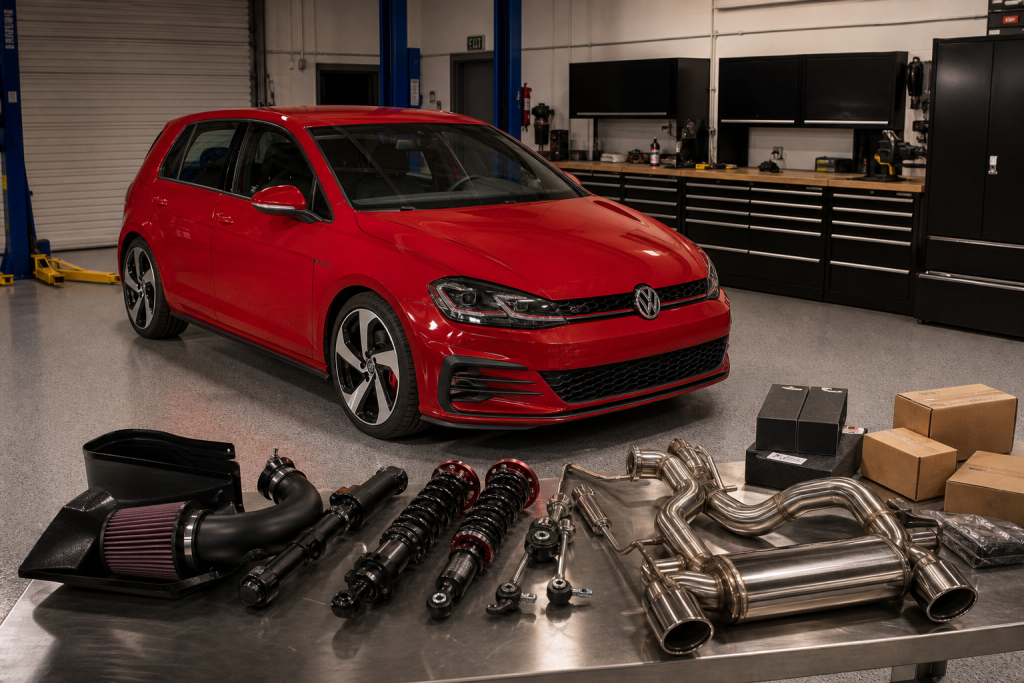
GTI performance parts fall into two categories that look similar on a spec sheet. Each carries notably different implications for fitment, calibration, and warranty coverage. A VW GTI owner evaluating an intake, suspension component, or exhaust is making a decision that goes beyond part price and installation cost. Understanding these categories helps Jacksonville GTI owners choose modifications that hold up technically and avoid unnecessary coverage risk. This breakdown covers how each category works, what the law says, and what the ECU tuning question involves. What OEM GTI Performance Parts Are and How They Differ From Dealer Accessories OEM GTI performance parts are components engineered by Volkswagen or its approved suppliers to the same tolerance standards as factory equipment. They interact with the GTI's EA888 turbocharged engine, its fuel delivery mapping, and its suspension geometry without requiring recalibration of adjacent components. An OEM intake, for instance, flows air at a rate the ECU's fuel trim tables already account for. Fitment is precise. It is built to a specific dimensional and flow specification. Dealer accessories occupy a different category. VW R-Line accessories are styling components approved for installation by VW. They carry warranty coverage when installed by a VW dealer following the approved installation procedure. However, most R-Line components are not output-oriented. They address visual and comfort modifications rather than engine output, suspension tuning, or exhaust flow. Conflating R-Line accessories with OEM parts leads to incorrect coverage assumptions. The following points clarify how the two categories differ at the installation level. OEM performance parts are engineered to factory tolerance and interact with existing ECU calibration without modification. They are sourced through VW's parts supply chain and carry the same warranty coverage as original equipment when installed correctly. Dealer accessories are VW-approved for cosmetic or comfort modification and carry installation warranty when installed by an authorized VW dealer. They do not calibrate to engine output parameters and do not substitute for output-oriented OEM components. Knowing which category a part falls into before purchase clarifies which warranty protections apply and what recalibration the installation may require. How Aftermarket GTI Parts Differ in Fitment and What That Means Mechanically Aftermarket GTI parts are produced by third-party manufacturers to their own dimensional and material specifications. Quality varies widely across the aftermarket segment. A well-engineered aftermarket intake from a reputable manufacturer may flow air within acceptable range of OEM specification. A lower-quality product may introduce fitment gaps, seal failures, or flow irregularities that create secondary problems beyond the part itself. Fitment tolerance is the core technical distinction. An OEM intake seats against the throttle body and airbox connection points to a precise dimensional standard. An aftermarket intake that is slightly off-dimension creates an air leak at the connection point. That leak introduces unmeasured air into the intake tract. The GTI's ECU reads mass airflow from the MAF sensor upstream of the leak. Unmeasured air downstream of the sensor causes a lean fuel trim condition. That lean condition places additional load on the turbocharger and raises combustion temperature. So a fitment gap that seems minor at installation creates a chain of secondary effects across connected components. Suspension components carry the same risk. An aftermarket strut mount or control arm bushing that does not seat to OEM geometry shifts the factory suspension geometry. However, that shift may not be immediately visible without a post-installation geometry check. A GTI on out-of-specification geometry will show accelerated tire wear, steering feedback changes, and handling that diverges from factory calibration. The part itself may have seemed to fit during installation. But the deviation it introduced compounds across every mile driven after the install. What the Magnuson-Moss Warranty Act Covers for GTI Owners The Magnuson-Moss Warranty Act governs written warranties on consumer products in the United States. It prohibits manufacturers from voiding a warranty solely because the owner used aftermarket parts. However, that protection is narrower than most GTI owners assume. The law does not guarantee that a modified GTI will receive warranty coverage on all claims. It shifts the burden of proof to the manufacturer to demonstrate that the aftermarket part caused the failure in question. That burden-of-proof standard is the critical detail. If a GTI owner installs an aftermarket intake and later faces a turbocharger failure, VW can deny the claim by demonstrating that the intake contributed to the failure. The lean fuel trim condition from a poorly fitting intake creates exactly the causal chain a warranty evaluator can follow. So Magnuson-Moss does not protect a GTI owner from a denial. It requires the manufacturer to justify the denial with evidence of causation. The law also does not apply to modifications that VW specifically excludes in writing within the warranty terms. ECU tuning is one such category in most manufacturer warranty agreements. A software modification that rewrites boost targets, fuel tables, and ignition timing falls outside the bolt-on hardware protection Magnuson-Moss addresses most clearly. In practice, the law protects owners who install quality parts, maintain documentation, and can show the modification did not causally connect to the failure. Why Does ECU Tuning Carry a Different Warranty Risk Than Bolt-On Parts? A bolt-on part modifies one system at a time. An aftermarket intake changes airflow. An aftermarket exhaust changes backpressure. Each modification is discrete and its effect on adjacent components is bounded. An ECU tune operates differently. It rewrites the operating parameters the entire powertrain runs against simultaneously. Boost pressure targets, fuel delivery maps, ignition timing curves, and torque limiters all change in a single software modification. The GTI's EA888 engine is turbocharged and direct-injection. Those two characteristics make it particularly sensitive to ECU calibration changes. A boost increase from a stage one tune raises load on the turbocharger bearings, increases combustion temperature, and demands more from the intercooler. Without supporting hardware changes, those increased demands run against components calibrated for factory boost levels. Turbocharger bearing wear, piston ring stress, and intercooler saturation are not immediate failures. However, they develop faster under elevated boost than under factory calibration. Furthermore, most current VW GTI ECUs log modification history. A dealership technician running a diagnostic scan can identify whether the ECU has been flashed to a non-factory calibration. That log entry changes the warranty evaluation conversation before the verbal discussion begins. A bolt-on modification does not leave the same diagnostic trail. So from a warranty standpoint, ECU tuning and bolt-on hardware modifications occupy different risk categories even on the same vehicle. What GTI Owners Should Know Before Modifying at Tom Bush Volkswagen GTI modifications are not inherently warranty-ending decisions. The risk level varies by modification type, part quality, and how well the owner documents what was installed and when. A GTI owner who installs a quality component, maintains the original part, and keeps installation records is in a far stronger position for any future warranty conversation. Several steps apply before any modification begins. Photograph the factory component and surrounding area before removal. Record the mileage, date, and installer name at the time of installation. Keep the original part in the event the modification needs to be reversed for a warranty claim evaluation. Confirm the part specification against the GTI's model year and build. A part listed as compatible may carry dimensional tolerances that vary by production year. Confirming specification before installation prevents fitment surprises that are difficult to diagnose after the fact. Ask Tom Bush Volkswagen about dealer-installed accessory options before sourcing aftermarket components. Some upgrades are available as VW-approved accessories with defined warranty coverage when installed by the Tom Bush Volkswagen service team. The GTI was built with enthusiast ownership in mind. VW's own accessory catalog reflects that. Navigating modifications with an understanding of fitment, warranty law, and ECU sensitivity lets Jacksonville GTI owners enhance the car without unnecessary coverage risk. The Tom Bush Volkswagen team can identify which upgrades carry the lowest risk and which require careful evaluation before proceeding.

Volkswagen Service Intervals: What Owners Need to Know

Volkswagen service intervals are not built on a fixed mileage number. That distinction matters for every driver planning a maintenance schedule. The system monitors how the car is monitored and calculates service needs from those inputs. Jacksonville VW owners who understand the system can plan service appointments more accurately. Both premature and delayed maintenance become avoidable. This breakdown covers the interval display, oil service calculation, service tiers, and what the annual inspection involves. How Does the VW Service Interval Display Work? The VW Service Interval Display is not a simple mileage counter. It is a multi-item monitoring system that tracks several maintenance components independently. In fact, oil quality, brake fluid condition, and inspection timing each carry their own threshold within the display. When any item reaches its service point, the display alerts the driver with a message identifying which service is due. Specifically, the oil service calculation draws from a set of vehicle inputs. Engine load, trip duration, ambient temperature, and RPM patterns all factor into the oil quality model running in the background. A VW Jetta on frequent short trips in Jacksonville's summer heat will see an oil service reminder earlier than one driven on longer highway routes. Both climate and trip pattern shift the calculation. The system responds to how the car is driven. It does not assume every driver covers the same miles on the same roads. However, multi-item tracking is what confuses drivers most. A service reminder that appears shortly after an oil change is not a system error. It may indicate that brake fluid has reached its moisture threshold, or that the vehicle's annual inspection interval has elapsed. In fact, each item within the display triggers independently. So a fresh oil service does not reset every item in the system. Understanding this prevents the assumption that a recent oil change means all service needs are current. VW Oil Change Intervals and Why Synthetic Oil Changes the Calculation VW gasoline engines require full synthetic oil meeting the VW 502.00 specification. Models with diesel particulate filters require VW 507.00. The synthetic specification is not a preference. It is what the oil interval calculation assumes. A VW that receives conventional oil will reach that oil's protection limit before the display triggers a reminder. The display's calculation assumes synthetic oil's longer protection window. Beyond the specification requirement, the mechanism behind the extended interval is shear stability. Synthetic oil maintains its viscosity under high-temperature and high-pressure engine use longer than conventional oil. In a VW Golf GTI's turbocharged engine, oil passes through the turbocharger bearing at high shaft speeds and temperatures. Indeed, synthetic oil holds its protective film at those temperatures far longer than a conventional product at the same viscosity grade. That retention supports an interval of up to 10,000 miles under favorable driving patterns. Jacksonville's stop-and-go traffic compresses that interval. Short trips, high ambient temperatures, and frequent braking degrade oil faster than the system's most optimistic calculation assumes. A Jacksonville VW owner in urban traffic may see the service reminder between 5,000 and 7,000 miles even with the correct synthetic oil. So following the display rather than a fixed mileage assumption is the more accurate approach. What Is the Difference Between a Minor and Major VW Service? VW service appointments follow a tiered structure. Understanding the difference prevents drivers from assuming one type covers everything the other does. So knowing which tier applies at each visit helps Jacksonville VW owners plan for time and cost without surprises. The two tiers cover the following. A minor service centers on oil and filter replacement, topping off fluids to the correct levels, and a visual inspection of wear items including brakes, tires, and lights. It addresses the consumable service items that require attention most frequently. A major service covers everything in the minor service and adds a more thorough inspection of mechanical components, spark plug replacement on applicable models, air filter service, cabin filter replacement, and a detailed check of steering, suspension, and drivetrain components. Furthermore, most current VW models follow a two-year or 20,000-mile major service cycle. The exact interval varies by model and driving pattern. A driver who skips a major service misses spark plug replacement and mechanical inspection items that oil service alone does not cover. Tom Bush Volkswagen tracks both tiers in the vehicle's service history, which supports accurate interval planning. The Annual Inspection and Why It Exists Separately From Oil Service However, the annual inspection is not triggered by oil quality or mileage. It is a time-based maintenance event that exists independently of the oil service cycle. A VW Tiguan receiving three oil changes in a calendar year still requires an annual inspection at the 12-month mark. The two service types address different aspects of vehicle maintenance and are not interchangeable. That distinction matters when scheduling. Several items fall within the standard annual inspection scope at Tom Bush Volkswagen. Brake pad thickness measurement and rotor condition evaluation on all four corners, with caliper and hardware inspection to confirm free movement. Tire pressure, tread depth, and visual sidewall inspection, along with a check of wheel torque and alignment indicators. Lighting function across all exterior lights, including brake lights, turn signals, and headlight aim verification. Fluid level confirmation for coolant, brake fluid, power steering fluid where applicable, and windshield washer fluid, with a check for any visible leaks at hose connections and seals. In addition, the inspection provides a documented snapshot of the vehicle's condition at a fixed point in time. That record supports warranty coverage, resale value, and the early identification of wear items. A driver relying solely on oil service reminders may go more than a year without a formal inspection. Safety-critical items fall outside any service review in that gap. What Jacksonville VW Drivers Should Know at Tom Bush Volkswagen So planning VW service in Jacksonville starts with the Service Interval Display and a clear picture of local driving patterns. Most Jacksonville VW owners drive in urban traffic that accelerates oil degradation relative to the system's highway-based calculations. Staying ahead of the display puts the vehicle in a better position at every service visit. Additionally, VW Carefree Maintenance is a prepaid program available at the point of new vehicle purchase. It covers scheduled minor and major services for a defined period. That removes per-service costs from the ownership equation during the coverage window. The program does not cover unscheduled repairs, brake replacements prompted by wear, or tire service. Drivers who plan to keep their VW through the full coverage period find the program removes friction from routine service scheduling. Independent shops can service a VW without voiding warranty coverage. They must use the correct oil specification, record the service, and reset the Service Interval Display. A shop that uses non-specified oil or skips the display reset creates a documentation gap. That gap can complicate future service planning. At Tom Bush Volkswagen, every service is logged to the vehicle's VW service record. That record travels with the car and supports warranty administration and resale documentation.

Jetta Lease Explained: Monthly Cost and Mileage Options

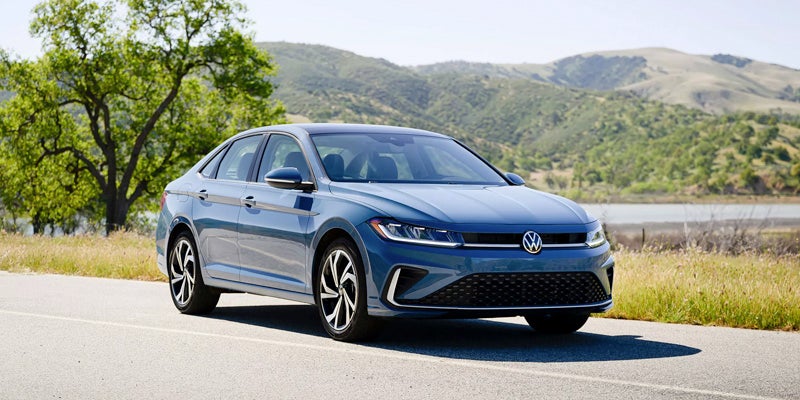
A Jetta lease puts one of Volkswagen's most popular compact sedans within reach of a wide range of monthly budgets. The payment a Jacksonville driver sees at the table reflects variables most promotions don't explain. Knowing those variables before walking into Tom Bush Volkswagen changes the conversation from reactive to informed. This breakdown covers how Jetta lease payments are built, what mileage decisions cost, and what due-at-signing amounts include. What Goes Into the Monthly Cost of a Jetta Lease? Two numbers drive a Jetta lease payment more than anything else: the residual value and the money factor. Residual value is the percentage of the Jetta's MSRP that VW Financial Services projects the car will retain at lease end. A higher residual means the driver finances a smaller depreciation gap across the term. That lowers the monthly payment. Beyond residual value, money factor is the leasing equivalent of an interest rate. VW Financial Services sets it monthly as part of the national lease program. To convert money factor to an approximate APR, multiply it by 2,400. A money factor of 0.00125 converts to roughly 3.0 percent APR. A Jacksonville shopper who asks for the current money factor can evaluate whether the rate is competitive before agreeing to anything. However, residual and money factor work together. A subsidized money factor paired with a strong residual produces the most payment-efficient lease. When VW Financial Services runs a promotional lease program on the Jetta, it usually subsidizes one or both variables. The Jetta SE may carry a stronger residual percentage than the Jetta S in a given month. That shifts the payment comparison even when both appear under the same program umbrella. Asking the Tom Bush Volkswagen lease team which trim carries the strongest residual that month is the most direct path to an efficient lease structure. How Mileage Tiers Work and What Choosing the Wrong One Costs Most Jetta lease promotions are built on a 10,000-mile annual cap. A driver who selects that tier and then drives 13,000 miles per year will owe overage charges at return. VW Financial Services charges around $0.25 per mile in overage on Jetta leases. Over a 36-month term, those 9,000 extra miles total $2,250 in return charges. That cost never appears in the monthly payment comparison. However, upgrading to a 12,000-mile or 15,000-mile tier at signing raises the monthly payment by a modest amount. That additional monthly cost is almost always less than the per-mile overage rate at return. The math favors upgrading before signing for any driver who covers more than 10,000 miles per year. Calculating annual mileage honestly before comparing tiers is the most cost-effective step before the paperwork begins. Furthermore, the mileage decision connects to lease-end options. Under a standard lease structure, returning a Jetta under mileage produces no credit for unused miles. So underestimating and overestimating both carry costs. The right tier matches actual annual driving. It is not always the one that produces the lowest advertised monthly number. What Does Due at Signing Include on a Jetta Lease? Due at signing on a Jetta lease is not a single fee. It is a collection of costs that fall outside the monthly payment structure. Understanding each component prevents the kind of surprise that causes shoppers to feel misled after a quote. Several items make up the standard due-at-signing total on a Jetta lease. The acquisition fee, charged by VW Financial Services on every leased vehicle, runs between $595 and $795 depending on the program. It covers the administrative cost of originating the lease and is non-negotiable at the lender level. The first month's payment is included in due at signing on most Jetta lease structures. It is not an additional charge but rather a prepayment of the first billing cycle. Florida documentary stamp tax, title fees, and dealer documentation fees are local charges that vary by county and transaction. These are separate from the national promotion baseline and are not reflected in the advertised payment. So a $0 down Jetta lease means no capitalized cost reduction at signing. That keeps the monthly payment at the program baseline. However, it does not eliminate the acquisition fee, first month, or applicable taxes. A true $0 out-of-pocket lease requires rolling those costs into the monthly payment. That raises it above the advertised figure. The Tom Bush Volkswagen team walks through each line item before the paperwork begins. Nothing appears unexpectedly at closing. How Credit Tier and Trim Level Affect What You Pay Indeed, credit tier is one of the most consequential variables in a Jetta lease. It is also one of the least discussed at the comparison stage. VW Financial Services assigns a money factor to each credit tier. A shopper in the top tier receives the lowest available money factor for the current program. A shopper one tier lower receives a higher money factor. That raises the monthly payment above the promoted figure even when every other variable stays the same. The implication is straightforward. Two Jacksonville drivers looking at identical Jetta SE leases in the same month may receive different payments based solely on their credit profile. Knowing your credit tier before visiting Tom Bush Volkswagen allows for a more accurate payment estimate before the formal application. In addition, trim level shifts the payment calculation. The Jetta S carries a lower MSRP but may carry a lower residual percentage than higher trims. That reduces the monthly payment advantage relative to its sticker price. The Jetta SE occupies the volume position in the lineup and regularly receives the most favorable residual support from VW Financial Services during promotional periods. The Jetta GLI, with its higher capitalized cost and sport-oriented positioning, carries a different residual structure than the standard lineup. Shoppers cross-shopping the GLI against the SE should compare residual percentages, not sticker prices alone. The Tom Bush Volkswagen lease team can answer which trim carries the strongest residual in a given month in minutes. That one number changes the payment comparison notably. What to Know at Lease End at Tom Bush Volkswagen Lease-end options for a Jetta are established at signing and remain consistent through the term. At the end of a 36-month Jetta lease, the driver has three choices. Returning the vehicle, purchasing it at the residual price, or leasing a new Jetta are all available paths. Each carries a different cost structure worth understanding before the final month arrives. So the purchase option price is the residual value established at signing, plus applicable taxes and fees. If market value at lease end exceeds the residual price, purchasing the vehicle is a favorable position. If the market value is lower than the residual, returning the vehicle is the more cost-efficient choice. VW Financial Services sets the residual at signing and does not adjust it based on market value at return. Finally, mileage reconciliation happens at vehicle return. A third-party inspection confirms the odometer reading and checks for excess wear. Overage charges apply at the per-mile rate established in the lease agreement. The Tom Bush Volkswagen team can review the lease-end inspection process and walk through what qualifies as excess wear. That removes uncertainty from the final step of the lease term.

Volkswagen Atlas vs Grand Highlander Space Comparison

Volkswagen Atlas vs Grand Highlander comparisons usually begin with third row space, but cargo layout, passenger comfort, technology usability, and family access patterns shape the larger decision. Families shopping for a three row SUV are evaluating more than passenger capacity alone. The real question is how the SUV functions once child seats, luggage, sports equipment, backpacks, groceries, and multiple passengers all begin sharing the same cabin space. The Volkswagen Atlas and Toyota Grand Highlander both target larger families needing flexible seating and modern technology, though their interior priorities differ in several important ways. Cabin packaging, seat movement, cargo access, and infotainment organization all influence how comfortable and manageable the SUV feels during daily use. Third Row Space and Passenger Comfort Which SUV has more usable third row space? Third row comfort is influenced by roof height, floor placement, seat geometry, cabin width, and how far the second row can slide forward. The Volkswagen Atlas places a major focus on passenger packaging across all three rows. Its upright body shape and wider cabin layout create a more open seating environment in the rear section of the SUV. Adult passengers generally notice more shoulder room and headroom in the third row, which becomes more noticeable during longer drives or when the SUV is fully occupied. The Grand Highlander expands rear seating compared with the standard Highlander and provides stronger third row usability than many midsize SUVs. The cabin still balances passenger space alongside hybrid packaging considerations and fuel efficiency priorities, creating a slightly different interior feel than the Atlas. Seat height changes comfort as well. A higher third row seat position usually creates better leg support for adult passengers. Lower seating positions can create a knees-up posture that becomes less comfortable during road trips. Families comparing these SUVs should evaluate: headroom in the third row shoulder space across rear seating adult passenger comfort during longer drives how easy passengers enter and exit the rear seats whether second row adjustment creates enough access room For families regularly carrying older children, teenagers, or adults in the rear seats, the Volkswagen Atlas generally creates a roomier passenger impression. Cargo Space and Rear Storage Layout Cargo capacity numbers only explain part of the story. Families need to understand how usable the storage area remains once every seating row is occupied. The Volkswagen Atlas uses a flatter cargo floor and a taller rear opening that supports easier loading of larger items. Strollers, sports bags, coolers, grocery bins, and travel luggage fit more naturally because of the wider rear cargo layout. Vertical loading room also matters because stacked cargo quickly becomes an issue during vacations or tournament travel. The Grand Highlander still delivers strong family-oriented cargo flexibility, though some configurations prioritize efficiency packaging and hybrid component placement. Families moving larger equipment may notice differences in loading shape and floor depth when both SUVs are viewed side by side. Rear cargo usability changes based on: cargo floor depth rear hatch opening height vertical storage space underfloor storage design third row folding layout rear wheel well intrusion This becomes noticeable during family travel. A cargo area may technically provide enough cubic footage, but uneven floor shapes or tighter loading dimensions can reduce how easily larger items fit once passengers occupy every row. The Atlas tends to create a more open cargo loading environment for families frequently traveling with multiple passengers and larger gear loads. Second Row Access and Family Movement How easy is third row access with child seats installed? This is one of the biggest areas missed in many three row SUV comparisons. Second row movement controls, seat rail travel distance, and aisle width all influence how manageable rear access feels during everyday use. Families with younger children may access the third row constantly during school pickups, sports events, and family outings. The Volkswagen Atlas uses large rear door openings and generous second row slide travel that help create easier movement into the third row. When child seats occupy part of the second row, access pathways still remain relatively manageable because of the SUV’s wider cabin structure. The Grand Highlander also supports flexible second row configurations, though passenger movement can feel slightly tighter depending on seating arrangement and child seat positioning. Important areas families should physically test: second row slide movement rear door opening size third row step-in clearance child seat interference aisle width between seats ease of reaching rear buckles and seat belts This part of the comparison matters because family usability is shaped by repetition. Small frustrations during daily passenger movement become much more noticeable over months and years of ownership. Atlas vs Grand Highlander Technology Layout Which SUV technology setup is easier to use while driving? Technology matters less by feature count alone and more by visibility, organization, and ease of access. The Volkswagen Atlas uses a straightforward dashboard structure with clear screen placement and relatively simple menu organization. Controls are positioned to reduce visual clutter, helping drivers interact with navigation, climate controls, and media functions without excessive distraction. The Grand Highlander offers a strong technology package as well, including large display options and extensive driver assistance integration. Toyota’s system prioritizes broad feature availability and hybrid information displays, which appeal strongly to efficiency-focused families. Technology usability should be evaluated through: screen visibility during daylight menu simplicity physical control accessibility climate control interaction rear passenger charging access driver distraction during adjustments Large screens alone do not automatically create a better experience. During family driving situations, simpler layouts and easier access can reduce distraction while managing navigation, calls, music, and passenger adjustments. The Atlas tends to emphasize cabin simplicity and open visibility, while the Grand Highlander balances family technology with hybrid-oriented information integration. Which SUV Fits Different Family Priorities? Choosing between the Volkswagen Atlas and Toyota Grand Highlander comes down to which family priorities matter most during everyday driving. The Atlas places heavy emphasis on: passenger space third row comfort wide cabin packaging cargo openness simplified interior usability The Grand Highlander strongly appeals to families prioritizing: hybrid availability fuel efficiency modern technology integration balanced family versatility Families needing maximum passenger room, easier third row access, and a more open cargo layout will likely find the Volkswagen Atlas better aligned with how larger households move through daily life. The Atlas creates a strong balance between passenger comfort, family practicality, and cabin simplicity without forcing families to compromise rear seating usability once every row is occupied. Its wider cabin structure, approachable technology layout, and more accommodating cargo configuration continue to make it one of the stronger choices for families prioritizing space and flexibility inside the three row SUV segment. The Grand Highlander brings strong efficiency focused appeal and modern family technology, though the Volkswagen Atlas stands out for families who place higher value on passenger comfort, loading flexibility, and everyday usability across all three rows. For larger households regularly carrying passengers, luggage, sports gear, or travel equipment, the Atlas continues to position itself as one of the leading family focused SUVs for shoppers wanting space that feels genuinely usable throughout the entire cabin.

OEM Volkswagen Accessories vs Aftermarket Explained

OEM Volkswagen accessories vs aftermarket comparisons usually begin with price, but fitment, warranty coverage, electronic compatibility, and installation quality shape the bigger decision. Many Volkswagen drivers start researching accessories after buying their vehicle, whether they want extra cargo flexibility, upgraded wheels, roof rack systems, splash guards, or interior protection. The challenge is understanding which accessories were engineered specifically for Volkswagen vehicles and which were designed to fit a wider range of applications. Modern Volkswagen models rely on tightly integrated electrical systems, driver assistance technology, factory mounting tolerances, and calibrated safety equipment. Because of that, accessory decisions can influence much more than appearance alone. Understanding how OEM and aftermarket accessories differ helps drivers make informed choices that support long-term reliability, comfort, and everyday usability. What Separates OEM Volkswagen Accessories From Aftermarket Options? OEM Volkswagen accessories are designed and tested specifically for Volkswagen vehicles. “OEM” stands for Original Equipment Manufacturer, meaning the accessories were engineered to match Volkswagen factory standards for fitment, integration, durability, and compatibility. Aftermarket accessories are produced by third-party companies. Some aftermarket manufacturers build high-quality products, while others prioritize lower production costs or universal fitment across multiple brands and vehicle types. That difference changes how the accessory interacts with the vehicle. OEM Volkswagen accessories are typically developed alongside the vehicle itself. Engineers evaluate: mounting locations weight distribution aerodynamic impact weather sealing electrical communication compatibility with safety systems long-term durability under daily driving conditions Aftermarket accessories may not go through the same level of Volkswagen-specific testing. This becomes important with: roof rack systems lighting upgrades wheels and tires cargo carriers trailer wiring electronic accessories camera and sensor-adjacent equipment Many shoppers initially compare accessories based on appearance or price alone. The larger difference usually comes down to integration quality and long-term reliability. Why Fitment Engineering Matters With Volkswagen Accessories Fitment is one of the biggest reasons OEM Volkswagen accessories remain popular with drivers who want factory-level integration. Volkswagen vehicles are engineered with very specific tolerances. Mounting points, body contours, attachment hardware, and sealing surfaces are designed to work together precisely. OEM accessories are developed around those exact specifications. That precision influences: road noise water intrusion protection vibration control mounting stability aerodynamic behavior long-term wear patterns Roof racks are one of the clearest examples. An OEM Volkswagen roof rack system is designed around the vehicle’s roof structure, weight distribution limits, and airflow characteristics. Proper placement helps reduce excess wind noise and uneven stress on mounting points. It also helps preserve weather sealing around attachment areas. Universal aftermarket roof racks may fit physically, but slight differences in mounting pressure or alignment can create: rattles premature seal wear uneven load distribution water leaks additional cabin noise Wheel accessories create similar concerns. Modern Volkswagen wheels work alongside: tire pressure monitoring systems suspension calibration steering geometry braking systems traction control programming Improper wheel sizing or offset changes can influence how the vehicle drives and how certain systems respond during braking, turning, or slippery conditions. That does not automatically make all aftermarket wheels problematic. It simply means compatibility requires more evaluation than appearance alone. How Electrical and Safety Systems Influence Accessory Compatibility Modern Volkswagen vehicles rely heavily on electronic communication between modules, sensors, cameras, and driver assistance systems. That means accessory installation can affect more than convenience features. Depending on the model, Volkswagen vehicles may include: adaptive cruise control lane keeping systems parking sensors blind spot monitoring forward collision mitigation rearview camera systems rain-sensing technology intelligent lighting systems Many of these systems rely on precise sensor positioning and uninterrupted communication between control modules. Aftermarket electrical accessories can sometimes interfere with: signal communication voltage consistency calibration accuracy sensor visibility software monitoring systems This is why some drivers experience: dashboard warning lights sensor malfunctions camera calibration issues intermittent electrical faults battery drain concerns Trailer wiring systems are a common example. OEM Volkswagen trailer wiring kits are usually engineered to communicate properly with factory electrical architecture. Some aftermarket wiring systems rely on splicing methods or universal adapters that may not integrate as cleanly with vehicle monitoring systems. Lighting accessories can also create complications if electrical loads differ from factory specifications. With newer Volkswagen vehicles becoming increasingly software-driven, compatibility matters more now than it did on older generations of vehicles. OEM Warranty Coverage Versus Aftermarket Accessory Risks Warranty concerns are one of the most searched aspects of OEM versus aftermarket accessory research. Many drivers worry that installing aftermarket accessories automatically voids their Volkswagen warranty. In reality, warranty situations are usually more specific than that. An aftermarket accessory does not automatically cancel an entire vehicle warranty. However, if an aftermarket part directly causes a failure or damage, repairs connected to that failure may not be covered. For example: improperly installed wiring that damages electrical systems non-compatible wheel fitment that contributes to suspension wear poorly sealed roof accessories that create water intrusion Those situations may create warranty disputes because the failure can be linked to the accessory installation itself. OEM Volkswagen accessories are generally designed and tested to reduce those compatibility risks. Another important factor is installation quality. Factory-trained installation procedures often include: torque specifications calibration procedures mounting inspections software integration steps sealing verification system testing Improper installation can create issues regardless of whether the accessory itself is OEM or aftermarket. That is why many Volkswagen drivers choose dealership installation for: roof rack systems trailer wiring electronic accessories wheel packages driver assistance-related equipment The goal is not simply convenience. It is preserving long-term compatibility and reliability. What Shoppers Should Evaluate Before Choosing Volkswagen Accessories Choosing between OEM Volkswagen accessories and aftermarket options depends on what matters most to the driver. Some aftermarket accessories work well for cosmetic customization or simpler upgrades. Others may require more careful evaluation due to integration complexity. Before purchasing accessories, drivers should evaluate: intended daily use installation complexity electrical integration requirements warranty considerations long-term durability expectations compatibility with driver assistance systems weather exposure conditions cargo or load requirements Drivers using roof systems frequently for bikes, kayaks, cargo boxes, or outdoor equipment may prioritize factory-tested load engineering and sealing protection. Drivers considering wheel upgrades may want to verify: offset compatibility tire pressure sensor integration brake clearance suspension interaction winter driving considerations For electronic accessories, compatibility becomes even more important because modern Volkswagen systems communicate constantly across multiple modules and sensors. The lowest-priced option is not always the lowest long-term cost if installation problems, warning lights, premature wear, or replacement concerns appear later. OEM Volkswagen accessories are designed around how the vehicle was engineered from the beginning. Aftermarket accessories may offer additional customization flexibility, but they often require more research to confirm proper compatibility and installation quality. Understanding those differences helps drivers choose accessories that support how they actually use their Volkswagen every day.

Volkswagen Repair Estimates Explained: Cost and Verification

Volkswagen repair estimates explained starts with understanding how diagnostics, labor, parts, inspections, and repair verification shape the final repair cost before service approval. Modern Volkswagen vehicles use advanced electronics, communication modules, sensors, and calibration procedures that require more than a quick visual inspection. A repair estimate is not simply a price quote. It is a breakdown of the testing, repair planning, replacement parts, labor procedures, and verification steps required to identify and correct a vehicle issue properly. What a Volkswagen Repair Estimate Includes What are you paying for in a repair estimate? A repair estimate combines diagnostic testing, technician labor, replacement components, inspections, taxes, and service procedures tied to the specific issue being addressed. When a Volkswagen enters the service department, the estimate process usually begins with concern verification. The technician reviews the issue reported by the driver, checks warning lights, performs an inspection, and connects the vehicle to factory level diagnostic equipment. That process creates the foundation for the estimate. A Volkswagen repair estimate may include: Diagnostic testing Technician labor time OEM Volkswagen parts Electronic calibration procedures Fluid replacement Taxes and shop fees Multi point inspection findings The estimate structure changes based on the repair type. A brake service estimate will look different from a module communication issue or cooling system repair because each service requires different labor procedures, tools, testing steps, and component access. For shoppers, the important detail is understanding that the estimate reflects the repair path required to diagnose and correct the issue fully, not simply replace one part. Why Diagnostic Testing Is Part of Repair Pricing Why is there a diagnostic fee before repairs even begin? Diagnostic testing is the process technicians use to identify the actual source of the problem before replacement work starts. Modern Volkswagen models contain multiple onboard control modules that communicate across the vehicle. A warning light or fault code does not automatically identify the failed component. Fault codes point technicians toward a system area that requires deeper testing. For example, a check engine light tied to an oxygen sensor code does not always mean the oxygen sensor itself failed. Wiring problems, vacuum leaks, fuel delivery concerns, exhaust leaks, or communication interruptions can create similar code patterns. The technician must verify the root cause before repairs are approved. Diagnostic procedures may involve: Full system scanning Live data monitoring Voltage testing Circuit inspection Pressure testing Sensor signal analysis Road testing Volkswagen diagnostic procedures can become more involved when electrical communication modules are connected to multiple systems at once. One issue can create secondary faults across several modules. That is why diagnostic labor exists separately from the actual repair. The goal is not replacing parts until the warning disappears. The goal is identifying the actual failure source before unnecessary repairs happen. How Labor Times and OEM Parts Shape Repair Cost Why do labor charges vary between repairs? Technician labor is calculated using standardized repair operations based on the complexity of the repair, required disassembly, testing procedures, and calibration steps. Some Volkswagen repairs require limited access and short installation time. Others involve major component removal, electronic programming, or recalibration after installation. Even repairs involving similar parts can have different labor totals because of where the component is located and how many procedures are required before replacement can begin. Volkswagen electronic architecture also changes the repair process. After replacing certain components, technicians may need to perform: Sensor calibration Module coding Software adaptation Steering angle resets Radar alignment Communication verification scans OEM Volkswagen parts also influence estimate structure. Factory parts are designed around exact fitment, communication compatibility, and calibration standards already programmed into the vehicle architecture. That matters with modern driver assistance features, electronic throttle systems, adaptive safety equipment, and engine management controls. An aftermarket part may physically fit the vehicle but still create communication problems, warning lights, or calibration interruptions if the module data does not match factory specifications correctly. For Volkswagen repairs involving electronics, sensors, drivability concerns, or safety equipment, part compatibility plays a major role in repair accuracy. Why Repair Estimates Sometimes Change After Inspection Why can repair pricing increase after the inspection process begins? Some issues are not fully visible until components are removed or secondary testing is completed. An estimate may begin with the most visible failure based on the initial inspection. Once technicians access the repair area, additional wear, damaged hardware, fluid contamination, wiring problems, or secondary failures can become visible. A cooling system leak may uncover additional hose deterioration. Brake repairs may reveal rotor damage or seized hardware. Suspension repairs may expose worn bushings or alignment issues that were hidden during the first inspection. Volkswagen repairs involving turbocharged engines, electrical systems, or sealed components can require partial disassembly before the full repair scope becomes clear. Estimate revisions may happen because of: Hidden component damage Additional failed parts Corrosion Fluid contamination Wiring deterioration Secondary electronic faults Calibration requirements discovered during repair That does not automatically mean unnecessary repairs are being added. It means the technician now has access to information that was not visible during the first stage of inspection. A transparent repair process explains what changed, why it changed, and how the added repair relates to the original concern. How Volkswagen Repairs Are Verified Before Vehicle Return How do technicians confirm the repair fixed the problem? Repair verification is the final testing process performed after installation and calibration procedures are complete. For Volkswagen vehicles, this process can involve clearing faults, rescanning modules, monitoring live sensor data, road testing, recalibrating electronic systems, and confirming proper communication between onboard modules. Repair verification may include: Post repair scan testing Warning light confirmation Road testing Sensor calibration checks Leak inspections Battery charging system review Communication module verification This final stage matters because the repair process does not end when a part is installed. Modern Volkswagen vehicles rely on connected electronic communication across multiple systems. A replacement component may still require adaptation procedures before the vehicle recognizes the repair properly. For drivers, repair verification provides confidence that the original concern was corrected, supporting systems are communicating correctly, and the vehicle is ready to return to normal operation. Volkswagen repair estimates are built around diagnosis, confirmation, repair planning, and validation. Understanding how those steps connect makes the estimate easier to evaluate and helps shoppers understand where repair costs originate before approving service.

Volkswagen Taos Lease Guide: Mileage and Payment Factors

The Volkswagen Taos lease guide starts with a clear look at how monthly payments, mileage limits, lease terms, and upfront costs work before you sign. For compact SUV shoppers, the goal is not just finding a monthly number that fits. It is knowing what creates that number, what changes it, and what to review before choosing a lease structure. How Volkswagen Taos Lease Payments Are Calculated Why can two Volkswagen Taos lease payments look different when the vehicles seem similar? A lease payment is the cost of using the vehicle during the lease term, not the full purchase price of the SUV. The core calculation starts with the Taos price, the projected value at lease end, the lease term, taxes, fees, and the finance charge. The projected end value is called the residual value. If a Volkswagen Taos has a stronger projected residual, the lease payment can be lower because the amount being paid during the term is smaller. The money factor is the finance charge inside the lease. It works like an interest rate, but it is shown in lease format. Credit approval, lender program, term length, and current lease structure can all change that part of the payment. A shopper should review: Vehicle price before lease calculation Residual value Money factor Term length Taxes and registration Acquisition fee Any amount paid upfront For a Volkswagen Taos lease, these details matter because a lower monthly payment can come from several places. It could come from a stronger residual, more money due upfront, a lower finance charge, or a longer term. The monthly amount only tells part of the story. How Mileage Options Change Monthly Cost How many miles should you choose on a lease? Lease mileage is the number of miles included each year before extra mileage charges apply. Mileage tiers change payment because mileage changes the projected value of the Volkswagen Taos at the end of the lease. A Taos returned with fewer miles is expected to hold more value than one returned with higher mileage. That value difference is built into the lease calculation from the start. A lower mileage lease can reduce the monthly payment because the projected end value is stronger. A higher mileage lease raises the monthly amount because more vehicle use is being priced into the agreement. That does not make one option better than another. It means the mileage tier should match how the SUV will be driven. If you commute, travel between cities, drive kids to school and activities, or use the Taos as the main household SUV, a higher mileage tier may create a cleaner lease structure. If the Taos will be used for shorter local trips, a lower mileage option may be enough. What shoppers should evaluate: Average weekly miles Commute distance Weekend driving Planned road trips Whether the Taos is the main vehicle Extra mileage cost listed in the lease Choosing too few miles can create lease end charges. Choosing more miles than needed raises the monthly payment. The right mileage tier comes from a clear estimate of how the Volkswagen Taos will fit into daily driving. What Due at Signing Includes What does due at signing include? Due at signing is the upfront amount paid when the Volkswagen Taos lease begins. This amount can include the first monthly payment, taxes, title, registration, acquisition fee, dealer documentation fee, and any capitalized cost reduction. A capitalized cost reduction is money paid upfront to reduce the amount being financed through the lease. This is where shoppers need to read carefully. A lease with a lower monthly payment might require more money upfront. Another lease may show a higher monthly payment but less due at signing. Both can be valid structures, but they are not the same cost layout. For the Volkswagen Taos, due at signing should be reviewed alongside the monthly payment. Looking at one without the other can make the lease seem cheaper or more expensive than it is. A clear lease review should separate: First payment Taxes and government fees Acquisition fee Documentation fee Upfront payment toward the lease Any optional protection products The main question is not only “What is the monthly payment?” It is “How much am I paying now, how much am I paying each month, and what charges could appear at lease end?” Residual Value, Term Length, and Lease End Review Residual value is the projected worth of the Volkswagen Taos when the lease ends. It is one of the most important numbers in the lease agreement because it shapes how much depreciation is included in the payment. A shorter lease term may have a stronger residual because the vehicle is newer at return. A longer term spreads the lease across more months, but it can include more depreciation. That is why a longer term is not always the lowest total cost path, even when the monthly number appears appealing. Lease end review also matters. When the Taos is returned, the vehicle is checked for mileage and wear. Normal use is expected, but excess wear, damage, or mileage above the selected tier can lead to added charges. For shoppers, the lease term should match how long they want to drive the Taos before switching vehicles. A shorter term can work well for drivers who like newer technology and updated safety features sooner. A longer term can appeal to shoppers who want a lower monthly structure and plan to stay within mileage limits. Leasing Versus Financing a Volkswagen Taos Is leasing or financing the better fit for a compact SUV? Leasing is a use based agreement, while financing is a purchase path. With a Volkswagen Taos lease, the shopper pays for the portion of the SUV used during the lease term, plus finance charges, taxes, and fees. At lease end, the driver can return the vehicle, buy it, or review another Volkswagen option. With financing, the shopper pays toward ownership of the full vehicle. Monthly payments may be higher, but each payment builds toward owning the Taos. Financing also removes lease mileage limits, which can matter for drivers with long commutes or changing travel needs. The main evaluation comes down to how the Taos will be used. Leasing can make sense for drivers who want a newer compact SUV every few years and can stay within mileage limits. Financing can make sense for drivers who want ownership, fewer mileage concerns, and a longer hold cycle. A Volkswagen Taos lease should be reviewed as a full structure. Monthly payment, mileage tier, due at signing, term length, residual value, and lease end rules all work together. When those pieces are clear, shoppers can choose a lease with fewer surprises and a stronger understanding of what they are agreeing to.

Volkswagen Taos vs Toyota Corolla Cross: Interior Space and AWD Confidence Compared

Choosing between the Volkswagen Taos and the Toyota Corolla Cross is not just about comparing specs. It is about understanding how each vehicle is engineered to support daily driving. Both models sit in the subcompact SUV segment, but they approach space, performance, and traction differently. Volkswagen builds the Taos around usable space and responsive performance, while the Corolla Cross focuses on simplicity and efficiency. The result is two vehicles that look similar on paper but feel very different in real-world driving. Understanding those differences helps you decide which one fits your routine, your environment, and how you actually drive. Interior Space and How Each SUV Uses It When comparing the Volkswagen Taos and Toyota Corolla Cross, interior space is not just about measurements. It is about how that space is designed to be used. The Volkswagen Taos is built on a platform that prioritizes passenger room and flexibility. This allows for more rear legroom and a more open cabin layout. The seating position, door openings, and cargo access points are all designed to make everyday entry, exit, and storage easier. From a system perspective: The Taos uses a longer wheelbase to create more rear passenger space Cabin layout is designed for visibility and comfort over long drives Storage areas are positioned for accessibility, not just volume The Corolla Cross, in contrast, uses a more compact platform. While it offers practical space, the interior is structured with efficiency in mind rather than expansion. Rear seat space is more limited, and cargo access is slightly tighter in comparison. For daily driving, this translates to: The Taos feeling more open and accommodating for passengers The Corolla Cross focusing on compact practicality If your routine includes passengers, commuting, or longer drives, the Taos provides a more comfortable environment. If your priority is simplicity and compact maneuverability, the Corolla Cross delivers a more traditional approach. How AWD Systems Work in the Taos and Corolla Cross Does the VW Taos have AWD. The Volkswagen Taos offers an available all wheel drive system that automatically distributes power between the front and rear wheels to maintain traction. All wheel drive systems are designed to respond to changing road conditions. The key difference is how they react and how quickly they adjust. The Taos uses a system that continuously monitors traction and adjusts power distribution based on wheel slip and driving conditions. This creates a balanced response that supports stability on wet roads, uneven surfaces, and light off pavement conditions. The Corolla Cross also offers an available AWD system, but it is designed with a stronger focus on efficiency. It engages the rear wheels when needed but prioritizes fuel economy during normal driving conditions. From a real-world standpoint: The Taos AWD system provides a more engaged driving feel with consistent traction support The Corolla Cross AWD system activates as needed, focusing on efficiency over continuous engagement For drivers in areas with changing weather or road conditions, the Taos system offers a more confidence focused experience. It responds in real time and maintains stability without waiting for traction loss to occur. Engine Performance and Driving Feel Differences The difference in driving feel between the Taos and Corolla Cross comes down to how their engines deliver power. The Volkswagen Taos uses a turbocharged engine. A turbocharged engine uses forced air to increase power output without increasing engine size. This allows the engine to deliver strong torque at lower speeds. The Corolla Cross uses a naturally aspirated engine. A naturally aspirated engine relies on atmospheric pressure to draw air into the engine, resulting in a more gradual power delivery. From a technical perspective: Turbocharged engines provide quicker acceleration and more responsive power Naturally aspirated engines deliver steady and predictable performance In real-world driving: The Taos feels more responsive when merging, accelerating, or navigating traffic The Corolla Cross provides a smoother, more gradual acceleration experience For drivers who want a more engaging and responsive feel, the Taos offers a clear advantage. Its engine design supports quicker reactions and a more dynamic driving experience. Cargo Flexibility and Everyday Practicality Cargo space is not just about how much you can fit. It is about how easily you can use that space in everyday situations. The Volkswagen Taos is designed with a focus on usable cargo layout. The cargo area is shaped to accommodate larger items, and the rear seats fold to create a more continuous load floor. Key advantages include: Wider cargo opening for easier loading Flat load floor when seats are folded Flexible space for both daily items and larger cargo The Corolla Cross offers practical cargo space, but the layout is more compact. The shape of the cargo area and seat folding design can limit how larger items fit. For everyday use: The Taos supports a wider range of cargo needs The Corolla Cross handles basic storage efficiently but with less flexibility This difference becomes more noticeable when carrying larger items, traveling, or managing multiple passengers and cargo at the same time. Which SUV Fits Different Driving Needs Volkswagen Taos vs Toyota Corolla Cross which is better. The answer depends on how you prioritize space, performance, and driving confidence. The Volkswagen Taos is designed for drivers who want: More interior space for passengers and cargo A responsive engine that supports everyday driving demands An AWD system that provides consistent traction and confidence The Toyota Corolla Cross is suited for drivers who prioritize: Simplicity and predictable performance Fuel efficiency in daily commuting A compact design that is easy to manage in tight spaces Both vehicles serve the same segment, but they are built with different priorities. The Taos focuses on flexibility, responsiveness, and usable space. The Corolla Cross focuses on efficiency and simplicity. When you evaluate them side by side, the decision becomes less about which one is better overall and more about which one aligns with how you drive and what you need from your vehicle every day.

OEM vs Aftermarket Volkswagen Parts: Fitment, Warranty, and Long Term Cost Differences

When your Volkswagen needs a replacement part, the decision often comes down to one question. Should you choose OEM or aftermarket. The answer is not just about price. It is about how your vehicle is engineered to function as a complete system. Every Volkswagen is built with precise tolerances, calibrated components, and integrated technology. The parts you choose directly affect how those systems perform, how long they last, and how confidently you can rely on your vehicle day to day. Understanding the difference between OEM and aftermarket Volkswagen parts requires looking beyond the surface. It means understanding how components are designed, how they interact with the vehicle, and what that means for long term ownership. How Volkswagen OEM Parts Are Engineered for System Compatibility Are OEM Volkswagen parts better than aftermarket. OEM parts are components designed and manufactured specifically for Volkswagen vehicles to match exact engineering specifications and system requirements. Volkswagen engineers every vehicle as a connected system. Components such as sensors, braking systems, engine parts, and electronic modules are all designed to work together within defined tolerances. OEM parts are built using the same specifications, materials, and testing standards as the original components installed at the factory. From a system perspective, this means: Each OEM part matches the exact dimensions and tolerances required by the vehicle Materials are selected to perform under specific stress and temperature conditions Components integrate directly with onboard systems and software For example, a Volkswagen sensor is not just a standalone part. It communicates with the vehicle control modules, contributing to fuel efficiency, performance, and safety systems. An OEM replacement ensures that communication remains consistent and accurate. For Volkswagen owners, this level of compatibility reduces the risk of system imbalance. The vehicle continues to operate as designed, without introducing variables that could affect performance or reliability. How Aftermarket Parts Differ in Fitment and Material Consistency Aftermarket parts are components produced by third party manufacturers, often designed to fit multiple vehicle types rather than a single Volkswagen model. This broader design approach introduces variation. While some aftermarket parts meet high quality standards, others are built with different tolerances or materials that do not fully align with Volkswagen engineering. From a technical standpoint, differences can include: Slight variations in dimensions that affect fitment Material differences that impact durability and wear Inconsistent calibration with electronic systems These differences may not always be immediately visible. A part may install correctly but perform differently under real world conditions. For example, a braking component with different material composition may wear faster or respond differently under heat. A sensor with slightly different calibration may send inconsistent data to the vehicle’s systems. For Volkswagen drivers, this creates uncertainty. The vehicle may function, but not at the level it was engineered to achieve. Over time, these small variations can lead to larger issues, especially in systems that rely on precision. Warranty Protection and Risk Differences Between Part Types Do OEM Volkswagen parts come with a warranty. OEM Volkswagen parts include manufacturer backed warranty protection that supports both the part itself and its compatibility with the vehicle. Warranty protection is not just about replacing a faulty component. It is about maintaining the integrity of the entire system. When OEM parts are used, they align with Volkswagen standards, reducing the likelihood of conflicts between components. Aftermarket parts may offer their own warranties, but they do not always account for how the part interacts with the rest of the vehicle. If a non OEM part contributes to a larger issue, coverage may not extend to related repairs. From an ownership perspective, this creates a difference in risk: OEM parts support system wide reliability and protection Aftermarket parts may isolate coverage to the component itself Integration issues may not be covered under warranty For Volkswagen vehicles with advanced systems, including driver assistance and emissions controls, maintaining compatibility is critical. OEM parts help ensure that these systems continue to function within expected parameters. Long Term Cost and Ownership Impact Why are OEM Volkswagen parts more expensive. OEM parts reflect the cost of engineering precision, material quality, and system level testing required to ensure long term reliability. At first glance, aftermarket parts often appear more affordable. However, cost should be evaluated over the full lifecycle of the component. Key considerations include: Durability and how long the part is expected to last Risk of additional repairs caused by incompatibility Labor costs associated with repeat repairs An aftermarket part that fails earlier or affects surrounding components can lead to additional service visits. In contrast, an OEM part is designed to perform consistently within the system, reducing the likelihood of repeat issues. For Volkswagen owners, this means the initial cost difference does not always reflect the true cost of ownership. Long term value comes from reliability, consistency, and reduced downtime. How to Evaluate the Right Part Choice for Your Volkswagen Choosing between OEM and aftermarket parts requires understanding how the decision affects your specific vehicle and driving needs. The goal is not simply to replace a part. It is to maintain how your Volkswagen performs over time. When evaluating your options, consider: How critical the component is to vehicle performance or safety Whether the part interacts with electronic systems or sensors The importance of maintaining warranty coverage Your long term ownership plans For essential systems such as braking, engine components, and electronic modules, OEM parts provide consistency and reliability that align with Volkswagen engineering. For less critical components, some aftermarket options may be suitable, depending on quality and application. The key is understanding the role each part plays within the vehicle. Volkswagen vehicles are designed as integrated systems. Maintaining that integration is what supports performance, efficiency, and long term dependability. When you understand how OEM and aftermarket parts differ, the decision becomes clearer. It is not just about replacing a part. It is about preserving how your Volkswagen is designed to perform every time you drive it.

Contact Us

Fill out this form below and we'll contact you shortly
*Required Fields