Blog / Tom Bush Volkswagen Service

Blog

All Tom Bush Volkswagen Service Jacksonville Volkswagen Dealer Tom Bush Volkswagen Jacksonville Volkswagen Service Things To Do In Jacksonville Jacksonville Amenities Jacksonville Entertainment Jacksonville Used Cars Jacksonville Eateries Jacksonville Parks Fun in Jacksonville Jacksonville Car Repair Jacksonville Restaurants Jacksonville Family Fun Tom Bush Family of Dealerships Oil Change in Jacksonville Tom Bush Volkswagen Collision Jacksonville Volkswagen Collision Center Date Night Jacksonville Fitness Getaways Jacksonville Auto Finance Things To Do Near Jacksonville Volkswagen Atlas Jacksonville Beaches Road Trips Jacksonville Finance Tom Bush Volkswagen Finance Florida Weddings Vegetarian Foodies Volkswagen ID.4 Volkswagen Taos
Volkswagen Digital Cockpit display features and customization

Your Guide to the Volkswagen Digital Cockpit: Displays, Customization, and More

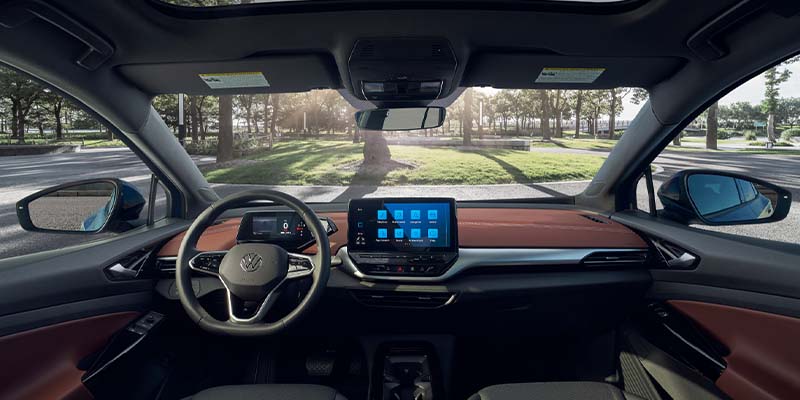
If you've been checking out Volkswagen s in Jacksonville, you've probably seen the term Volkswagen Digital Cockpit. It's one of the most talked-about features in the VW lineup, transforming the driver's view with a fully digital instrument cluster that puts key information right where you need it. If you're exploring the 2027 Taos, the reimagined Atlas, or the sport-tuned Jetta GLI, understanding how this technology works can help you make your decision. What Is the Volkswagen Digital Cockpit? The Volkswagen Digital Cockpit replaces the traditional analog gauge cluster with a high-resolution digital display positioned directly in the driver's line of sight. Rather than glancing down at fixed dials, you get a configurable screen that shows navigation maps, media information, driver assistance alerts, and vehicle data in real time. It's designed to keep your eyes forward and your attention on the road. Customization and Display Modes One of the strongest aspects of VW Digital Cockpit features is how much control the driver has over the layout. You can typically switch between different display views - classic, sportier, or map-focused configurations - depending on what information matters most on a given trip. In a performance-oriented vehicle like the 2027 Jetta GLI, a sport-focused view keeps key performance data front and center. That kind of flexibility means the cockpit works for all kinds of drivers. How It Works Alongside VW's Connected Technology The Digital Cockpit connects with Volkswagen's broader suite of technology features. VW has built generative AI-enhanced voice control into its connected services ecosystem, which means drivers can interact with navigation, media, and vehicle settings without taking their hands off the wheel. In the 2027 Atlas, features like dual wireless charging and three-zone climate control integrate naturally with the driver-focused display, making it easier to monitor comfort settings and connectivity at-a-glance. Digital Cockpit Across the VW Lineup VW Digital Cockpit features appear across a wide range of models, giving drivers options at various levels of capability. In the 2027 Taos compact SUV, you have a turbocharged engine producing 174 h p paired with 65.9 total cu f t of cargo room with the rear seats folded - a practical combination that the digital display helps you manage efficiently on longer trips. The 2027 Atlas, designed to seat up to 7 adults, pairs that spacious interior with technology that keeps the driver connected without feeling overwhelmed. Each model uses the cockpit to reflect its own personality. What to Expect When You Sit Behind the Wheel Getting acquainted with the Volkswagen Digital Cockpit for the first time is easier than most drivers expect. Volkswagen supports owners with resources like quick-start guides, video tutorials, and detailed vehicle manuals through its owner support platform - helpful for anyone who wants to get the most out of every display mode and shortcut. Once you've had a few drives to explore the layout, adjusting views and navigating menus becomes second nature. E xplore the VW Digital Cockpit at Tom Bush Volkswagen If you're in Jacksonville and ready to experience the Volkswagen Digital Cockpit in person, the best next step is to get behind the wheel. Seeing the display in action - exploring the customization options, checking how navigation overlays look in different modes, and pairing your phone to the connected system - makes all the difference. Visit Tom Bush Volkswagen online at tombushvw.com to browse current inventory and schedule a test drive with a model that fits your lifestyle.
Volkswagen Car-Net connected vehicle features

Your Complete Volkswagen Car-Net Guide

If you've recently bought or leased a new Volkswagen, you may have noticed a suite of connected services built right into the experience. This Volkswagen Car-Net ® guide is here to help you understand what those features are, how they work, and why they make everyday driving a little more seamless - if you're commuting across Jacksonville or heading out on a weekend road trip. What Is Volkswagen Car-Net? Volkswagen Car-Net ® is VW's connected services platform, designed to keep you informed, in control, and in touch with your vehicle virtually anywhere. It brings together remote access tools, in-car connectivity, and real-time vehicle insights into a single, easy-to-use system. Rather than leaving owners to sort through scattered settings menus, Car-Net ties everything together through the myVW app and in-vehicle interface. VW Car-Net Features and Setup on New VW Models Getting started with VW Car-Net begins in the vehicle itself. Once your Volkswagen is connected to a network, you can access a growing list of services that span convenience, safety, and real-time vehicle monitoring. The system is available across multiple models in the current VW lineup, including the 2027 Taos, the reimagined 2027 Atlas, and the 2027 Jetta GLI. On the 2027 Atlas, for example, the vehicle already comes equipped with dual wireless charging and ample charging ports - both of which work in conjunction with connected services to keep your devices powered while Car-Net keeps your vehicle connected. Three-zone climate control and the ability to seat up to 7 passengers make the Atlas a natural fit for families who want to stay organized and linked up on longer drives. Remote Access and Vehicle Insights One of the most practical sides of VW Car-Net features and setup is the remote access capability. Through the app, owners can check on their vehicle's status, lock or unlock doors, and receive alerts without being anywhere near the car. This kind of visibility is particularly useful for households sharing a vehicle. The platform also delivers insights about your Volkswagen directly to your smartphone, so you're never left guessing about maintenance schedules or warning indicators. VW's owner support resources - which include vehicle manuals, quick-start guides, service scheduling, and recall information - pair naturally with Car-Net to give drivers a comprehensive picture of their vehicle's health. How Car-Net Fits Into the Broader VW Technology Ecosystem C ar-Net doesn't operate in isolation. It's part of a broader philosophy at Volkswagen around building confidence into every drive. The IQ.DRIVE suite of safety-enhancing features works alongside connected services to create an experience where technology actively supports the driver rather than distracting them. Visit Tom Bush Volkswagen to Explore Car-Net in Person Reading about connected features is one thing - experiencing them firsthand is another. The team at Tom Bush Volkswagen, online at tombushvw.com is ready to walk you through everything this Volkswagen Car-Net guide covers and more, from initial setup to making the most of remote access tools on whichever VW model fits your lifestyle best.

Volkswagen brake pad inspection and maintenance

Volkswagen Brake Pads: Warning Signs of Brake Wear and When to Act

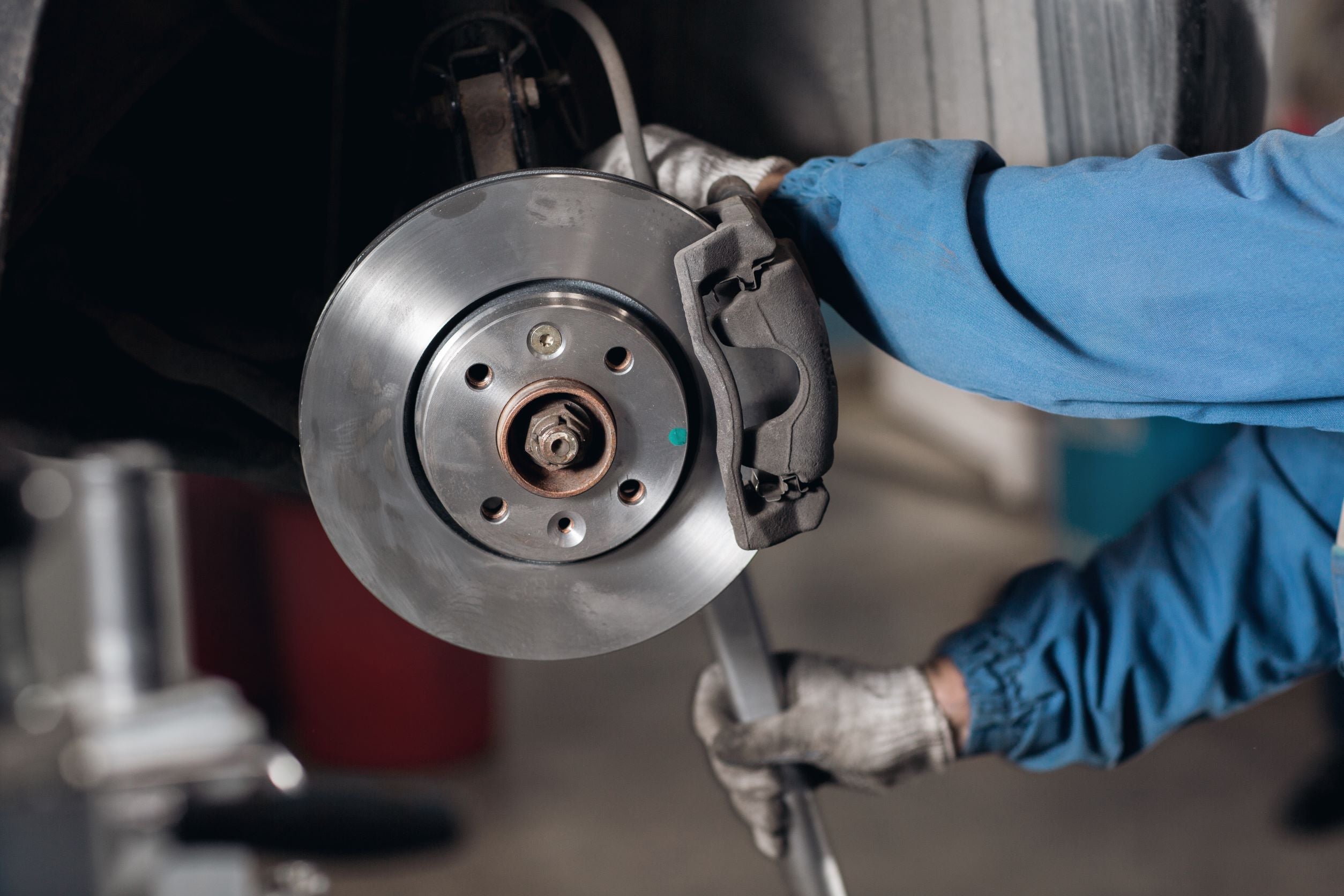
Let’s face it; you need your brakes to be in good working order. The brake system is one of the most important safety systems on your vehicle, and VW engineers them with precision. Making sure that your Volkswagen brake pads are in good shape and working as they should is one of the simplest ways to protect yourself, your passengers, and your vehicle in Jacksonville, Florida. What Brake Pads Do Brake pads create the friction your vehicle needs to slow down and stop. Every time you press the pedal, the pads clamp against the rotors, converting your vehicle's momentum into friction. Over time, that friction wears the pad material down. The rate of wear depends on your driving habits, the road conditions you encounter, and how often you're in stop-and-go traffic. VW's IQ.DRIVE suite of safety-enhancing features is engineered from the wheels up, but those systems can't compensate for brake pads that are past their service life. Common Warning Signs of Worn Volkswagen Brake Pads A high-pitched squealing noise when slowing down is one of the earliest and most reliable indicators that your pads are thinning. Most brake pads include a built-in wear indicator - a small metal tab that contacts the rotor and emits that sound intentionally as a warning. If you ignore that squeal, the next sign is often a grinding sensation or noise, which typically means the pad material has worn away entirely, and metal is contacting metal. At that stage, rotor damage becomes a real concern and repair s get harder and more expensive. A soft or spongy brake pedal, vibration when stopping, or your vehicle pulling to one side during braking are all additional signals you need to take seriously. VW Brake Wear and Inspection: What to Expect A thorough VW brake wear and inspection checks pad thickness, rotor condition, brake fluid levels, and the overall integrity of your braking system. Volkswagen recommends following your vehicle's maintenance schedule, which is available through the owners support resources at vw.com, to ensure brake components are reviewed at the right intervals. During an inspection, a technician will measure pad depth and evaluate whether your rotors show signs of scoring or uneven wear. Connected services and vehicle insights available through VW's technology ecosystem can also help you stay informed about your vehicle's needs between scheduled visits. How Driving Habits Affect Brake Pad Life Frequent hard braking wears pads faster than smooth, gradual stops. City driving with heavy traffic - like driving around Jacksonville - is generally harder on brakes than steady highway miles. Towing additional weight, even occasionally, increases the demand placed on your braking system with every stop. When to Schedule a Brake Service Appointment Don't wait for the grinding stage. If you're hearing squealing, noticing changes in pedal feel, or simply can't remember the last time your brakes were checked, that's enough reason to schedule a VW brake wear and inspection. Volkswagen owners have access to service scheduling directly through the owners section at vw.com, along with vehicle manuals, maintenance schedules, and more. Visit Tom Bush Volkswagen for Volkswagen Brake Pad Service Your safety starts with your brakes, and keeping your Volkswagen brake pads in good condition is one of the most straightforward ways to take care of your vehicle. The team at Tom Bush Volkswagen is ready to help drivers throughout Jacksonville stay on top of brake maintenance with the expertise your VW deserves. Schedule your inspection at tombushvw.com.

Volkswagen catalytic converter warning signs

Volkswagen Catalytic Converter Warning Signs and When to Schedule Service 

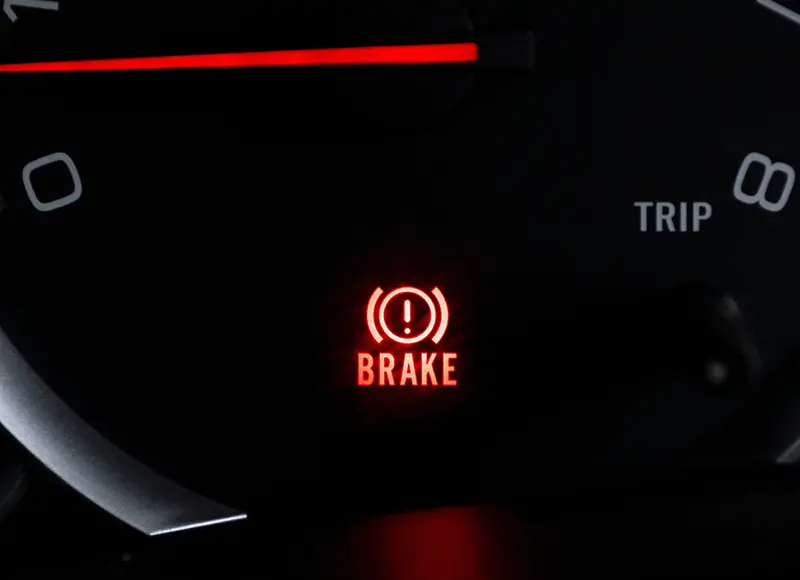
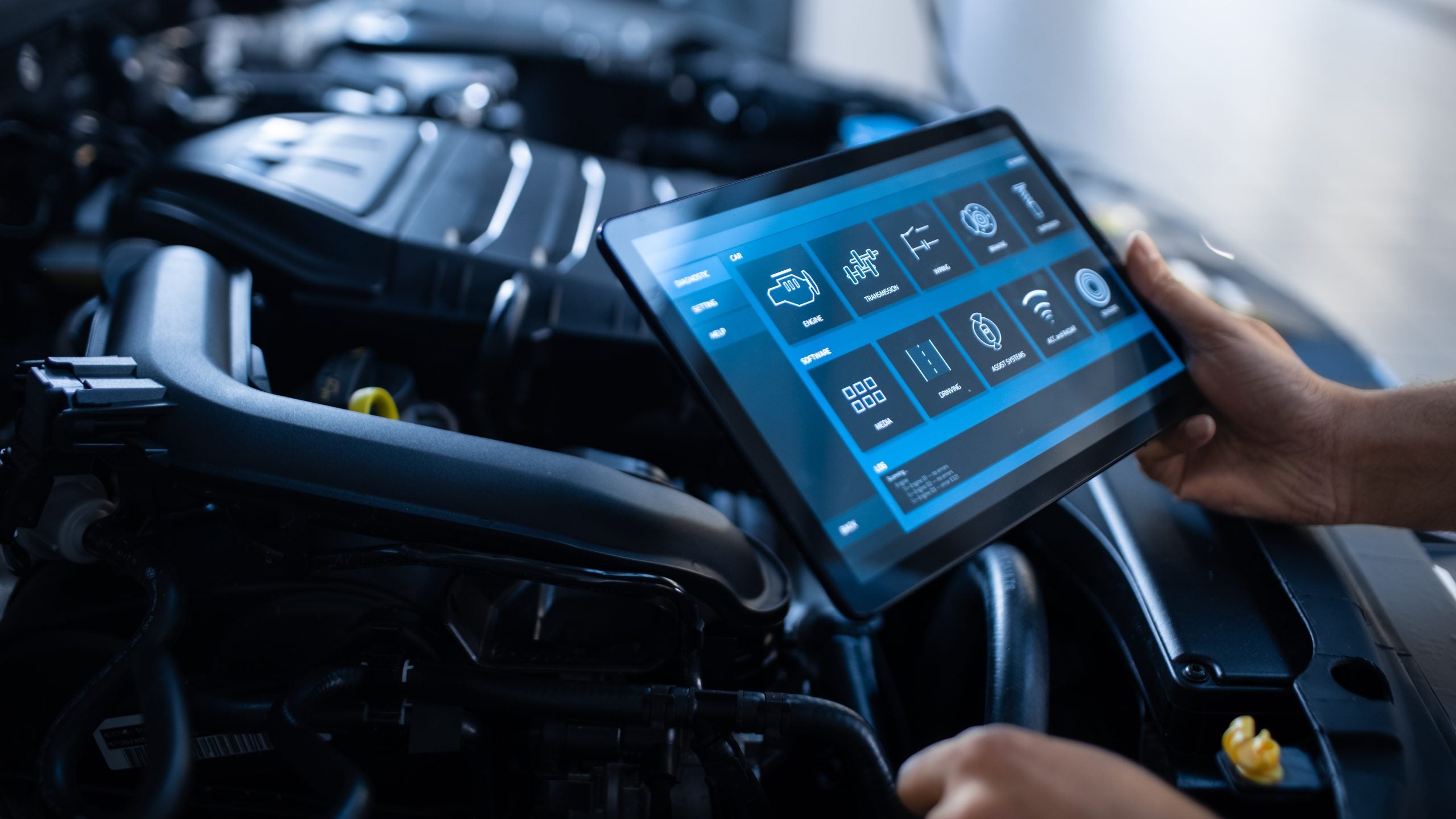
Your Volkswagen is designed to deliver smooth performance with low emissions, but like any component in your exhaust system, the catalytic converter can occasionally run into issues. Recognizing early warning signs - from subtle shifts in engine feel to unusual smells or dash lights—can help you address potential exhaust concerns before they lead to more significant repairs. Here is what every Jacksonville driver should know about how your catalytic converter functions and how to handle potential symptoms. What Does a Volkswagen Catalytic Converter Do? A catalytic converter is a vital part of your Volkswagen’s exhaust and emissions-control system. Inside its durable metal housing sits a coated honeycomb structure that transforms harmful exhaust gases into less harmful emissions before they exit the tailpipe. Because your converter relies heavily on proper engine timing, fuel delivery, and precise exhaust conditions to function, an issue elsewhere in the engine can quickly affect emissions performance. When a warning sign pops up, the converter may be involved, but a single symptom alone doesn't necessarily mean it needs to be replaced. Can a Rotten-Egg Smell Mean Converter Trouble? A persistent sulfur or rotten-egg odor coming from your exhaust usually means your emissions system isn't processing exhaust gases properly. While this can point to a catalytic converter problem, it can also stem from an overly rich fuel mixture, combustion issues, or temporary exhaust system imbalances. You should always pay attention to an unusual odor - especially if paired with sluggish acceleration or a dashboard warning light - but it isn't immediate proof of a dead converter. Having a Certified Volkswagen technician evaluate the root cause first saves you from replacing expensive parts unnecessarily. What Causes Rattling or Reduced Performance? If the internal structure of a converter breaks down, it can produce a metallic rattling sound, particularly as the exhaust warms up or during acceleration. However, loose heat shields, worn exhaust hangers, and nearby brackets can make nearly identical noises. Similarly, a clogged or restricted converter can make your VW feel sluggish or hesitant when pressing the gas pedal. However, misfires, clogged fuel injectors, or dirty air filters can cause the exact same drag. A thorough inspection of the entire exhaust system is always necessary before concluding the converter itself is at fault. Does a Check Engine Light Confirm a Bad Converter? In short, no. An illuminated Check Engine light often accompanies an emissions efficiency code—such as the common P0420 fault—which simply means the vehicle's computer detected efficiency dropping below an expected threshold. That code doesn't necessarily mean the catalytic converter failed. Common issues like faulty oxygen sensors, minor exhaust leaks, engine misfires, or damaged wiring can easily trigger it instead. Diagnostic trouble codes are just the starting point for a technician, not a final verdict. Importantly, if your Check Engine light ever flashes, you should ease off the accelerator, pull over safely, and arrange for immediate assistance, as an active misfire can quickly melt or destroy a catalytic converter. What If Fuel Economy Drops or You Fail an Emissions Test? A sudden drop in gas mileage or a failed state emissions test can certainly point to converter trouble, but these issues frequently start elsewhere under the hood. A proper diagnostic evaluation includes reading live sensor data, testing fuel-to-air ratios, checking for exhaust leaks, and verifying overall engine performance. If an unaddressed engine misfire or fuel mixture issue caused the converter to degrade in the first place, simply putting on a new converter without fixing the underlying problem will cause the new part to fail too. Finding the original trigger is key to a lasting repair. When Should You Schedule Volkswagen Service? It is best to schedule a professional inspection whenever a Check Engine light stays on, exhaust odors become noticeable, new underbody rattles develop, or your vehicle’s performance changes. Replacing a converter based on a sound, smell, or single fault code alone can lead to unnecessary expenses. The experienced team at Tom Bush Volkswagen’s service department can pinpoint the exact issue and explain the necessary steps. To book a diagnostic appointment in Jacksonville, simply use the dealership’s online service scheduler at tombushvw.com/schedule-service to make an ap pointment and get a clear, accurate plan for your vehicle.

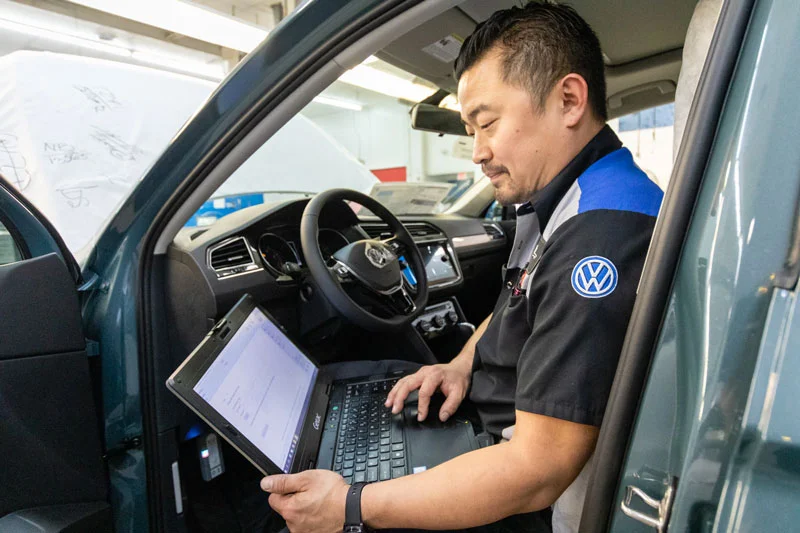
A Volkswagen Certified Technician running diagnostics on a vehicle

3 Signs That Your Volkswagen Needs New Spark Plugs

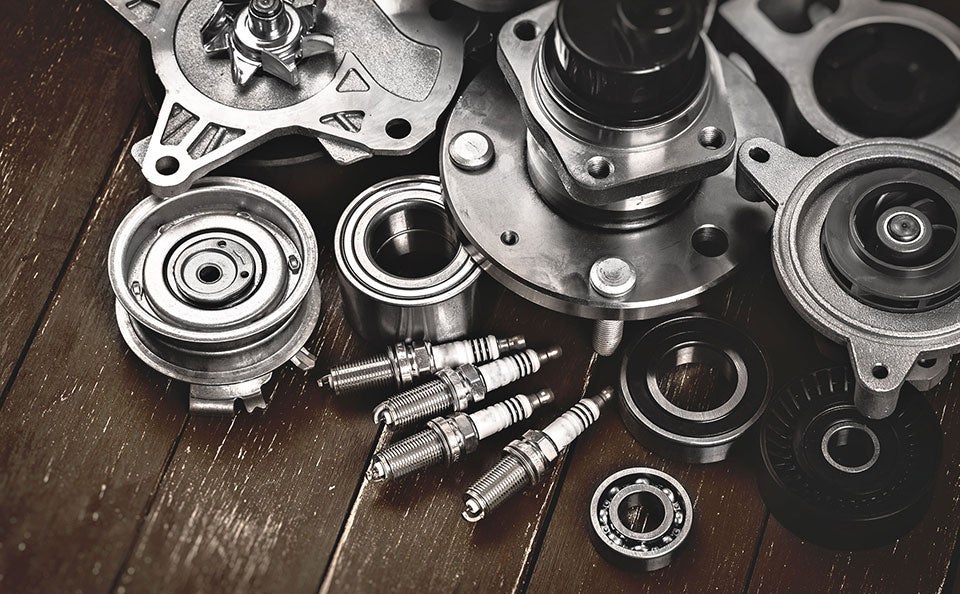
Volkswagen Spark Plug Timing Is Vehicle Specific Volkswagen spark plug replacement timing comes from the maintenance schedule for the exact model and engine. One mileage figure does not apply to every Volkswagen. Additionally, Volkswagen schedules may use both mileage and elapsed time. The correct interval can change by engine, model, and model year. How often should Volkswagen spark plugs be replaced? Start with the Volkswagen maintenance schedule for your vehicle. That schedule provides the maintenance point Volkswagen assigned to that engine. This approach is more accurate than choosing an interval based only on spark plug material. A plug may use iridium, platinum, or another design. However, the vehicle service schedule still controls when Volkswagen calls for replacement. Therefore, check the schedule before assuming that a generic mileage estimate applies. Why Model and Engine Matter Volkswagen uses different engines across its lineup. Those engines do not all share the same spark plug service interval. Some Volkswagen maintenance schedules call for replacement around 40,000 miles or four years. Others use 60,000 miles or six years. Different applications can use another interval. Why do the intervals differ? Engine design, spark plug specification, and service requirements vary by application. Therefore, one number cannot accurately cover every Volkswagen. The easiest way to verify the correct interval is to use the maintenance information tied to your vehicle. Your model year and engine matter more than a broad internet estimate. Additionally, service records can help. They show whether previous spark plug replacement has already been completed. If the service history is unclear, a Volkswagen service advisor can help identify the correct maintenance point. Mileage and Time Both Matter Many maintenance items are discussed only in mileage terms. However, Volkswagen schedules may also include a time limit. That means a vehicle with low annual mileage can still reach the service point through age. Consequently, owners should review both numbers when checking spark plug timing. Does age matter even if you drive very little? It can when the Volkswagen maintenance schedule lists a time limit. A schedule may state a mileage point or a number of years, whichever comes first. That language keeps service timing tied to both driving and elapsed time. Therefore, do not look only at the odometer. Review when the plugs were last replaced as well. Useful information to gather before scheduling service includes: The current odometer reading helps determine whether the mileage point is approaching. The vehicle model year and engine identify the maintenance schedule that applies. The date and mileage of the previous spark plug service show whether replacement has already been completed. Keeping this information together makes future maintenance planning simpler. Why Generic Spark Plug Lifespans Can Mislead Older spark plug articles often group replacement timing by plug material. Copper plugs may receive one estimate, while platinum and iridium plugs receive longer estimates. That approach can be misleading for Volkswagen maintenance planning. Does an iridium plug automatically mean 100,000 miles between replacements? No. The maintenance schedule for the exact vehicle should take priority. The plug material is only one part of the design. Volkswagen selects specific plugs for specific engines and assigns maintenance requirements accordingly. Therefore, a generic lifespan should not replace the service schedule. This distinction is important because the previous version of this Tom Bush article used broad material based estimates. The refreshed guidance should remove those universal figures. Instead, use the vehicle schedule and correct plug specification. What Volkswagen Spark Plug Service Includes Spark plug service involves more than removing one plug and installing another. The correct replacement plugs must match the engine specification. A technician begins by confirming the vehicle and required parts. Then the existing plugs can be removed and inspected during service. What can removed spark plugs reveal? Their condition may show wear, deposits, or other clues that deserve attention. However, plug appearance alone does not always identify the full cause of an engine concern. Additionally, the surrounding ignition parts can be checked when needed. Ignition coils sit directly above or near the plugs on many Volkswagen gasoline engines. For more context on overlapping ignition symptoms, review the Tom Bush guide to faulty Volkswagen ignition coils. The replacement plugs must also be installed correctly. Proper fit and tightening matter because each plug seals into the cylinder head. After replacement, the engine can be checked for normal operation. If warning lights or misfires were present before service, further diagnosis may still be necessary. What if Symptoms Appear Before the Scheduled Interval Scheduled replacement and symptom diagnosis are separate issues. A Volkswagen can develop an ignition concern before the normal spark plug service point. What should you do if the engine begins misfiring before the interval? Schedule diagnosis instead of waiting for the maintenance date. Worn plugs are one possible cause. However, ignition coils, wiring, fuel delivery, and other engine faults can create similar symptoms. That is why the companion Tom Bush Volkswagen spark plug warning signs guide has a different role. It covers symptoms and diagnosis rather than scheduled maintenance. Use that guide when you notice rough running, hesitation, misfires, or a check engine light. Use this page when you need to know when spark plug service is due. Tom Bush Volkswagen in Jacksonville can verify the maintenance schedule tied to your vehicle. You can schedule Volkswagen service when replacement is due or when an ignition concern needs diagnosis. Start with the model, engine, mileage, and service history. Then confirm the correct interval before scheduling replacement. That process keeps spark plug service tied to the Volkswagen in your driveway, not a generic mileage estimate from another vehicle.

Volkswagen OEM Parts vs aftermarket parts

Differences Between OEM and Aftermarket Parts

Original Equipment Manufacturer (OEM) and aftermarket parts may look similar, but they're very different in reality. As your VW dealership in Jacksonville, we want to tell you about some of these differences and why OEM parts are the best choice for you and your VW. Recognized Quality OEM parts are manufactured by the same companies to the same high-quality standards as the original parts on your vehicle. They're the products of countless hours of design and engineering and have been rigorously tested to meet or exceed recognized national and international standards. They're also fully endorsed by Volkswagen as the correct parts for your vehicle. Aftermarket parts, in contrast, are made by many different companies that have no connection to VW or your vehicle. They're cheaper than OEM parts as they use lower-grade materials and haven't been tested to ensure they work correctly on your VW. Lowering material quality means they won't last as long as OEM parts. This makes them more expensive in the long run as they have to be replaced more frequently. They Fit Since OEM parts are identical to the original parts they replace, they will always fit and perform perfectly. This is important aesthetically for visible components, such as a replacement door or rearview mirror, as once they are installed, there's no sign they were ever replaced. It's even more essential for components in the engine, transmission, and other vital systems to ensure they continue to work as safely and to the same high level as they previously did. Aftermarket parts may not fit correctly, since they weren't designed specifically for your VW. They're intended to be used in many vehicle makes and models. These types of parts usually need adjustment to fit, which can cause issues like gaps between them and other original parts. This can result in numerous problems, including reduced performance, increased wear and tear on original parts, and potentially make driving dangerous. Warranty Protection It's very rare, but labor or manufacturing issues can result in an OEM component that isn't as good as it should be. All OEM parts are protected by warranty, and in the unlikely event of an issue, the affected part will be replaced at no charge. Warranty replacement for an OEM part can also be performed at any VW dealer. If an aftermarket part has a problem, the situation is very different. These parts don't carry a warranty as they weren't designed or tested on your VW model. If one of these parts fails, you have to buy another ​replacement. If you'd like to know more or to book a service or repair, contact us at Tom Bush Volkswagen in Jacksonville, FL.

Volkswagen Oil Change

Volkswagen Maintenance Schedule: Keeping Your Vehicle Reliable

Volkswagens are known for their exceptional German build quality and everyday practicality. However, as with any car, you need to maintain your VW with a certain amount of diligence. This Volkswagen maintenance schedule will ensure that your VW never lets you down. Don't Neglect Your Monthly Checks Some things require attention every month. Each fluid in your car, including the motor oil, must be checked; make sure no fluids are degrading, contaminated, or low. You should also inspect your headlights and all exterior lights, which are vital for road safety. Above all, check your tire pressure monthly, and also inspect each tire for signs of damage, uneven wear, or shallow treads. Book These Biannual Services Two times a year, your VW needs a few essential services with a trusted technician. Have your motor oil changed and tires rotated, aligned, and balanced at this time. Your brakes, exhaust system, and battery should all be inspected every six months. Also, wax your car and check your wiper blades, and replace them if necessary. All Cars Require Yearly Inspections The air filters for the engine and cabin typically last about a year and should be replaced when clogging up. Also, have your suspension inspected and fine-tuned once a year. Your engine also needs to be tuned yearly. This should entail a careful examination of each spark plug and other important engine component. Have your cooling system pressure-tested, your fuel system inspected, and your transmission examined for signs of wear and leaks. All belts and hoses must also be checked at least yearly for fraying, cracks, and leaks. You can arrange all these inspections in one convenient visit with our VW technicians. Plan for the Longer-Term Upkeep Tasks Over the longer term, you'll need to replace your tires, which may last from four to six years. Your battery is likely to last about three to five years. Your brake's pads and rotors may last from two to five years. The engine's timing belt could last longer. Your coolant and brake fluid will probably need to be flushed every two or three years. The transmission and differential fluids tend to last a lot longer than this. One of the main purposes of all the inspections is to keep a close eye on these components and fluids, so they can be replaced in a timely way. Respond Quickly to Dashboard Warning Lights This maintenance routine will effectively protect and preserve your VW. In addition, adopt a quick-response attitude to signs of car trouble. Whenever you feel, see, hear, or smell something wrong, try to figure out the fault and ask a technician for help, rather than hoping the problem will go away on its own. If you put off repairs, a minor issue could grow into something much more hazardous and costly to fix. Allow us to arrange a comprehensive maintenance timetable for your VW. Visit Tom Bush Volkswagen in Jacksonville, FL, to get started. We've been keeping our customers' cars in terrific shape since 1970.

volkswagen maintenance

Volkswagen's Fuel Efficiency Tips: Save at the Pump

No one wants to spend more than strictly necessary on fuel but did you know that having your Volkswagen regularly serviced could improve your fuel efficiency? For more Volkswagen fuel efficiency tips, visit Tom Bush Volkswagen for advice you can trust. Fuel-Saving Tips for Volkswagen Drivers: Increased Efficiency Check Your Tires If you notice your fuel efficiency has recently reduced, your tires should be the first thing you look at. Underinflated tires can use more fuel due to an increase in the rolling resistance. This means the engine has to work harder, which burns more fuel in the process. According to the U.S. Department of Energy, it's possible to see a 3% improvement in fuel consumption when your tires are all properly inflated. Clear Out the Clutter If you've got a busy life, it's easy to toss things in the trunk and forget about them. However, the more weight you are driving around, the more fuel you'll burn. By clearing out any clutter from your car and removing unnecessary cargo, you'll burn less fuel. This also applies to anything on your roof rack. Carrying cargo on your roof is a useful way to extend your storage space, but it can have a negative impact on fuel consumption, so remember to remove the items when they're not needed. Not only does the extra weight have an impact, but the increased drag resistance means your engine has to work harder. Schedule a Regular Service To operate at its best, your Volkswagen engine needs to be able to combust fuel efficiently and with minimum friction. Over time, both of these functions can be affected due to worn-out components or circulating debris. A service from professional technicians can replace your filters, spark plugs, and any other parts needed, as well as rotate your tires. This not only ensures optimal fuel consumption, but also prevents other damage to your engine. Select the Best Drive Mode Many modern Volkswagens have a choice of drive modes, including Eco. Selecting this mode adjusts the engine and climate control settings to optimize fuel consumption without significantly impacting overall performance. If you're driving on a highway, cruise control can help preserve fuel by maintaining a steady speed and minimizing unnecessary braking or acceleration. Consider Your Driving Habits Although technology can help you cut your fuel bill, your driving style also makes a difference. Some of the driving habits that can contribute to increased fuel consumption include: Heavy braking and acceleration Sharp swerving Multiple stop-starts Excessive idling By driving smoothly, using gravity to assist braking, and by applying a light, gradual touch to both acceleration and braking, you'll get more miles from every tank of fuel. If you think your Volkswagen is using too much fuel or you're simply overdue for a service, we can help. Contact us today at Tom Bush Volkswagen in Jacksonville, FL to speak to our friendly team.

VW Tire

Expert Tips for Volkswagen Tire Maintenance and Replacement

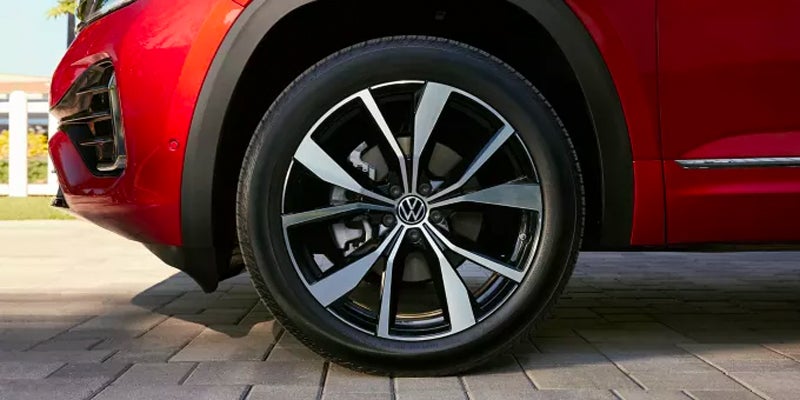
Whether you drive a new VW or your Volkswagen is a few years old, good tire maintenance is key for excellent vehicle performance. Tires with adequate treads offer a better grip on the road, which can improve fuel economy, safety, and overall handling. Learn about how to properly take care of your tires and when you need to purchase new tires from your VW dealer. Expert Tips for Volkswagen Tire Maintenance and Replacement One of the best ways to ensure your tires have a long life is to schedule regular tire rotation service at your local dealership. Ideally, you should rotate your tires at least twice a year to ensure the tire tread wears down evenly on all four tires. The front tires on your vehicle tend to carry more weight, so it's best to rotate those tires to the back of the vehicle frequently for better vehicle performance. You can save time on your routine vehicle maintenance by scheduling a tire rotation at the same time as other key services, such as an oil change, air filter replacement, windshield wiper replacement, and other routine services. When you book a tire rotation, make sure that you also ask for a wheel or tire alignment to ensure proper wheel balance and vehicle handling when you're on the road. When to Buy New Tires at Your VW Dealer The tires on your vehicle should last for a few years, although the specific type of tire may impact the longevity of the rubber. For example, all-season performance tires offer excellent grip in all weather conditions, but these tires also tend to wear down more quickly. You can refer to your VW owner's manual for guidance on the best replacement tires for your model. While time might be a good indicator of when to purchase replacement tires, there are other signs you can look out for. Most mechanics will recommend replacing the entire set of tires when the tread wear runs too low. If your tires can't pass the quarter or penny test because the tread depth is too shallow, then it's time for tires. Replacing your tires when the tread wear runs low will ensure your vehicle has enough traction on the road. Cracks, Bubbles, and Bulges Visible defects in the appearance of the tires are a sign that you need to replace one or all tires. Cracks on the sidewall and bubbles on the tire spell trouble like blowouts, flats, and air leaks. If your tire is ever visibly damaged after hitting a curb or a pothole, you should replace the tire immediately. Routine maintenance for your tires means frequent rotations and replacing tires when the tread is worn down. Keep yourself safe on the road by scheduling tire service at Tom Bush Volkswagen in Jacksonville, FL.

AC Service

Keeping Cool: Volkswagen Air Conditioning Maintenance Tips

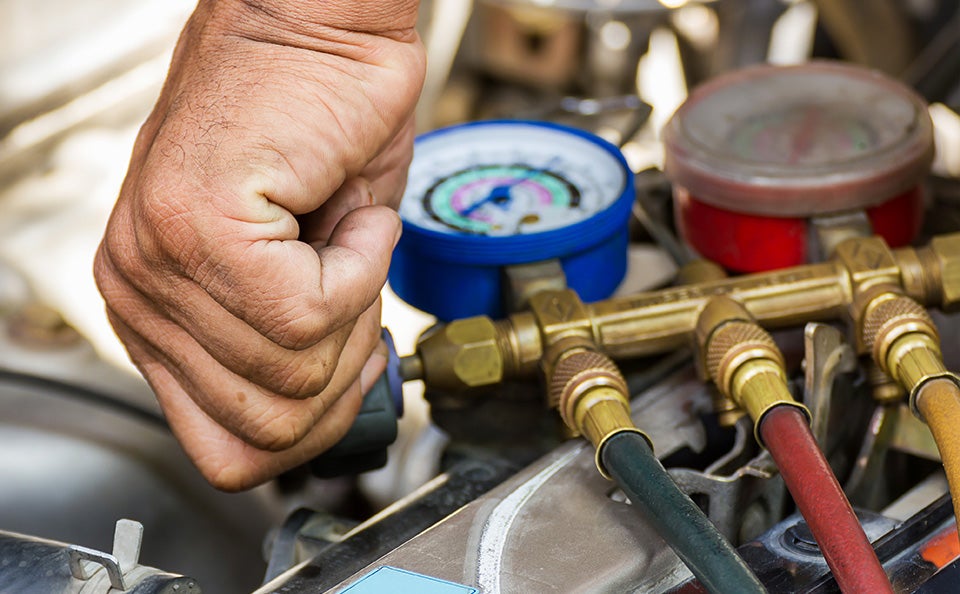
AC not working? It might not be because your car battery is failing. There are several reasons why your Volkswagen's air conditioning system might be blowing out hot air, which is why it's best to take your car to your local VW dealership for service. Check out how to maintain your AC system and more. Keeping Cool: Volkswagen Air Conditioning Maintenance Tips Your VW owner's manual outlines the routine maintenance for your AC system to keep things running smoothly. Some of these key maintenance tasks include inspecting and replacing air filters, cleaning the condenser, topping up the coolant level, and inspecting belt fans. Most of these maintenance tasks should be performed once a year to ensure good air conditioner performance. Other AC Service at Your VW Dealership Other maintenance tasks will need to be performed less often, such as flushing the radiator. A radiator flush should be done every few years to clean out any debris from the radiator that could reduce the efficiency of the AC unit. This is also a good chance to check for leaks, corrosion, or other issues that could hamper your air conditioning system. Common Causes for AC Not Working When your AC system runs into performance problems like blowing out hot air, the most common cause is low coolant levels. The coolant or refrigerant in your vehicle ensures your air vents produce cold air, so when levels are low, your AC unit won't function normally. A quick fix for this is topping up the coolant level or correcting any leaks in the radiator that are causing coolant levels to drop. Best Practices for Good AC Performance If you want your air conditioner system to perform well throughout the year, there are things you can do when you're behind the wheel to maintain good AC performance. For example, you can roll down your windows when it's hot outside to vent out hot air that accumulates in the cabin before turning on your AC system so your air conditioner doesn't have to work as hard to cool down the car. It's also a good idea to occasionally turn on the defrost mode, even when it's hot or you don't need to defrost windows. This is because the defrost mode can reduce moisture buildup in your AC unit, which prevents the development of mildew and musty air vent odor. You can run the defrost mode for at least 10 minutes once a week to keep your air vents fresh. In Florida, it's essential to have a functional air conditioning system to battle heat and humidity throughout the year. To keep your AC in good shape, you should schedule routine service for coolant level top-offs, air filter replacement, and other AC inspection services at your local dealership. Book service at Tom Bush Volkswagen in Jacksonville, FL.

Oil Change

The Complete Guide to Volkswagen Oil Change Intervals and Benefits

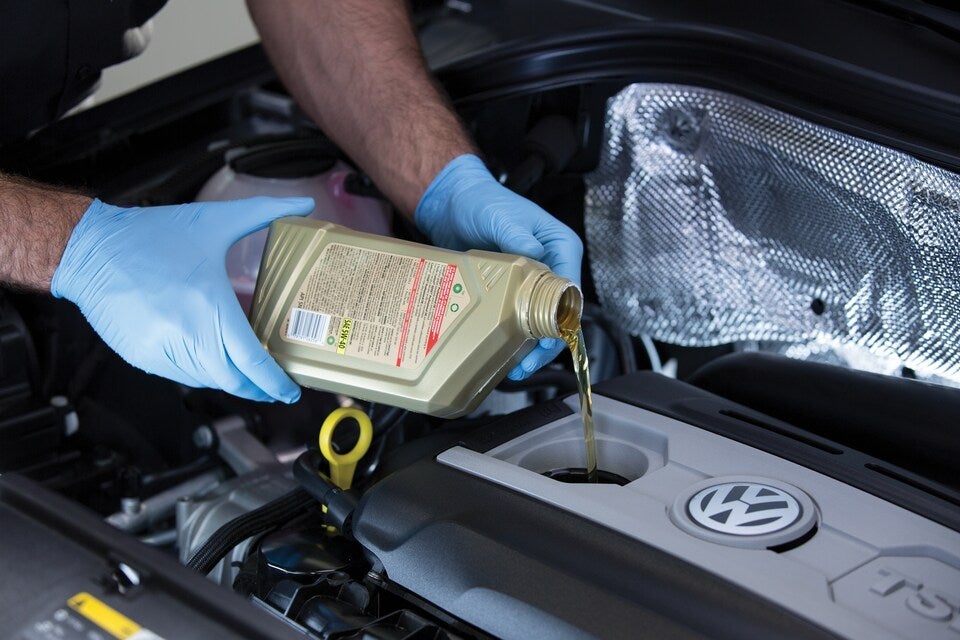
As a leading Jacksonville VW dealership, we get a lot of questions from drivers about how to best take care of their VWs. A lot of drivers specifically ask about the humble oil change, a service that has the power to protect your Volkswagen's engine. Here's everything you need to know to keep your VW running smoothly for a long time to come. Oil Change Intervals and Benefits: A Complete Guide from Your VW Dealership What Motor Oil Does Motor oil has a few critical functions that help keep your VW's engine running smoothly. First, oil lubricates the engine, helping the pistons move smoothly. Fresh, clean oil also gently removes any impurities or microscopic metal fragments, which are caught in the oil filter so they don't recirculate into the engine. Change Intervals: How Long Motor Oil Lasts The longevity of a motor oil can vary based on its origin. Conventional motor oil is a petroleum distillation byproduct and tends to be more affordable, but it also tends to have a shorter life. Most conventional oils last up to 3,000 miles or three months. Synthetic oils are man-made products and offer more mileage before breaking down in an engine. A typical synthetic oil can last roughly six months or 7,500 miles. Your maintenance team will always let you know how many months and miles your motor oil is rated for, and many locations will put an unintrusive sticker on the inside of your windshield with a reminder of when to change your motor oil. Should I Change By Miles or Months? You should always change your motor oil when you hit either the time limit or the mileage limit. Once it's poured from its container, motor oil breaks down both from use and from time. So whether you're putting lots of miles on your VW or it's sitting for prolonged periods, it will still need an oil service within the recommended limits. Should I Get Synthetic or Conventional Oil? In addition to their differing longevity, conventional and synthetic motor oils have different strengths. Generally, we recommend synthetic oil. It tends to outperform conventional oil in many common driving situations like cold weather or stop-and-go traffic. Additionally, if you tend to make multiple short trips rather than longer journeys, synthetic oil can perform better, since conventional oil doesn't perform as well as synthetic oil when it's cold. However, you can always have an open discussion with your maintenance team and describe your driving patterns to help find the perfect oil for your needs. When it's time to schedule an oil service, trust your VW to the people who know it best. Book your next oil service today at Tom Bush Volkswagen in Jacksonville, FL.

Alignment

The Role of Wheel Alignment in Preserving Your Volkswagen's Performance

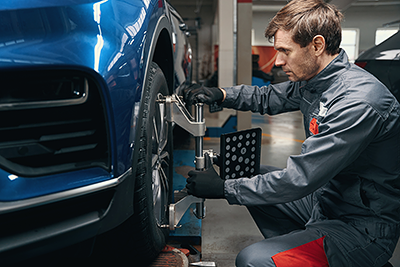
A wheel alignment is one of the most critical services you can schedule at your VW dealer. This service adjusts the direction and angle of your wheels so that they are perfectly parallel and often involves fine-tuning the suspension system to ensure your Volkswagen has a comfortable and smooth ride feel. The Role of Wheel Alignment in Preserving Your Volkswagen's Performance The main purpose of a tire alignment is to ensure the tread on all four tires is wearing evenly. If tires aren't aligned, different parts of your tire tread will wear down, which can eventually cause performance problems like reduced fuel economy. Driving on tires with uneven tread can negatively impact the traction your tires have and may even make steering straight more difficult. One of the cardinal signs of misaligned tires is difficult handling. It's common for a vehicle with poor alignment to pull to one side of the road, especially when the brakes are engaged. This can cause issues if you're driving on wet and rainy roads. Some drivers may even notice particular issues with cornering and braking when wheels aren't aligned correctly. How Often Do You Need Alignment at Your VW Dealer? You should schedule a tire alignment at least once a year or once every 10,000 to 12,000 miles. Some drivers may prefer to schedule an alignment service at the same time as a routine tire rotation for optimal road performance. However, you may want to schedule this service sooner if you notice performance issues, such as a steering wheel that isn't centered even when the vehicle is driving on a straight road. If you notice your tire tread seems to be wearing unevenly during your monthly tire air pressure check, it may be time to schedule an alignment service. This is particularly true if your tires are losing tread more quickly than usual or if you're stopping at the pump to fill up the tank more often. It's also wise to book an alignment service if you hit large road debris, take your VW off-roading, or drive over a big pothole. How Long Can You Drive With Misaligned Wheels? If you notice any signs of wheel misalignment, you should avoid driving your car and schedule service as soon as convenient. Driving on misaligned wheels can cause major issues with mechanical components, and you may even notice that your vehicle gets harder to handle over time. What Happens During Alignment Service? A VW mechanic may start your alignment service by taking your car out for a short test drive. It's also common to put your car on a raised platform right away to access the tires and suspension. A special alignment is typically used to perfect the angles of the tires, so this service usually doesn't take very long. When your wheels are out of alignment, you may notice marked performance issues that make it hard to drive your car straight. Book your maintenance appointment at Tom Bush Volkswagen in Jacksonville, FL to get your VW back in good driving condition.

Contact Us

Fill out this form below and we'll contact you shortly
*Required Fields