

When your Volkswagen needs a replacement part, the decision often comes down to one question. Should you choose OEM or aftermarket. The answer is not just about price. It is about how your vehicle is engineered to function as a complete system. Every Volkswagen is built with precise tolerances, calibrated components, and integrated technology. The parts you choose directly affect how those systems perform, how long they last, and how confidently you can rely on your vehicle day to day.
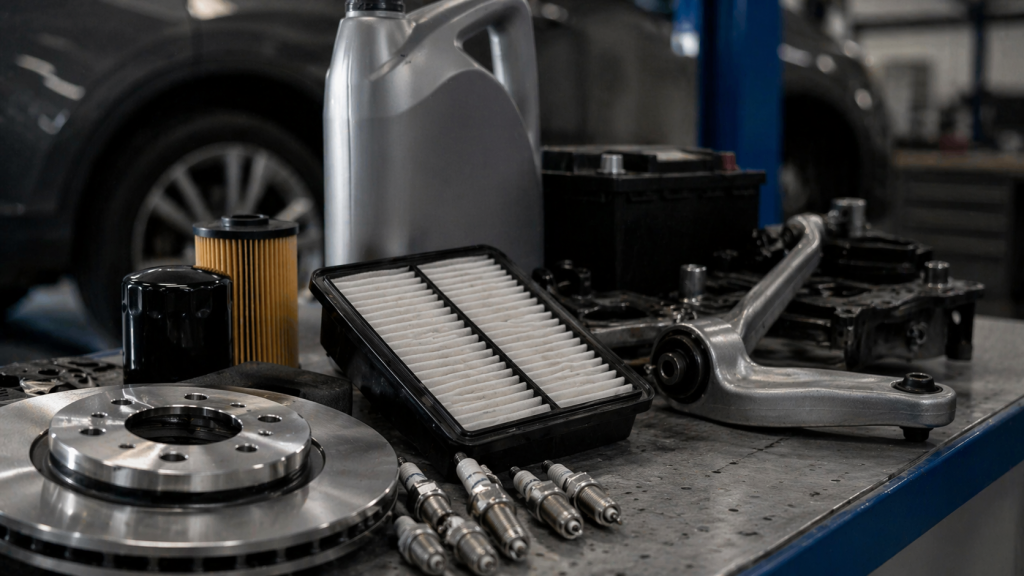
Understanding the difference between OEM and aftermarket Volkswagen parts requires looking beyond the surface. It means understanding how components are designed, how they interact with the vehicle, and what that means for long term ownership.
How Volkswagen OEM Parts Are Engineered for System Compatibility
Are OEM Volkswagen parts better than aftermarket. OEM parts are components designed and manufactured specifically for Volkswagen vehicles to match exact engineering specifications and system requirements.
Volkswagen engineers every vehicle as a connected system. Components such as sensors, braking systems, engine parts, and electronic modules are all designed to work together within defined tolerances. OEM parts are built using the same specifications, materials, and testing standards as the original components installed at the factory.
From a system perspective, this means:
- Each OEM part matches the exact dimensions and tolerances required by the vehicle
- Materials are selected to perform under specific stress and temperature conditions
- Components integrate directly with onboard systems and software
For example, a Volkswagen sensor is not just a standalone part. It communicates with the vehicle control modules, contributing to fuel efficiency, performance, and safety systems. An OEM replacement ensures that communication remains consistent and accurate.
For Volkswagen owners, this level of compatibility reduces the risk of system imbalance. The vehicle continues to operate as designed, without introducing variables that could affect performance or reliability.
How Aftermarket Parts Differ in Fitment and Material Consistency
Aftermarket parts are components produced by third party manufacturers, often designed to fit multiple vehicle types rather than a single Volkswagen model.
This broader design approach introduces variation. While some aftermarket parts meet high quality standards, others are built with different tolerances or materials that do not fully align with Volkswagen engineering.
From a technical standpoint, differences can include:
- Slight variations in dimensions that affect fitment
- Material differences that impact durability and wear
- Inconsistent calibration with electronic systems
These differences may not always be immediately visible. A part may install correctly but perform differently under real world conditions.
For example, a braking component with different material composition may wear faster or respond differently under heat. A sensor with slightly different calibration may send inconsistent data to the vehicle’s systems.
For Volkswagen drivers, this creates uncertainty. The vehicle may function, but not at the level it was engineered to achieve. Over time, these small variations can lead to larger issues, especially in systems that rely on precision.
Warranty Protection and Risk Differences Between Part Types
Do OEM Volkswagen parts come with a warranty. OEM Volkswagen parts include manufacturer backed warranty protection that supports both the part itself and its compatibility with the vehicle.
Warranty protection is not just about replacing a faulty component. It is about maintaining the integrity of the entire system. When OEM parts are used, they align with Volkswagen standards, reducing the likelihood of conflicts between components.
Aftermarket parts may offer their own warranties, but they do not always account for how the part interacts with the rest of the vehicle. If a non OEM part contributes to a larger issue, coverage may not extend to related repairs.
From an ownership perspective, this creates a difference in risk:
- OEM parts support system wide reliability and protection
- Aftermarket parts may isolate coverage to the component itself
- Integration issues may not be covered under warranty
For Volkswagen vehicles with advanced systems, including driver assistance and emissions controls, maintaining compatibility is critical. OEM parts help ensure that these systems continue to function within expected parameters.
Long Term Cost and Ownership Impact
Why are OEM Volkswagen parts more expensive. OEM parts reflect the cost of engineering precision, material quality, and system level testing required to ensure long term reliability.
At first glance, aftermarket parts often appear more affordable. However, cost should be evaluated over the full lifecycle of the component.
Key considerations include:
- Durability and how long the part is expected to last
- Risk of additional repairs caused by incompatibility
- Labor costs associated with repeat repairs
An aftermarket part that fails earlier or affects surrounding components can lead to additional service visits. In contrast, an OEM part is designed to perform consistently within the system, reducing the likelihood of repeat issues.
For Volkswagen owners, this means the initial cost difference does not always reflect the true cost of ownership. Long term value comes from reliability, consistency, and reduced downtime.
How to Evaluate the Right Part Choice for Your Volkswagen
Choosing between OEM and aftermarket parts requires understanding how the decision affects your specific vehicle and driving needs. The goal is not simply to replace a part. It is to maintain how your Volkswagen performs over time.
When evaluating your options, consider:
- How critical the component is to vehicle performance or safety
- Whether the part interacts with electronic systems or sensors
- The importance of maintaining warranty coverage
- Your long term ownership plans
For essential systems such as braking, engine components, and electronic modules, OEM parts provide consistency and reliability that align with Volkswagen engineering. For less critical components, some aftermarket options may be suitable, depending on quality and application.
The key is understanding the role each part plays within the vehicle. Volkswagen vehicles are designed as integrated systems. Maintaining that integration is what supports performance, efficiency, and long term dependability.
When you understand how OEM and aftermarket parts differ, the decision becomes clearer. It is not just about replacing a part. It is about preserving how your Volkswagen is designed to perform every time you drive it.
Connect with us


