

Volkswagen repair estimates explained starts with understanding how diagnostics, labor, parts, inspections, and repair verification shape the final repair cost before service approval. Modern Volkswagen vehicles use advanced electronics, communication modules, sensors, and calibration procedures that require more than a quick visual inspection. A repair estimate is not simply a price quote. It is a breakdown of the testing, repair planning, replacement parts, labor procedures, and verification steps required to identify and correct a vehicle issue properly.
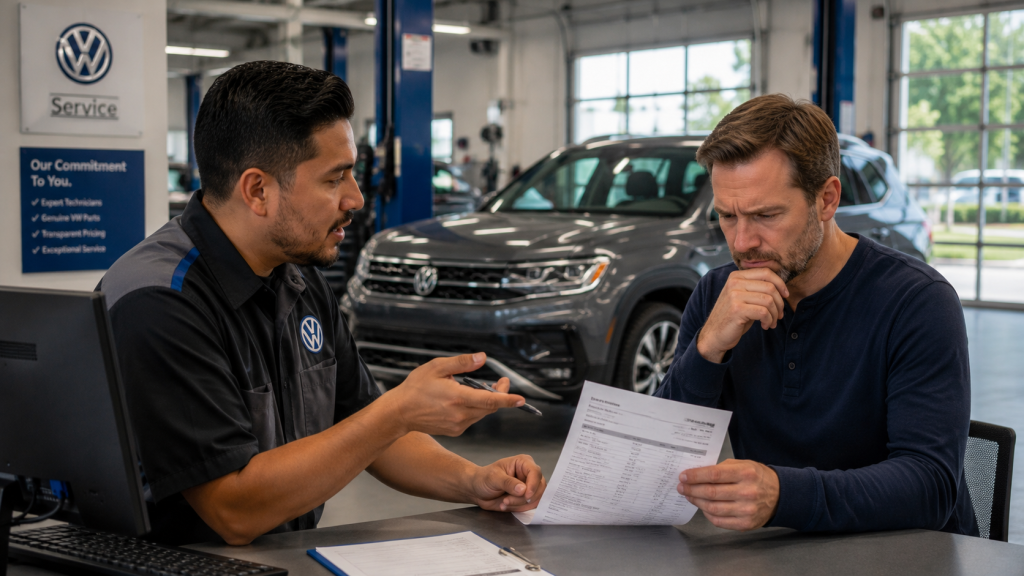
What a Volkswagen Repair Estimate Includes
What are you paying for in a repair estimate? A repair estimate combines diagnostic testing, technician labor, replacement components, inspections, taxes, and service procedures tied to the specific issue being addressed.
When a Volkswagen enters the service department, the estimate process usually begins with concern verification. The technician reviews the issue reported by the driver, checks warning lights, performs an inspection, and connects the vehicle to factory level diagnostic equipment. That process creates the foundation for the estimate.
A Volkswagen repair estimate may include:
- Diagnostic testing
- Technician labor time
- OEM Volkswagen parts
- Electronic calibration procedures
- Fluid replacement
- Taxes and shop fees
- Multi point inspection findings
The estimate structure changes based on the repair type. A brake service estimate will look different from a module communication issue or cooling system repair because each service requires different labor procedures, tools, testing steps, and component access.
For shoppers, the important detail is understanding that the estimate reflects the repair path required to diagnose and correct the issue fully, not simply replace one part.
Why Diagnostic Testing Is Part of Repair Pricing
Why is there a diagnostic fee before repairs even begin? Diagnostic testing is the process technicians use to identify the actual source of the problem before replacement work starts.
Modern Volkswagen models contain multiple onboard control modules that communicate across the vehicle. A warning light or fault code does not automatically identify the failed component. Fault codes point technicians toward a system area that requires deeper testing.
For example, a check engine light tied to an oxygen sensor code does not always mean the oxygen sensor itself failed. Wiring problems, vacuum leaks, fuel delivery concerns, exhaust leaks, or communication interruptions can create similar code patterns. The technician must verify the root cause before repairs are approved.
Diagnostic procedures may involve:
- Full system scanning
- Live data monitoring
- Voltage testing
- Circuit inspection
- Pressure testing
- Sensor signal analysis
- Road testing
Volkswagen diagnostic procedures can become more involved when electrical communication modules are connected to multiple systems at once. One issue can create secondary faults across several modules. That is why diagnostic labor exists separately from the actual repair.
The goal is not replacing parts until the warning disappears. The goal is identifying the actual failure source before unnecessary repairs happen.
How Labor Times and OEM Parts Shape Repair Cost
Why do labor charges vary between repairs? Technician labor is calculated using standardized repair operations based on the complexity of the repair, required disassembly, testing procedures, and calibration steps.
Some Volkswagen repairs require limited access and short installation time. Others involve major component removal, electronic programming, or recalibration after installation. Even repairs involving similar parts can have different labor totals because of where the component is located and how many procedures are required before replacement can begin.
Volkswagen electronic architecture also changes the repair process. After replacing certain components, technicians may need to perform:
- Sensor calibration
- Module coding
- Software adaptation
- Steering angle resets
- Radar alignment
- Communication verification scans
OEM Volkswagen parts also influence estimate structure. Factory parts are designed around exact fitment, communication compatibility, and calibration standards already programmed into the vehicle architecture. That matters with modern driver assistance features, electronic throttle systems, adaptive safety equipment, and engine management controls.
An aftermarket part may physically fit the vehicle but still create communication problems, warning lights, or calibration interruptions if the module data does not match factory specifications correctly.
For Volkswagen repairs involving electronics, sensors, drivability concerns, or safety equipment, part compatibility plays a major role in repair accuracy.
Why Repair Estimates Sometimes Change After Inspection
Why can repair pricing increase after the inspection process begins? Some issues are not fully visible until components are removed or secondary testing is completed.
An estimate may begin with the most visible failure based on the initial inspection. Once technicians access the repair area, additional wear, damaged hardware, fluid contamination, wiring problems, or secondary failures can become visible.
A cooling system leak may uncover additional hose deterioration. Brake repairs may reveal rotor damage or seized hardware. Suspension repairs may expose worn bushings or alignment issues that were hidden during the first inspection.
Volkswagen repairs involving turbocharged engines, electrical systems, or sealed components can require partial disassembly before the full repair scope becomes clear.
Estimate revisions may happen because of:
- Hidden component damage
- Additional failed parts
- Corrosion
- Fluid contamination
- Wiring deterioration
- Secondary electronic faults
- Calibration requirements discovered during repair
That does not automatically mean unnecessary repairs are being added. It means the technician now has access to information that was not visible during the first stage of inspection.
A transparent repair process explains what changed, why it changed, and how the added repair relates to the original concern.
How Volkswagen Repairs Are Verified Before Vehicle Return
How do technicians confirm the repair fixed the problem? Repair verification is the final testing process performed after installation and calibration procedures are complete.
For Volkswagen vehicles, this process can involve clearing faults, rescanning modules, monitoring live sensor data, road testing, recalibrating electronic systems, and confirming proper communication between onboard modules.
Repair verification may include:
- Post repair scan testing
- Warning light confirmation
- Road testing
- Sensor calibration checks
- Leak inspections
- Battery charging system review
- Communication module verification
This final stage matters because the repair process does not end when a part is installed. Modern Volkswagen vehicles rely on connected electronic communication across multiple systems. A replacement component may still require adaptation procedures before the vehicle recognizes the repair properly.
For drivers, repair verification provides confidence that the original concern was corrected, supporting systems are communicating correctly, and the vehicle is ready to return to normal operation.
Volkswagen repair estimates are built around diagnosis, confirmation, repair planning, and validation. Understanding how those steps connect makes the estimate easier to evaluate and helps shoppers understand where repair costs originate before approving service.
Connect with us


