

Volkswagen Atlas vs Grand Highlander comparisons usually begin with third row space, but cargo layout, passenger comfort, technology usability, and family access patterns shape the larger decision. Families shopping for a three row SUV are evaluating more than passenger capacity alone. The real question is how the SUV functions once child seats, luggage, sports equipment, backpacks, groceries, and multiple passengers all begin sharing the same cabin space.
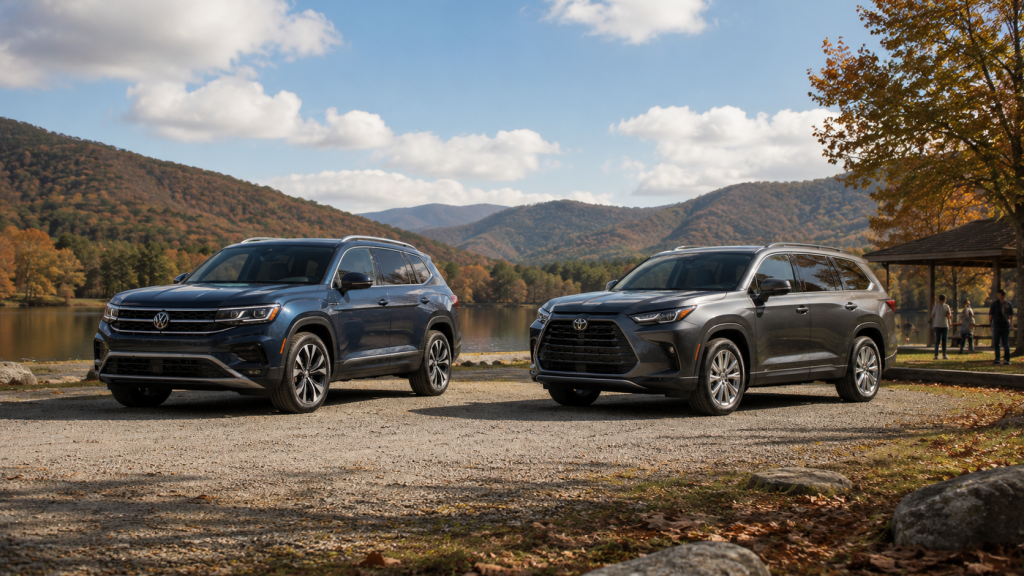
The Volkswagen Atlas and Toyota Grand Highlander both target larger families needing flexible seating and modern technology, though their interior priorities differ in several important ways. Cabin packaging, seat movement, cargo access, and infotainment organization all influence how comfortable and manageable the SUV feels during daily use.
Third Row Space and Passenger Comfort
Which SUV has more usable third row space? Third row comfort is influenced by roof height, floor placement, seat geometry, cabin width, and how far the second row can slide forward.
The Volkswagen Atlas places a major focus on passenger packaging across all three rows. Its upright body shape and wider cabin layout create a more open seating environment in the rear section of the SUV. Adult passengers generally notice more shoulder room and headroom in the third row, which becomes more noticeable during longer drives or when the SUV is fully occupied.
The Grand Highlander expands rear seating compared with the standard Highlander and provides stronger third row usability than many midsize SUVs. The cabin still balances passenger space alongside hybrid packaging considerations and fuel efficiency priorities, creating a slightly different interior feel than the Atlas.
Seat height changes comfort as well. A higher third row seat position usually creates better leg support for adult passengers. Lower seating positions can create a knees-up posture that becomes less comfortable during road trips.
Families comparing these SUVs should evaluate:
- headroom in the third row
- shoulder space across rear seating
- adult passenger comfort during longer drives
- how easy passengers enter and exit the rear seats
- whether second row adjustment creates enough access room
For families regularly carrying older children, teenagers, or adults in the rear seats, the Volkswagen Atlas generally creates a roomier passenger impression.
Cargo Space and Rear Storage Layout
Cargo capacity numbers only explain part of the story. Families need to understand how usable the storage area remains once every seating row is occupied.
The Volkswagen Atlas uses a flatter cargo floor and a taller rear opening that supports easier loading of larger items. Strollers, sports bags, coolers, grocery bins, and travel luggage fit more naturally because of the wider rear cargo layout. Vertical loading room also matters because stacked cargo quickly becomes an issue during vacations or tournament travel.
The Grand Highlander still delivers strong family-oriented cargo flexibility, though some configurations prioritize efficiency packaging and hybrid component placement. Families moving larger equipment may notice differences in loading shape and floor depth when both SUVs are viewed side by side.
Rear cargo usability changes based on:
- cargo floor depth
- rear hatch opening height
- vertical storage space
- underfloor storage design
- third row folding layout
- rear wheel well intrusion
This becomes noticeable during family travel. A cargo area may technically provide enough cubic footage, but uneven floor shapes or tighter loading dimensions can reduce how easily larger items fit once passengers occupy every row.
The Atlas tends to create a more open cargo loading environment for families frequently traveling with multiple passengers and larger gear loads.
Second Row Access and Family Movement
How easy is third row access with child seats installed? This is one of the biggest areas missed in many three row SUV comparisons.
Second row movement controls, seat rail travel distance, and aisle width all influence how manageable rear access feels during everyday use. Families with younger children may access the third row constantly during school pickups, sports events, and family outings.
The Volkswagen Atlas uses large rear door openings and generous second row slide travel that help create easier movement into the third row. When child seats occupy part of the second row, access pathways still remain relatively manageable because of the SUV’s wider cabin structure.
The Grand Highlander also supports flexible second row configurations, though passenger movement can feel slightly tighter depending on seating arrangement and child seat positioning.
Important areas families should physically test:
- second row slide movement
- rear door opening size
- third row step-in clearance
- child seat interference
- aisle width between seats
- ease of reaching rear buckles and seat belts
This part of the comparison matters because family usability is shaped by repetition. Small frustrations during daily passenger movement become much more noticeable over months and years of ownership.
Atlas vs Grand Highlander Technology Layout
Which SUV technology setup is easier to use while driving? Technology matters less by feature count alone and more by visibility, organization, and ease of access.
The Volkswagen Atlas uses a straightforward dashboard structure with clear screen placement and relatively simple menu organization. Controls are positioned to reduce visual clutter, helping drivers interact with navigation, climate controls, and media functions without excessive distraction.
The Grand Highlander offers a strong technology package as well, including large display options and extensive driver assistance integration. Toyota’s system prioritizes broad feature availability and hybrid information displays, which appeal strongly to efficiency-focused families.
Technology usability should be evaluated through:
- screen visibility during daylight
- menu simplicity
- physical control accessibility
- climate control interaction
- rear passenger charging access
- driver distraction during adjustments
Large screens alone do not automatically create a better experience. During family driving situations, simpler layouts and easier access can reduce distraction while managing navigation, calls, music, and passenger adjustments.
The Atlas tends to emphasize cabin simplicity and open visibility, while the Grand Highlander balances family technology with hybrid-oriented information integration.
Which SUV Fits Different Family Priorities?
Choosing between the Volkswagen Atlas and Toyota Grand Highlander comes down to which family priorities matter most during everyday driving.
The Atlas places heavy emphasis on:
- passenger space
- third row comfort
- wide cabin packaging
- cargo openness
- simplified interior usability
The Grand Highlander strongly appeals to families prioritizing:
- hybrid availability
- fuel efficiency
- modern technology integration
- balanced family versatility
Families needing maximum passenger room, easier third row access, and a more open cargo layout will likely find the Volkswagen Atlas better aligned with how larger households move through daily life. The Atlas creates a strong balance between passenger comfort, family practicality, and cabin simplicity without forcing families to compromise rear seating usability once every row is occupied. Its wider cabin structure, approachable technology layout, and more accommodating cargo configuration continue to make it one of the stronger choices for families prioritizing space and flexibility inside the three row SUV segment.
The Grand Highlander brings strong efficiency focused appeal and modern family technology, though the Volkswagen Atlas stands out for families who place higher value on passenger comfort, loading flexibility, and everyday usability across all three rows. For larger households regularly carrying passengers, luggage, sports gear, or travel equipment, the Atlas continues to position itself as one of the leading family focused SUVs for shoppers wanting space that feels genuinely usable throughout the entire cabin.
Connect with us


