

Choosing between the Volkswagen Taos and the Toyota Corolla Cross is not just about comparing specs. It is about understanding how each vehicle is engineered to support daily driving. Both models sit in the subcompact SUV segment, but they approach space, performance, and traction differently.
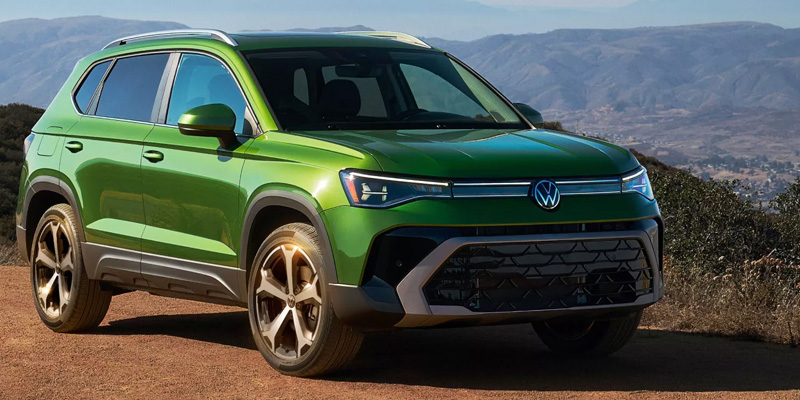
Volkswagen builds the Taos around usable space and responsive performance, while the Corolla Cross focuses on simplicity and efficiency. The result is two vehicles that look similar on paper but feel very different in real-world driving. Understanding those differences helps you decide which one fits your routine, your environment, and how you actually drive.
Interior Space and How Each SUV Uses It
When comparing the Volkswagen Taos and Toyota Corolla Cross, interior space is not just about measurements. It is about how that space is designed to be used.
The Volkswagen Taos is built on a platform that prioritizes passenger room and flexibility. This allows for more rear legroom and a more open cabin layout. The seating position, door openings, and cargo access points are all designed to make everyday entry, exit, and storage easier.
From a system perspective:
- The Taos uses a longer wheelbase to create more rear passenger space
- Cabin layout is designed for visibility and comfort over long drives
- Storage areas are positioned for accessibility, not just volume
The Corolla Cross, in contrast, uses a more compact platform. While it offers practical space, the interior is structured with efficiency in mind rather than expansion. Rear seat space is more limited, and cargo access is slightly tighter in comparison.
For daily driving, this translates to:
- The Taos feeling more open and accommodating for passengers
- The Corolla Cross focusing on compact practicality
If your routine includes passengers, commuting, or longer drives, the Taos provides a more comfortable environment. If your priority is simplicity and compact maneuverability, the Corolla Cross delivers a more traditional approach.
How AWD Systems Work in the Taos and Corolla Cross
Does the VW Taos have AWD. The Volkswagen Taos offers an available all wheel drive system that automatically distributes power between the front and rear wheels to maintain traction.
All wheel drive systems are designed to respond to changing road conditions. The key difference is how they react and how quickly they adjust.
The Taos uses a system that continuously monitors traction and adjusts power distribution based on wheel slip and driving conditions. This creates a balanced response that supports stability on wet roads, uneven surfaces, and light off pavement conditions.
The Corolla Cross also offers an available AWD system, but it is designed with a stronger focus on efficiency. It engages the rear wheels when needed but prioritizes fuel economy during normal driving conditions.
From a real-world standpoint:
- The Taos AWD system provides a more engaged driving feel with consistent traction support
- The Corolla Cross AWD system activates as needed, focusing on efficiency over continuous engagement
For drivers in areas with changing weather or road conditions, the Taos system offers a more confidence focused experience. It responds in real time and maintains stability without waiting for traction loss to occur.
Engine Performance and Driving Feel Differences
The difference in driving feel between the Taos and Corolla Cross comes down to how their engines deliver power.
The Volkswagen Taos uses a turbocharged engine. A turbocharged engine uses forced air to increase power output without increasing engine size. This allows the engine to deliver strong torque at lower speeds.
The Corolla Cross uses a naturally aspirated engine. A naturally aspirated engine relies on atmospheric pressure to draw air into the engine, resulting in a more gradual power delivery.
From a technical perspective:
- Turbocharged engines provide quicker acceleration and more responsive power
- Naturally aspirated engines deliver steady and predictable performance
In real-world driving:
- The Taos feels more responsive when merging, accelerating, or navigating traffic
- The Corolla Cross provides a smoother, more gradual acceleration experience
For drivers who want a more engaging and responsive feel, the Taos offers a clear advantage. Its engine design supports quicker reactions and a more dynamic driving experience.
Cargo Flexibility and Everyday Practicality
Cargo space is not just about how much you can fit. It is about how easily you can use that space in everyday situations.
The Volkswagen Taos is designed with a focus on usable cargo layout. The cargo area is shaped to accommodate larger items, and the rear seats fold to create a more continuous load floor.
Key advantages include:
- Wider cargo opening for easier loading
- Flat load floor when seats are folded
- Flexible space for both daily items and larger cargo
The Corolla Cross offers practical cargo space, but the layout is more compact. The shape of the cargo area and seat folding design can limit how larger items fit.
For everyday use:
- The Taos supports a wider range of cargo needs
- The Corolla Cross handles basic storage efficiently but with less flexibility
This difference becomes more noticeable when carrying larger items, traveling, or managing multiple passengers and cargo at the same time.
Which SUV Fits Different Driving Needs
Volkswagen Taos vs Toyota Corolla Cross which is better. The answer depends on how you prioritize space, performance, and driving confidence.
The Volkswagen Taos is designed for drivers who want:
- More interior space for passengers and cargo
- A responsive engine that supports everyday driving demands
- An AWD system that provides consistent traction and confidence
The Toyota Corolla Cross is suited for drivers who prioritize:
- Simplicity and predictable performance
- Fuel efficiency in daily commuting
- A compact design that is easy to manage in tight spaces
Both vehicles serve the same segment, but they are built with different priorities. The Taos focuses on flexibility, responsiveness, and usable space. The Corolla Cross focuses on efficiency and simplicity.
When you evaluate them side by side, the decision becomes less about which one is better overall and more about which one aligns with how you drive and what you need from your vehicle every day.
Connect with us


