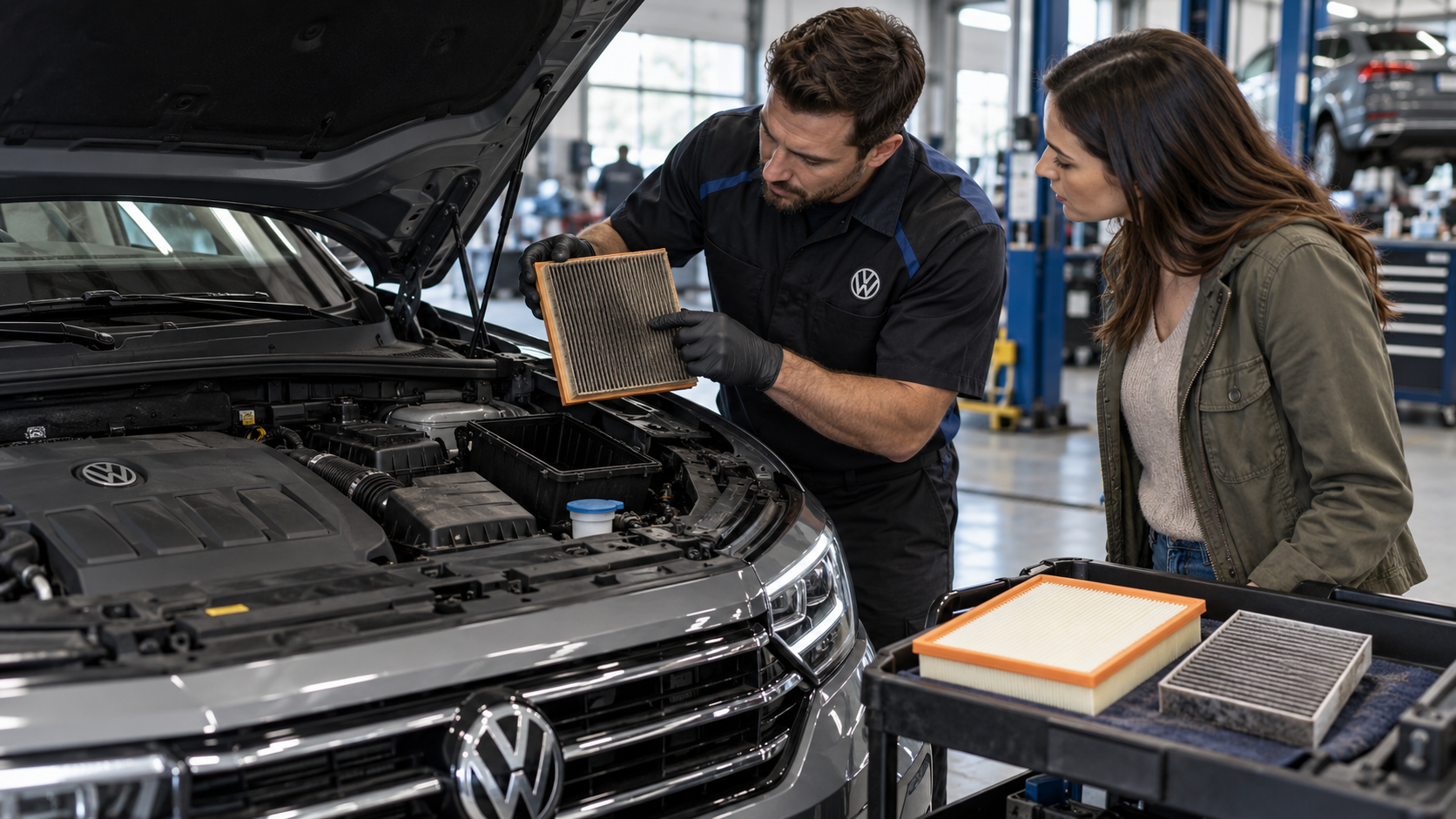

Know Which Volkswagen Air Filter Needs Attention Volkswagen air filter replacement starts with knowing which filter needs attention and what signs justify an inspection. Additionally, your Volkswagen uses separate filters for engine intake air and cabin ventilation. Each filter handles a different job, so the signs of trouble are different. Furthermore, the engine air filter sits in the intake path and traps dust and debris before air reaches the engine. In addition, the cabin air filter works with the ventilation system and filters air entering the passenger compartment. Does your Volkswagen have more than one air filter? Yes. The engine filter protects the intake path, while the cabin filter supports cleaner airflow through the HVAC vents. Because the two filters serve different areas, one symptom should not be used to judge both. A musty vent smell points toward cabin filtration. By contrast, visible debris in the engine filter points toward the intake side. Signs the Engine Air Filter Should Be Inspected Additionally, the engine air filter collects airborne debris before it can travel farther into the intake tract. As the filter fills, airflow through the media can become restricted. How can you tell whether the engine air filter needs attention? Start with its condition and any change that makes an intake inspection sensible. A symptom alone does not prove the filter is the cause. Several signs can support an inspection: Heavy dirt, leaves, or debris across the filter media can show that the filter has collected substantial material. Torn, collapsed, or damaged filter media calls for service because the filter may no longer seal or filter correctly. Sluggish response or rough running should be diagnosed, with the air filter included among the items a technician may inspect. A warning light needs diagnosis instead of an automatic filter replacement. The same applies to unusual noises or engine response changes. Those symptoms can have several causes, so inspection matters more than guessing. Signs the Cabin Air Filter Should Be Inspected Furthermore, the cabin filter sits within the ventilation path and captures pollen, dust, and other airborne material. Its condition can change how air moves through the cabin vents. How can you tell whether the cabin filter needs attention? Weak vent airflow, stale odors, and visible contamination are useful reasons to inspect it. These signs relate more directly to the HVAC path than to engine intake airflow. Common cabin filter signs include: Airflow from the vents feels weaker than expected even when the fan setting is increased. A stale or musty odor appears when the heating or air conditioning system is running. The filter shows heavy dust, leaves, pollen, or other debris during inspection. Fogging concerns can also justify an HVAC inspection. However, the cabin filter is only one part of that system. A technician can check the filter along with other ventilation components when airflow or moisture control seems unusual. Volkswagen Air Filter Replacement Timing Volkswagen air filter replacement timing should come from the maintenance schedule for the exact model and model year. One mileage number does not fit every Volkswagen. In addition, current Volkswagen maintenance literature shows why that matters. Some schedules list engine air filter service at 60,000 miles or six years. Dust and pollen filter service can appear at 40,000 miles or two years. Other models or years may differ. Local dust and debris can also change when an inspection makes sense. Volkswagen notes that excessive dust can call for some maintenance work between the normal intervals. Jacksonville drivers may encounter pollen, road dust, leaves, and other airborne debris during the year. Those factors can justify checking filter condition sooner when symptoms appear. Therefore, use the Volkswagen maintenance schedule for your vehicle. A technician can also confirm the next service point from the vehicle information on file. What a Filter Inspection Can Confirm A filter inspection gives a technician direct evidence instead of relying only on symptoms. The goal is to confirm filter condition and housing condition. The technician also checks whether both remain clean and secure. During an inspection, a technician can review several areas: The filter media can be checked for heavy contamination, tears, collapse, or damage. The housing can be checked for loose debris, poor fit, or sealing concerns around the filter. The surrounding intake or ventilation area can be checked when dirt, odor, or airflow concerns remain. Visible dirt alone needs context because filters are meant to collect material. The question is whether contamination, damage, or restriction has reached the point where replacement is due. This inspection also helps separate filter concerns from other causes. If the filter looks normal, the technician can continue checking the system linked to the symptom. Plan Volkswagen Air Filter Service Air filter service works best when symptoms, filter condition, and the maintenance schedule are reviewed together. That keeps replacement decisions tied to the vehicle instead of a generic mileage rule. Schedule an inspection when vent airflow drops, odors appear, or the filter looks heavily contaminated. Also schedule service when the maintenance schedule calls for it. Engine response concerns should also be diagnosed when they persist. Tom Bush Volkswagen in Jacksonville can inspect engine and cabin air filters during service. You can schedule Volkswagen service with Tom Bush Volkswagen when inspection or replacement is due. Before your appointment, note the symptom you noticed and when it started. That information gives the technician more context during inspection. The next step should match the evidence. A clean filter may point the diagnosis elsewhere. A restricted or damaged filter may be ready for replacement. Either way, a direct inspection gives you a clearer answer than relying on one symptom alone.