

Owning a vehicle involves more than the initial purchase price. Long term ownership costs include routine maintenance, scheduled inspections, and replacement of service components over time. Drivers researching Volkswagen maintenance plans often want to understand how prepaid maintenance works, what services are included, and whether locking in maintenance coverage can reduce the unpredictability of future service expenses.
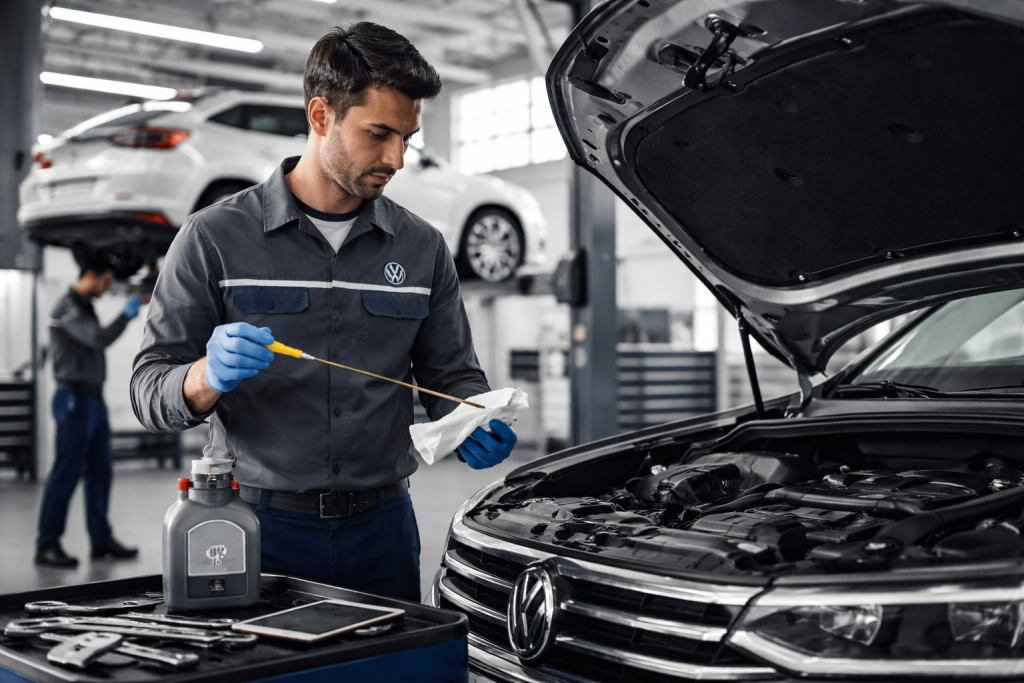
Volkswagen offers prepaid maintenance options designed to cover factory recommended service intervals using Volkswagen trained technicians and Genuine VW Parts. Understanding how these plans work helps drivers evaluate whether a prepaid maintenance plan fits their ownership strategy and how it compares with paying for service individually as maintenance needs arise.
A closer look at how Volkswagen maintenance plans are structured explains why many drivers consider prepaid maintenance when planning long term vehicle ownership.
How Volkswagen Maintenance Plans Work
Many drivers researching Volkswagen ownership ask what a Volkswagen maintenance plan actually includes and how prepaid scheduled maintenance differs from paying for each service visit individually. A Volkswagen prepaid maintenance plan is a service contract that covers the cost of specific factory recommended maintenance intervals in advance.
Vehicle manufacturers define scheduled maintenance intervals based on mileage and operating conditions. These intervals are designed to ensure that key vehicle systems continue to operate properly throughout the life of the vehicle.
Volkswagen maintenance plans follow these manufacturer defined service intervals. When a driver purchases prepaid maintenance coverage, the cost of these scheduled service visits is paid upfront rather than individually when each maintenance milestone occurs.
This approach creates a predictable ownership structure. Instead of encountering maintenance expenses at different points during the ownership cycle, the driver locks in the cost of covered service intervals at the time the plan is purchased.
For drivers who prefer predictable ownership budgeting, prepaid maintenance can simplify the long term cost of maintaining the vehicle.
What Volkswagen Maintenance Plans Cover at Scheduled Service Intervals
Another common question shoppers ask is what services are actually included in a Volkswagen maintenance plan. Maintenance plans typically cover services outlined in the factory recommended maintenance schedule for each Volkswagen model.
Scheduled maintenance services focus on preventive care that helps maintain vehicle reliability and performance over time. These services are performed at defined mileage intervals and often include inspections and replacement of components that naturally wear during everyday driving.
Typical services included in Volkswagen scheduled maintenance intervals may include:
• engine oil and oil filter replacement
• multi point vehicle inspections
• tire rotation when applicable
• cabin air filter replacement at designated intervals
• brake system inspection
• fluid level checks and system evaluations
These services are designed to help maintain proper operation of engine systems, braking components, and vehicle safety features.
By following manufacturer defined maintenance schedules, technicians can identify potential wear or developing issues early, helping maintain vehicle performance throughout the ownership period.
How Prepaid Maintenance Changes Long Term Ownership Cost
One of the most important financial advantages of prepaid maintenance is the ability to convert future service expenses into a fixed cost. Many drivers researching Volkswagen maintenance plans ask whether prepaid coverage actually saves money compared with paying for each service visit separately.
Prepaid maintenance does not eliminate the need for routine service, but it changes how those costs are structured.
When maintenance is purchased as a plan, the price of covered services is locked in at the time the plan is purchased. This protects the owner from potential increases in parts and labor pricing that may occur over the life of the vehicle.
For example, routine services such as oil changes or scheduled inspections may gradually increase in cost as labor rates and parts pricing change over time. A prepaid maintenance plan secures the price of covered service intervals before those changes occur.
Drivers evaluating maintenance plans often consider several financial factors:
• how frequently scheduled maintenance will occur during ownership
• whether service pricing is likely to increase over time
• how predictable they want long term maintenance costs to be
For owners who plan to keep their vehicle for several years, locking in service pricing can provide budgeting stability and reduce uncertainty about future maintenance expenses.
Why OEM Service Quality Matters in a Volkswagen Maintenance Plan
Maintenance plan value is not determined only by cost. Service quality also plays a role in long term vehicle performance and reliability.
Volkswagen maintenance plans are designed to be performed by Volkswagen certified technicians who are trained specifically on Volkswagen vehicles and systems. These technicians use diagnostic tools and service procedures designed by Volkswagen engineers.
Service quality can influence several aspects of vehicle ownership:
• accurate diagnosis of developing mechanical issues
• correct service procedures for complex vehicle systems
• use of parts engineered for specific Volkswagen models
Volkswagen maintenance plans also emphasize the use of Genuine VW Parts during scheduled service visits. These components are designed to match the engineering specifications of Volkswagen vehicles.
Using manufacturer designed parts helps maintain proper fit, performance, and durability across major vehicle systems such as engine components, braking systems, and filtration systems.
For drivers who want maintenance performed according to manufacturer standards, OEM backed service can provide additional confidence in the quality of scheduled maintenance.
How to Evaluate Whether a Volkswagen Maintenance Plan Fits Your Ownership Strategy
Not every driver approaches vehicle ownership the same way. Some drivers prefer to handle maintenance expenses as they occur, while others prefer to plan maintenance costs in advance.
Evaluating whether a Volkswagen maintenance plan fits your ownership strategy typically involves considering several factors related to driving habits, ownership duration, and cost preferences.
Drivers often evaluate maintenance plans by considering:
• how long they plan to keep the vehicle
• how many miles they expect to drive each year
• whether they prefer fixed ownership costs
• how important manufacturer service standards are to them
Another factor that influences maintenance planning is the included Carefree Maintenance coverage available on many new Volkswagen vehicles. This program covers the first scheduled maintenance visits during the early ownership period.
After those initial services are completed, additional prepaid maintenance plans may extend coverage for later scheduled service intervals.
Understanding how included maintenance coverage and optional prepaid plans work together can help drivers determine whether extended maintenance coverage aligns with their long term ownership plans.
Understanding the Long Term Value of Volkswagen Maintenance Planning
Routine maintenance plays an important role in preserving vehicle performance, reliability, and long term ownership value. Scheduled service intervals help ensure that engine systems, braking components, and other critical systems continue to operate properly throughout the life of the vehicle.
Volkswagen maintenance plans provide a structured way to approach that responsibility by aligning service visits with manufacturer recommended maintenance schedules while locking in the cost of those services in advance.
For many drivers, this structure offers a balance between predictable ownership costs and manufacturer guided service quality. Understanding how maintenance plans work and what they cover allows vehicle owners to make more informed decisions about how they plan for long term vehicle care.
Connect with us


