

For decades the Volkswagen Golf GTI has represented one of the most recognizable examples of the modern hot hatch. Drivers searching for the 2026 Volkswagen Golf GTI are usually trying to understand more than just horsepower numbers. They want to know how the GTI produces quick acceleration, why it feels so composed in corners, and how Volkswagen engineering continues to balance everyday usability with enthusiast-level performance.
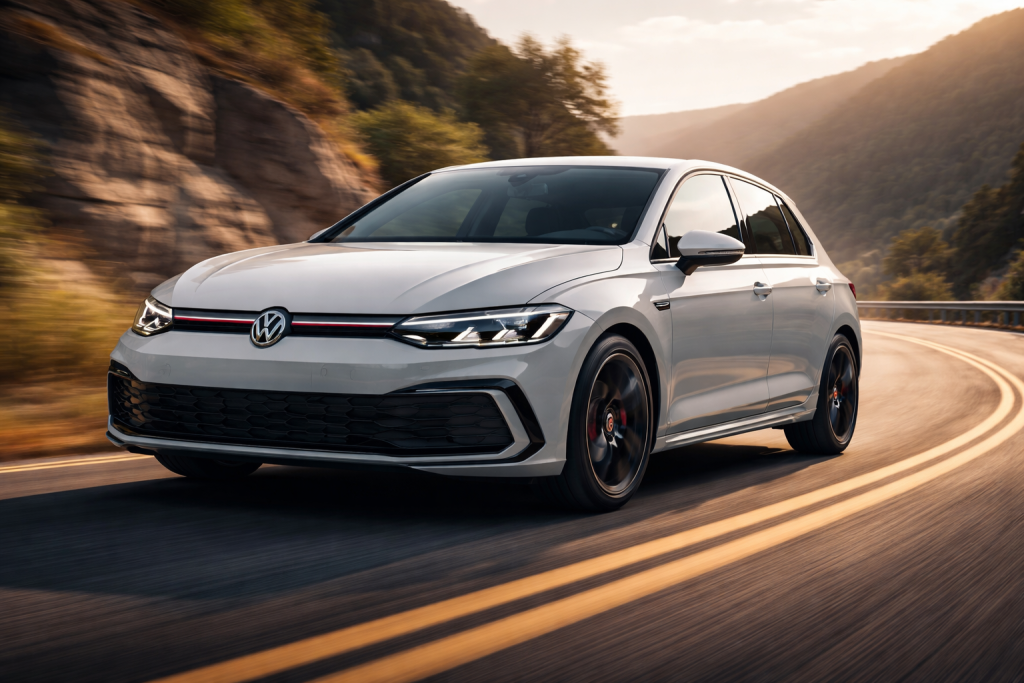
The appeal of the 2026 Volkswagen Golf GTI comes from a combination of mechanical systems working together rather than a single performance figure. Turbocharged power delivery, electronically controlled traction systems, precise chassis tuning, and adaptable suspension technology all contribute to the GTI’s reputation as a performance car that remains practical enough for daily driving.
Understanding how these systems work helps explain why the GTI continues to stand out in the hot hatch segment.
Turbocharged Power Delivery in the 2026 Volkswagen Golf GTI
Many shoppers researching the 2026 Volkswagen Golf GTI ask what engine the vehicle uses and why the GTI feels responsive even at everyday speeds. The 2026 Volkswagen Golf GTI uses a turbocharged 2.0 liter four cylinder engine designed to produce strong torque across a broad range of engine speeds.
Turbocharging increases engine output by compressing incoming air before it enters the combustion chamber. This process allows the engine to burn more fuel efficiently during each combustion cycle, producing more power from a relatively compact engine displacement.
The 2026 Volkswagen Golf GTI turbocharged engine delivers strong low end torque, which plays an important role in how the car feels in real world driving. Instead of requiring high engine speeds to produce power, the GTI engine generates meaningful pulling force earlier in the rev range.
For drivers, this creates several noticeable benefits:
• quicker response when accelerating from traffic lights
• confident highway merging without excessive downshifting
• stronger mid range acceleration when passing slower vehicles
The result is performance that feels accessible and immediate rather than dependent on high rpm driving.
How the Volkswagen Golf GTI VAQ Differential Improves Cornering Grip
One of the most important handling technologies in the 2026 Volkswagen Golf GTI is the VAQ electronically controlled limited slip differential. Many drivers ask how a front wheel drive performance car maintains traction during aggressive cornering.
The Volkswagen Golf GTI VAQ differential is designed to actively manage how torque is distributed between the front wheels. Unlike a traditional open differential, which sends power equally to both wheels regardless of traction, the VAQ system can direct more power to the wheel with greater grip.
The system uses electronically controlled clutch packs that respond to steering input, throttle position, and wheel speed sensors. When the vehicle detects that one front wheel is losing traction during a turn, the VAQ differential adjusts torque distribution to maintain forward momentum and reduce wheelspin.
This technology improves performance in several ways:
• increased traction when accelerating out of corners
• reduced inside wheelspin during aggressive driving
• improved steering stability under power
For drivers exploring winding roads or spirited driving situations, the Volkswagen Golf GTI differential allows the car to maintain composure while delivering power efficiently.
Chassis Tuning and Steering Precision in the Golf GTI
Handling balance is another area where the 2026 Volkswagen Golf GTI continues to distinguish itself. Many enthusiasts describe the GTI as predictable and confidence inspiring, but the reasons behind that reputation come from careful chassis engineering.
The Volkswagen Golf GTI chassis combines precise steering calibration with suspension geometry designed to keep the vehicle stable during directional changes. Steering input is translated quickly into front wheel movement, allowing the driver to place the vehicle accurately when entering corners.
At the same time, the suspension system works to control body motion while maintaining tire contact with the road surface. Maintaining consistent tire grip is critical because the tires ultimately determine how effectively the vehicle can accelerate, brake, and corner.
Volkswagen engineers tune the Golf GTI chassis to maintain a balance between responsiveness and stability. The goal is not simply maximum cornering force, but predictable handling that allows drivers to understand how the vehicle will react in different situations.
For buyers comparing hot hatch options, several chassis characteristics are worth evaluating:
• steering feedback and response accuracy
• front axle traction during corner entry and exit
• body control during quick directional changes
• overall driver confidence during spirited driving
These factors often determine how enjoyable a performance car feels behind the wheel.
Adaptive Damping and Ride Control in the 2026 Volkswagen Golf GTI
Performance vehicles often face a challenge between sharp handling and ride comfort. The 2026 Volkswagen Golf GTI adaptive damping system helps manage this balance by allowing the suspension to adjust its behavior depending on driving conditions.
Adaptive dampers control how quickly the suspension compresses and rebounds when encountering road irregularities. By adjusting damping forces electronically, the Volkswagen Golf GTI suspension can provide firm body control during aggressive driving while maintaining smoother ride quality during normal commuting.
This flexibility helps the GTI serve multiple roles. During spirited driving, firmer damping helps reduce body roll and maintain stable cornering behavior. During daily driving, softer suspension responses help absorb road imperfections and improve ride comfort.
Drivers evaluating performance vehicles often consider how suspension systems affect everyday usability. The adaptive damping system in the Volkswagen Golf GTI allows the vehicle to remain comfortable enough for regular commuting while still supporting enthusiastic driving when desired.
Why the 2026 Volkswagen Golf GTI Continues to Define the Hot Hatch Segment
The term hot hatch refers to vehicles that combine compact hatchback practicality with meaningful performance capability. The 2026 Volkswagen Golf GTI continues to define this concept by blending mechanical performance systems with everyday usability.
Unlike more extreme performance vehicles that prioritize track performance over practicality, the Golf GTI maintains the functional advantages of the hatchback design. The rear cargo area allows drivers to carry luggage, sports equipment, or everyday items without sacrificing performance capability.
Several characteristics contribute to the Golf GTI’s continued popularity:
• responsive turbocharged power delivery
• advanced traction management through the VAQ differential
• precise steering and chassis balance
• adaptable suspension behavior for daily driving
• hatchback practicality for cargo flexibility
For drivers who want an engaging driving experience without giving up everyday practicality, the 2026 Volkswagen Golf GTI represents a well balanced approach to performance engineering.
Volkswagen’s long history of refining the GTI platform shows how thoughtful engineering decisions can shape a vehicle’s character. By combining turbocharged efficiency, intelligent traction control, and adaptable chassis technology, the Golf GTI remains one of the most recognizable and respected hot hatch designs in modern automotive engineering.
Connect with us


