Blog / Jacksonville Volkswagen Dealer

Discover the Comfort and Technology of the 2024 VW Jetta

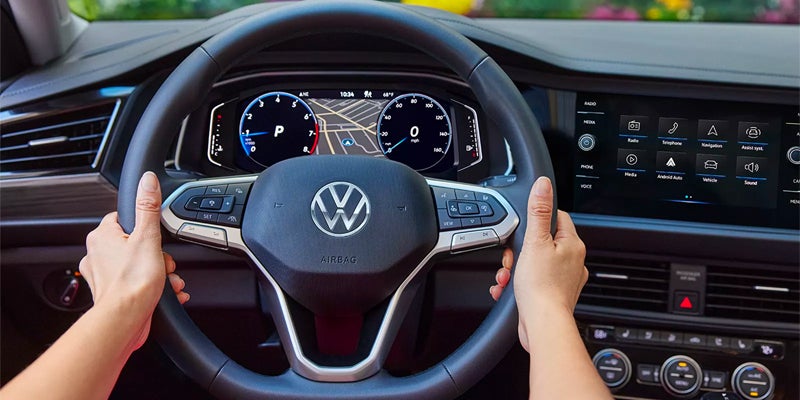
A close-up view of the 2025 Volkswagen Jetta’s steering wheel

Year after year, one of Volkswagen's most popular models is the Jetta. The 2024 VW Jetta has a few key updates that emphasize the urban-ready and eco-friendly performance of the model. Learn about the capabilities and standard features of this model before you visit your VW dealer.

Discover the Comfort and Technology of the 2024 VW Jetta

The Jetta's iconic urban-friendly handling can be attributed to the 1.5-liter turbocharged motor that provides 158 horsepower and 184 lb-ft of torque. This reliable powertrain is paired with a front-wheel-drive drivetrain, and either a manual or an automatic transmission. Power-assisted steering and brakes enhance the handling of this sedan so you can have an effortless driving experience. 

Jetta models with a manual transmission get 29 MPG in the city, 42 MPG on the freeway, and 34 MPG combined. When the base S model is equipped with an automatic transmission, the car gets 30 MPG in urban areas and 41 MPG on the interstate. Automatic models have the benefit of an engine start-stop system that optimizes fuel consumption in low-speed traffic.

IQ.DRIVE

The age of autonomous driving has arrived with the inclusion of the IQ.DRIVE system on the base Jetta model. IQ.DRIVE is a partially automated driving assistant that focuses on keeping the Jetta centered between visible lane markers and improves steering control for safer driving. This system keeps an eye on the road around you and can alert you if an obstacle unexpectedly crosses in front of your vehicle. 

Other IQ.DRIVE features include a frontal collision warning, forward emergency braking with integrated pedestrian detection, and Emergency Assist, a feature that can call for emergency aid after an accident. Adaptive Cruise Control is another key feature that works in stop-and-go traffic and helps your vehicle maintain an ideal following distance at different traffic speeds. 

Post-Collision Braking

The Jetta S is equipped with an Automatic Post-Collision Braking System, which works by engaging the automatic brakes immediately after a collision to lock the vehicle in place. This feature can help prevent secondary collisions and additional vehicle damage. This system is paired with an Intelligent Crash Response feature, a system that unlocks the vehicle's doors, turns on the hazard lights, and turns off the fuel pump after an accident.

Travel Assist

Travel Assist is a unique feature that works when the Jetta is traveling between zero and 95 MPH. This feature provides steering assist when the Adaptive Cruise Control system is turned on. Travel Assist monitors the driver by sensing when hands are on the steering wheel.  

The Jetta continues to be one of VW's most beloved models. This flagship compact car comes with a variety of active and passive safety features that work equally well on the highway and city streets. Book a test drive at Tom Bush Volkswagen in Jacksonville, FL. 
Posted in:

Related Posts

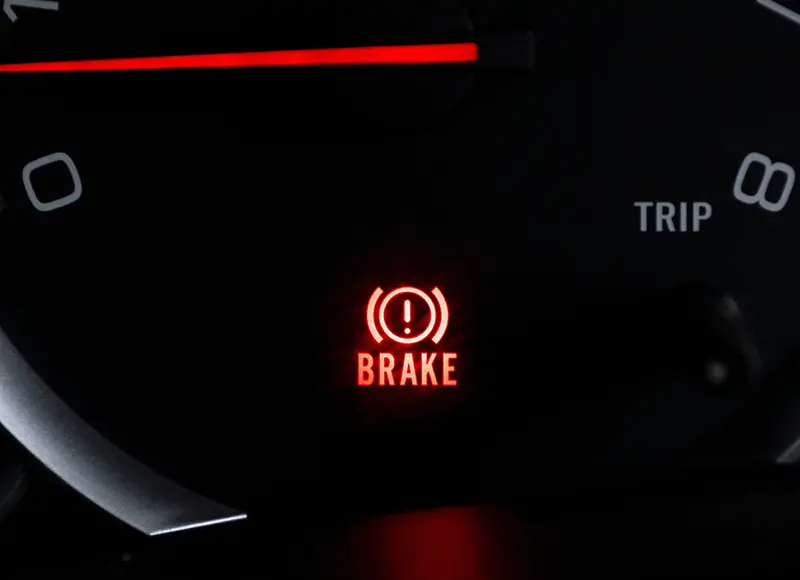
Volkswagen brake pad inspection and maintenance

Volkswagen Brake Pads: Warning Signs of Brake Wear and When to Act

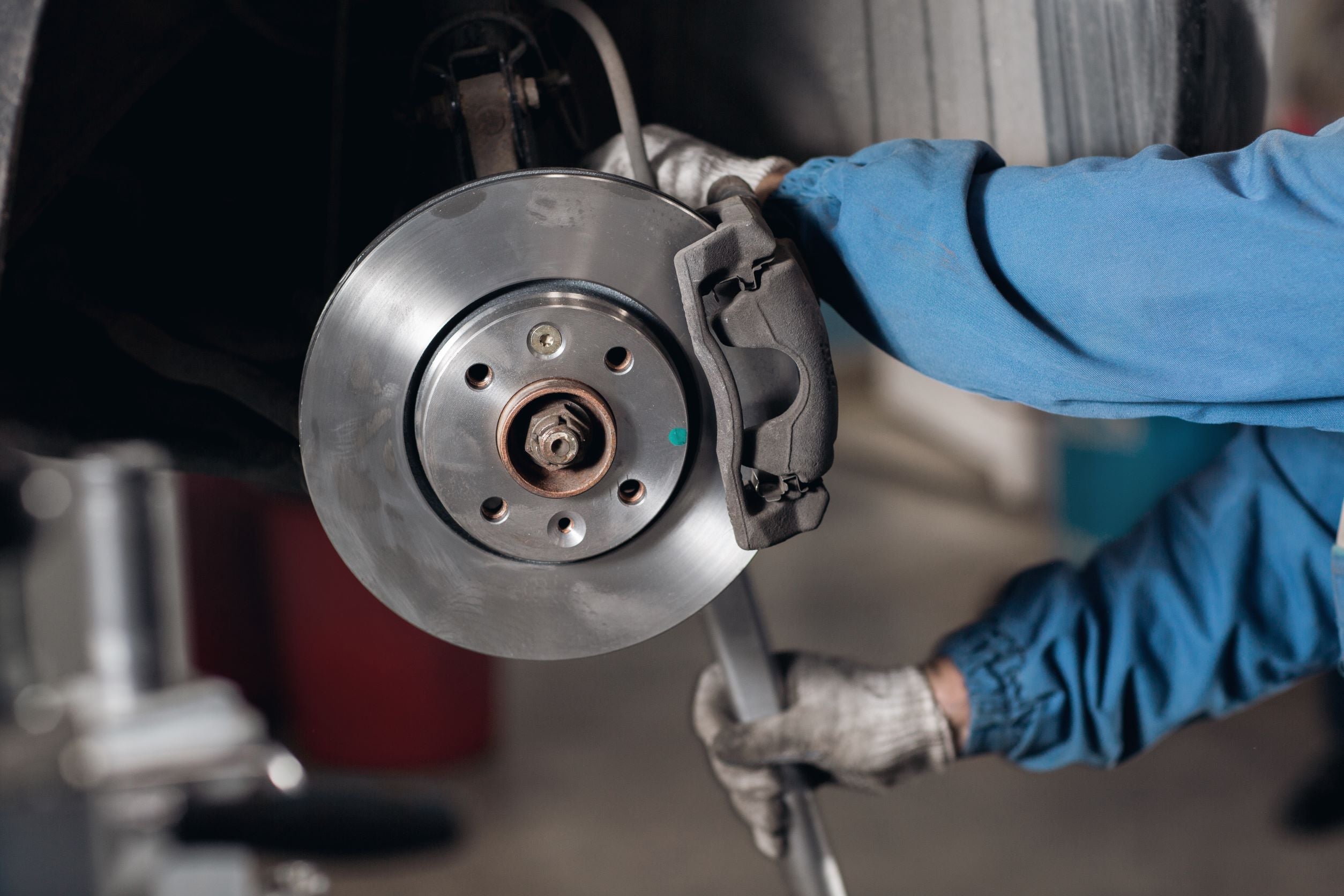
Let’s face it; you need your brakes to be in good working order. The brake system is one of the most important safety systems on your vehicle, and VW engineers them with precision. Making sure that your Volkswagen brake pads are in good shape and working as they should is one of the simplest ways to protect yourself, your passengers, and your vehicle in Jacksonville, Florida. What Brake Pads Do Brake pads create the friction your vehicle needs to slow down and stop. Every time you press the pedal, the pads clamp against the rotors, converting your vehicle's momentum into friction. Over time, that friction wears the pad material down. The rate of wear depends on your driving habits, the road conditions you encounter, and how often you're in stop-and-go traffic. VW's IQ.DRIVE suite of safety-enhancing features is engineered from the wheels up, but those systems can't compensate for brake pads that are past their service life. Common Warning Signs of Worn Volkswagen Brake Pads A high-pitched squealing noise when slowing down is one of the earliest and most reliable indicators that your pads are thinning. Most brake pads include a built-in wear indicator - a small metal tab that contacts the rotor and emits that sound intentionally as a warning. If you ignore that squeal, the next sign is often a grinding sensation or noise, which typically means the pad material has worn away entirely, and metal is contacting metal. At that stage, rotor damage becomes a real concern and repair s get harder and more expensive. A soft or spongy brake pedal, vibration when stopping, or your vehicle pulling to one side during braking are all additional signals you need to take seriously. VW Brake Wear and Inspection: What to Expect A thorough VW brake wear and inspection checks pad thickness, rotor condition, brake fluid levels, and the overall integrity of your braking system. Volkswagen recommends following your vehicle's maintenance schedule, which is available through the owners support resources at vw.com, to ensure brake components are reviewed at the right intervals. During an inspection, a technician will measure pad depth and evaluate whether your rotors show signs of scoring or uneven wear. Connected services and vehicle insights available through VW's technology ecosystem can also help you stay informed about your vehicle's needs between scheduled visits. How Driving Habits Affect Brake Pad Life Frequent hard braking wears pads faster than smooth, gradual stops. City driving with heavy traffic - like driving around Jacksonville - is generally harder on brakes than steady highway miles. Towing additional weight, even occasionally, increases the demand placed on your braking system with every stop. When to Schedule a Brake Service Appointment Don't wait for the grinding stage. If you're hearing squealing, noticing changes in pedal feel, or simply can't remember the last time your brakes were checked, that's enough reason to schedule a VW brake wear and inspection. Volkswagen owners have access to service scheduling directly through the owners section at vw.com, along with vehicle manuals, maintenance schedules, and more. Visit Tom Bush Volkswagen for Volkswagen Brake Pad Service Your safety starts with your brakes, and keeping your Volkswagen brake pads in good condition is one of the most straightforward ways to take care of your vehicle. The team at Tom Bush Volkswagen is ready to help drivers throughout Jacksonville stay on top of brake maintenance with the expertise your VW deserves. Schedule your inspection at tombushvw.com.

Volkswagen catalytic converter warning signs

Volkswagen Catalytic Converter Warning Signs and When to Schedule Service 

Your Volkswagen is designed to deliver smooth performance with low emissions, but like any component in your exhaust system, the catalytic converter can occasionally run into issues. Recognizing early warning signs - from subtle shifts in engine feel to unusual smells or dash lights—can help you address potential exhaust concerns before they lead to more significant repairs. Here is what every Jacksonville driver should know about how your catalytic converter functions and how to handle potential symptoms. What Does a Volkswagen Catalytic Converter Do? A catalytic converter is a vital part of your Volkswagen’s exhaust and emissions-control system. Inside its durable metal housing sits a coated honeycomb structure that transforms harmful exhaust gases into less harmful emissions before they exit the tailpipe. Because your converter relies heavily on proper engine timing, fuel delivery, and precise exhaust conditions to function, an issue elsewhere in the engine can quickly affect emissions performance. When a warning sign pops up, the converter may be involved, but a single symptom alone doesn't necessarily mean it needs to be replaced. Can a Rotten-Egg Smell Mean Converter Trouble? A persistent sulfur or rotten-egg odor coming from your exhaust usually means your emissions system isn't processing exhaust gases properly. While this can point to a catalytic converter problem, it can also stem from an overly rich fuel mixture, combustion issues, or temporary exhaust system imbalances. You should always pay attention to an unusual odor - especially if paired with sluggish acceleration or a dashboard warning light - but it isn't immediate proof of a dead converter. Having a Certified Volkswagen technician evaluate the root cause first saves you from replacing expensive parts unnecessarily. What Causes Rattling or Reduced Performance? If the internal structure of a converter breaks down, it can produce a metallic rattling sound, particularly as the exhaust warms up or during acceleration. However, loose heat shields, worn exhaust hangers, and nearby brackets can make nearly identical noises. Similarly, a clogged or restricted converter can make your VW feel sluggish or hesitant when pressing the gas pedal. However, misfires, clogged fuel injectors, or dirty air filters can cause the exact same drag. A thorough inspection of the entire exhaust system is always necessary before concluding the converter itself is at fault. Does a Check Engine Light Confirm a Bad Converter? In short, no. An illuminated Check Engine light often accompanies an emissions efficiency code—such as the common P0420 fault—which simply means the vehicle's computer detected efficiency dropping below an expected threshold. That code doesn't necessarily mean the catalytic converter failed. Common issues like faulty oxygen sensors, minor exhaust leaks, engine misfires, or damaged wiring can easily trigger it instead. Diagnostic trouble codes are just the starting point for a technician, not a final verdict. Importantly, if your Check Engine light ever flashes, you should ease off the accelerator, pull over safely, and arrange for immediate assistance, as an active misfire can quickly melt or destroy a catalytic converter. What If Fuel Economy Drops or You Fail an Emissions Test? A sudden drop in gas mileage or a failed state emissions test can certainly point to converter trouble, but these issues frequently start elsewhere under the hood. A proper diagnostic evaluation includes reading live sensor data, testing fuel-to-air ratios, checking for exhaust leaks, and verifying overall engine performance. If an unaddressed engine misfire or fuel mixture issue caused the converter to degrade in the first place, simply putting on a new converter without fixing the underlying problem will cause the new part to fail too. Finding the original trigger is key to a lasting repair. When Should You Schedule Volkswagen Service? It is best to schedule a professional inspection whenever a Check Engine light stays on, exhaust odors become noticeable, new underbody rattles develop, or your vehicle’s performance changes. Replacing a converter based on a sound, smell, or single fault code alone can lead to unnecessary expenses. The experienced team at Tom Bush Volkswagen’s service department can pinpoint the exact issue and explain the necessary steps. To book a diagnostic appointment in Jacksonville, simply use the dealership’s online service scheduler at tombushvw.com/schedule-service to make an ap pointment and get a clear, accurate plan for your vehicle.

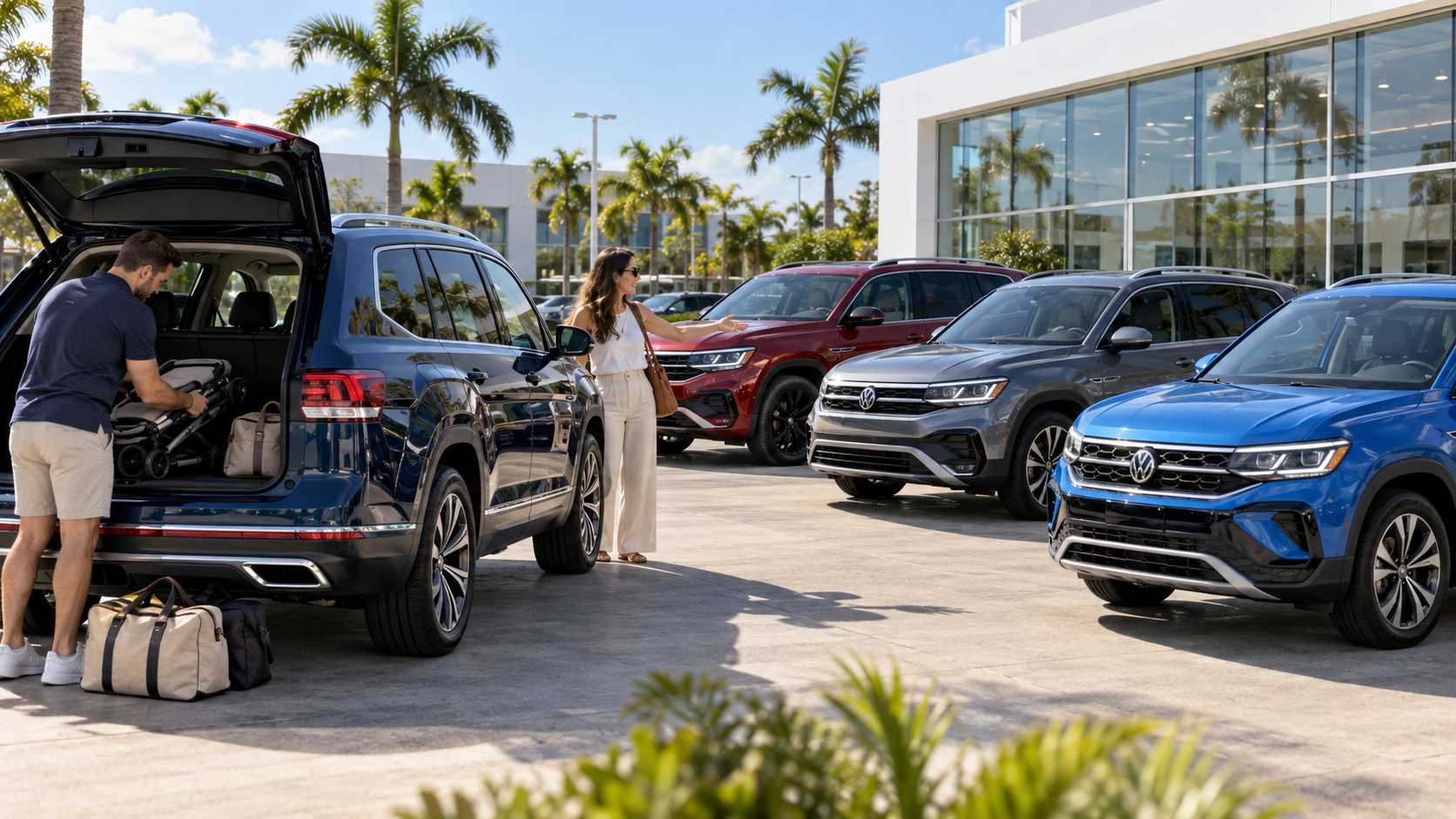
Volkswagen SUV Comparison Taos Tiguan Atlas and Cross Sport

Volkswagen SUV Comparison Taos Tiguan Atlas and Cross Sport

Start Your Volkswagen SUV Comparison With Space and Seating A Volkswagen SUV comparison starts with passenger space, cargo room, and the amount of vehicle you want around you. Volkswagen currently offers four distinct SUV paths through the Taos, Tiguan, Atlas Cross Sport, and Atlas. Each model fills a different role. The Taos keeps exterior dimensions compact while providing seating for five. The Tiguan adds more room within a two row layout. The Atlas Cross Sport moves into midsize territory while keeping two rows. The Atlas adds a third row and seating for up to seven. Which Volkswagen SUV should you research first? Start with the number of passengers you carry most. Then consider your normal cargo load and where you spend most driving time. A smaller SUV may make parking and city travel easier. A larger cabin may make family trips or gear loading simpler. Furthermore, a third row changes the decision when more than five seats are necessary. A useful starting path looks like this: Start with the Taos when you want five seats within Volkswagen's smallest SUV footprint. Move to the Tiguan when you want a roomier two row cabin without moving into a midsize SUV. Review the Atlas Cross Sport when five seats are enough but you want more cargo room. Choose the Atlas research path when three rows and seating for up to seven are priorities. Once you narrow the list, a detailed comparison page can answer the next set of questions. Volkswagen Taos for Compact Five Seat Driving The Volkswagen Taos sits at the smaller end of the Volkswagen SUV lineup. It seats five and provides 65.9 cubic feet of cargo volume with the rear seats folded. Is the Taos large enough for your needs? The answer starts with what you carry during a normal week. A couple, commuter, or smaller household may not need the exterior dimensions of a larger SUV. The Taos can also work for errands, bags, groceries, and weekend gear. Additionally, folding the rear seats opens substantially more room when passenger seating is not needed. Its smaller exterior size also deserves consideration around Jacksonville. Tighter parking spaces, garages, and busy shopping areas can make a compact SUV easier to place. However, choosing Taos does not mean skipping useful cabin space. Volkswagen gives the model a flexible rear seating area and a wide cargo opening. If Taos and Tiguan both remain on your list, move next to a direct comparison. Tom Bush Volkswagen already has a dedicated Taos versus Tiguan resource for that research step. That page should carry the detailed size and equipment comparison. This hub only needs to answer whether Taos belongs on your shortlist. Volkswagen Tiguan for More Two Row Family Space The current Volkswagen Tiguan gives five passengers a larger compact SUV cabin. It no longer uses the previous generation's optional third row. That distinction matters because older Tiguan articles may still mention seven passenger seating. Current Tiguan research should center on a two row layout with five seats. When should you move from Taos to Tiguan? Consider Tiguan when you want more cabin room while staying within the compact SUV class. Volkswagen lists 69.8 cubic feet of cargo volume with the second row folded. That creates more carrying room while keeping the vehicle below Atlas family dimensions. The current Tiguan also offers front wheel drive on several trims and available 4MOTION. The upper SEL R Line Turbo uses standard all wheel drive. A Tiguan shortlist makes sense when your priorities include: Five passenger seating with more cabin room than Taos. A larger cargo area without moving to the Atlas Cross Sport. Available 4MOTION on eligible trims. A two row layout that keeps rear passenger access straightforward. If you need more than five seats, Tiguan should not remain your final stop. The Atlas becomes the Volkswagen SUV to research next. If five seats are enough, compare Tiguan against Taos or Atlas Cross Sport based on desired vehicle size. Atlas Cross Sport for Larger Two Row Space The Volkswagen Atlas Cross Sport takes a different route. It gives five passengers midsize SUV dimensions without adding a third row. Who should research the Atlas Cross Sport? Start here when you want more cargo room and cabin space but still prefer two rows. Volkswagen lists 40.3 cubic feet of cargo volume behind the second row. Folding that row expands the area to 77.6 cubic feet. That gives the Atlas Cross Sport a noticeable cargo increase over the Tiguan. Therefore, the model makes sense for larger travel loads, sports gear, luggage, or bulky household items. The two row layout also means the rear cabin does not need to accommodate third row seating. This keeps the vehicle focused on five passengers and cargo space. The Atlas Cross Sport can be especially relevant when your shortlist includes Tiguan and Atlas. The decision is not only about exterior dimensions. Ask whether you need a third row. If the answer is no, compare your preferred cabin space and cargo needs next. If the Tiguan feels smaller than you want, Atlas Cross Sport deserves a closer look. If seven seats matter, move directly to Atlas research. Volkswagen Atlas When Three Rows Matter The Volkswagen Atlas is the clearest branch in this SUV comparison. It provides three rows and seating for up to seven passengers. Which Volkswagen SUV has three rows? Among these four models, the Atlas fills that role. Volkswagen also lists 96.6 cubic feet of cargo volume with the rear seating folded. That is the largest maximum cargo figure within this group. The third row changes how the Atlas serves family travel. Additional passengers can use dedicated seating without forcing someone into a two row arrangement. Cargo planning still matters when every seat is occupied. Therefore, families should consider how frequently they carry seven people and large bags at the same time. The Atlas deserves deeper research when your priorities include: Three rows for households that regularly carry more than five people. Seating for up to seven passengers. The largest maximum cargo volume among these four Volkswagen SUVs. A larger cabin for family trips, school activities, luggage, or sports gear. Atlas research can then move into more specific topics. Those may include trim selection, towing equipment, or a direct Atlas comparison. Drivers who do not need a third row should also review the Atlas Cross Sport. It keeps the larger Atlas family footprint while staying with five seats. Turn Your Shortlist Into the Next Research Step Choosing among Volkswagen SUVs becomes easier once the first major question is settled. Start with passenger count. Then review cargo space and overall vehicle size. If Taos and Tiguan remain close, use the dedicated Taos versus Tiguan comparison. That resource can handle the detailed distinctions this hub does not need to repeat. If Tiguan and Atlas remain on your list, compare how much cabin space you need. The Atlas also adds the third row that the current Tiguan does not provide. If Atlas Cross Sport and Atlas remain close, the seating question becomes central. Five seats point toward Atlas Cross Sport research. A third row points toward Atlas. From there, move into trim pages after choosing the model. Trim research can address equipment, drivetrain, seating details, and available cabin technology. Inventory should come after that model decision. Tom Bush Volkswagen provides separate inventory paths for each Volkswagen SUV, which makes it easier to review available configurations. Jacksonville drivers can use the same process whether they are replacing a smaller crossover or moving into a larger family SUV. Begin with seating. Compare the cargo room you expect to use. Then choose the deeper model resource that matches your remaining questions. That sequence keeps the Volkswagen SUV comparison focused. It also gives each existing comparison, trim guide, towing resource, and inventory page a clear purpose in your research.