

Volkswagen Atlas Trim Levels
Explore Volkswagen Atlas Inventory
Call Our Volkswagen Team About Atlas Trims
Schedule Your Volkswagen Atlas Test Drive
| Sales | ||
| Day | Open | Closed |
| Monday | 9:00AM | 8:00PM |
| Tuesday | 9:00AM | 8:00PM |
| Wednesday | 9:00AM | 8:00PM |
| Thursday | 9:00AM | 8:00PM |
| Friday | 9:00AM | 8:00PM |
| Saturday | 9:00AM | 7:00PM |
| Sunday | Closed | Closed |
Choose a Volkswagen Atlas Trim for Family Space, Jacksonville Driving, and the Features You Will Use
Volkswagen Atlas trim levels make more sense when you stop asking which one has the longest equipment list and start asking which step changes the way your household will use a three row SUV. SE, SE with Technology, Peak Edition, SEL, and SEL Premium R Line all share the Atlas name, but they answer different purchase questions.
One household may want the lowest trim that already covers front seat comfort and core technology. Another may care more about parking support, a hands free liftgate, or towing hardware. Peak Edition can pull a shopper toward its distinct look, while SEL places more weight on cabin upgrades. SEL Premium R Line moves farther into camera views, audio, seat content, and R Line styling.
The goal is not to keep moving upward. It is to stop where the next trim adds items you would rarely use.
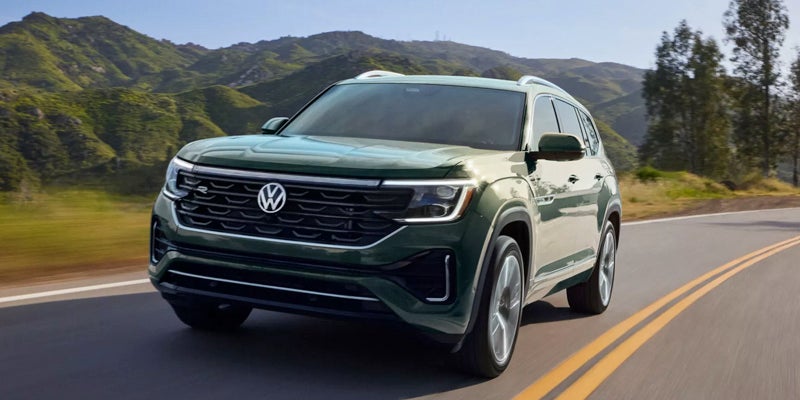
Read the Atlas Trim Ladder Before Comparing Two Badges
A direct SE versus SEL search sounds simple, but it skips two choices in the middle. That matters because SE with Technology and Peak Edition may solve the exact issue that started the comparison.
SE is the opening trim. It is the place to start when you want the three row Atlas layout and do not need every parking, loading, or upper cabin upgrade available farther up the range. The question is not whether SE has fewer items than SEL. Of course it does. The question is whether those missing items would change enough of your routine to justify moving higher.
SE with Technology is the first major step. Current trim coverage points to items such as front and rear parking sensors, a hands free power liftgate, remote start, larger wheels, added exterior lighting, a household style outlet for the second row, and a trailer hitch. A family loading strollers, sports bags, groceries, or travel gear may place more weight on that liftgate than a shopper who rarely opens the rear hatch with both hands full.
Peak Edition takes a different path. It adds a distinct exterior and cabin identity, 18 inch black wheels, and all terrain inspired details. It deserves attention from someone who likes the Atlas but wants the vehicle to look less like a standard family SUV.
SEL shifts the emphasis toward the cabin and driver information. Leather seating, head up display content, navigation, added front seat adjustment, memory functions, and heated outboard second row seating are among the items that make this a different kind of step.
SEL Premium R Line sits at the top. Its case rests on upper camera, parking, audio, seating, wheel, and R Line content.
Before comparing two trims, decide which branch fits the goal. SE with Technology is about added convenience and equipment. Peak Edition is about a distinct identity. SEL moves deeper into the cabin. SEL Premium R Line asks whether the fullest package earns the final step.
SE Versus SE With Technology Starts With the Items You Touch Every Week
SE versus SE with Technology is one of the most useful Atlas comparisons because the choice happens early in the price ladder and the added items are easy to test in person.
Start with parking. Front and rear Park Distance Control on SE with Technology can matter when the Atlas will spend time in crowded shopping centers, school pickup lanes, downtown garages, or a tight home parking space. That does not make SE a poor choice. It means the added sensors should earn their place through the type of parking you do.
Then think about loading. A hands free power rear liftgate has a clear purpose when you approach with bags, gear, or a child in your arms. A shopper who rarely carries large loads may place less weight on it.
The trailer hitch creates another dividing point. Someone planning to tow should examine the exact vehicle, hitch equipment, trailer needs, and ratings before treating that item as a minor extra. A household with no towing plans may care more about the parking sensors or liftgate.
There is also a price question. Moving to SE with Technology means paying for a collection of added items rather than one single upgrade. That can make the step appealing when several of them fit your routine. It can make SE the smarter stopping point when most of them would go unused.
Do not compare the trims by counting features. Pick the three additions you would use most. If you struggle to name three, SE deserves a closer look. If the liftgate, parking sensors, remote start, or hitch solve recurring needs, SE with Technology has a stronger case.
Peak Edition Versus SEL Is a Choice Between Two Different Priorities
Peak Edition and SEL sit next to each other in the 2026 lineup, yet they are not trying to win the same shopper. That is what makes this comparison more useful than a simple “higher trim is better” approach.
Peak Edition leans into a distinct visual direction. The 18 inch glossy black wheels, model specific styling, and all terrain inspired treatment give the Atlas a stronger outdoor identity. For a shopper who already likes that appearance, the draw is immediate. You can see the reason for choosing it before opening the door.
SEL asks you to look inside. Leather seating surfaces, a head up display, navigation, added front seat adjustment, seat memory, and heated outboard second row seating shift the purchase toward cabin content and driver information.
The current official price ladder makes the tension sharper. Peak Edition and SEL sit relatively close in published starting price, so the choice is less about jumping across a massive price spread and more about where you want the money to go.
Choose Peak Edition for the stronger visual identity when that look is part of why you want the Atlas. Its appeal is weaker when you are selecting it only because it sits above SE with Technology.
Choose SEL when leather seating, driver information, seat memory, and added cabin content will matter more during each week than the Peak Edition appearance.
There is no reason to decide from photos alone. Park a Peak Edition beside an SEL. Walk around both. Sit in both. Check the seat material, driver display, second row, wheel treatment, and exterior details. The stronger choice should become clearer once the difference moves from a browser tab into the vehicle.
Let Third Row Use Shape the Trim Choice
The Atlas seats up to seven, but seat count alone does not tell you how your household will use the cabin. A family that keeps all three rows occupied several days each week should approach the trim ladder differently from someone who folds row three for cargo most of the time.
Start with the second row because it controls how people move toward the back. Check the exact seating configuration on the vehicle you are considering. Sit where your passengers will sit. Move into row three using the same path a child, teenager, or adult would use.
Then look at cargo room with all seats in place. Volkswagen lists 20.6 cu ft behind the third row when every row is in use. Folding row three opens 55.5 cu ft while keeping the second row available. Folding both rear rows opens up to 96.6 cu ft.
Those three layouts matter more than the maximum number by itself.
A household using row three each week should focus on how passengers enter, where bags go when all seats are occupied, and which cabin items make longer trips easier. A household using row three a few times each year may place more weight on how quickly the seats fold and how the cargo floor works.
Trim choice enters through the items around that layout. Heated outboard second row seating on SEL may matter to one family. The Peak Edition look may matter more to another. SE with Technology may solve loading and parking needs without moving into SEL.
Use the third row first. Then decide which trim makes that three row setup easier to live with.
SEL Versus SEL Premium R Line Comes Down to the Final Layer of Equipment
SEL already represents a major move up the Atlas range. That means SEL Premium R Line has to justify itself against a trim that is already well equipped.
Start with the items that are easiest to test. Current upper trim coverage identifies a surround view camera, added parking support, upgraded audio, massaging front seats, larger wheels, richer leather treatment, and R Line exterior content among the top trim distinctions.
A surround view camera can be worth close attention for someone who parks in tight garages or crowded lots. The question is whether you would use the extra views enough to care about them after the first week.
The upgraded audio path is similar. Someone who spends hours in the Atlas each week may place real weight on the sound difference. Another shopper may listen mostly to podcasts at moderate volume and care very little.
Massage seating creates a personal test. Do not assume the feature earns the price because it sounds impressive. Sit in the seat and use it.
R Line styling also carries its own pull. A shopper who wants the strongest visual statement in the Atlas range may prefer the top trim before considering any cabin item.
SEL is the stronger stopping point when its leather seating, driver information, navigation, memory functions, and second row seat content already cover the priorities. SEL Premium R Line earns the move when several upper trim items matter together.
Check 4MOTION Before Locking the Budget
The drivetrain choice can change the trim path. The current Volkswagen builder shows SE and SE with Technology with two drivetrain configurations, while Peak Edition, SEL, and SEL Premium R Line are shown with all wheel drive configurations.
That makes the order of decisions important.
A shopper who wants front wheel drive should not spend hours comparing Peak Edition and SEL before checking whether those trims match the drivetrain plan. A shopper already set on 4MOTION has a wider comparison path across the ladder.
For Jacksonville driving, start with where the Atlas goes beyond the daily commute. Think about trips, boat ramps, unpaved access areas, travel outside Florida, and the roads you use most.
Then compare the exact vehicles, not broad trim names. Price, wheel choice, drivetrain, and installed equipment should all be checked on the units in front of you before the budget is locked.
Use a Jacksonville Test Drive to Settle One Trim Question
The most useful Atlas test drive begins with one unresolved comparison. Do not arrive with five trims and no plan.
Pair the vehicles based on the question you still have:
- SE versus SE with Technology when you are testing parking, loading, and added equipment
- Peak Edition versus SEL when appearance and cabin upgrades are competing for priority
- SEL versus SEL Premium R Line when you need to test the upper camera, seating, audio, and styling package
Set the driver seat the same way in both vehicles. Use the parking features. Open the liftgate. Sit in rows two and three. Check cargo space with the seating layout you will use most.
Jacksonville traffic around Atlantic Boulevard, highway merging, busy retail parking, and family trips toward Jacksonville Beach can reveal different parts of the decision. The goal is not a long drive. It is a direct comparison between the two trims still competing for your money.
Find the Atlas Trim That Fits Your Jacksonville Routine
By the time you reach inventory, you should know more than “I want an Atlas.” You should know whether SE already covers the core needs, whether SE with Technology adds enough to earn the move, whether Peak Edition styling is part of the purchase goal, or whether SEL cabin content deserves priority.
Tom Bush Volkswagen is located at 9850 Atlantic Blvd in Jacksonville. Current inventory gives you a chance to compare available trims, colors, drivetrains, seating configurations, and installed equipment before choosing which Atlas to drive.
Use the trim ladder to narrow the field, then compare the closest two matches in person. That is a stronger route than paying for the highest trim simply because it has more.
How many seats are in a Volkswagen Atlas?
The Volkswagen Atlas seats up to seven people across three rows. Check the exact vehicle before purchase because second row configuration can change how passengers move through the cabin and how the seating setup fits your household. Sit in all three rows during the test drive rather than judging passenger fit from the front seats.
What are the best VW Atlas trim levels for third row comfort?
Third row space comes from the Atlas body rather than one trim having a larger rear seating area. Trim choice changes the cabin items around that space. Compare second row configuration, seat materials, rear passenger equipment, and how easily people enter row three. SEL may draw families interested in added cabin content, while another household may prefer a lower trim and place more weight on price.
How much weight can a VW Atlas tow?
Volkswagen publishes an upper towing figure of up to 5,000 lb for the 2026 Atlas. The exact amount for a specific vehicle should be checked against its equipment, hitch setup, passenger load, cargo load, trailer weight, and written ratings. Do not treat the maximum published figure as the answer for every Atlas and trailer pairing.
What is the warranty on a Volkswagen Atlas?
Warranty coverage should be checked for the exact model year and VIN. Review the original in service date, mileage, written Volkswagen terms, exclusions, and any added protection plan tied to the vehicle. A new Atlas shopper should use current 2026 documents rather than relying on terms published for an earlier model year.
Note: Vehicle details, features, towing ratings, and availability may change. Contact Tom Bush Volkswagen for current information on a specific Volkswagen Atlas.