

When drivers begin researching a new vehicle purchase, one of the most important questions quickly becomes how to structure the financing. Many shoppers exploring Volkswagen vehicles in 2026 are comparing promotional APR offers, lease programs, and manufacturer incentives to understand how each option affects their monthly payment and long term ownership costs. While advertisements often highlight attractive rates or lease payments, understanding the financial structure behind these programs helps drivers make more informed decisions.
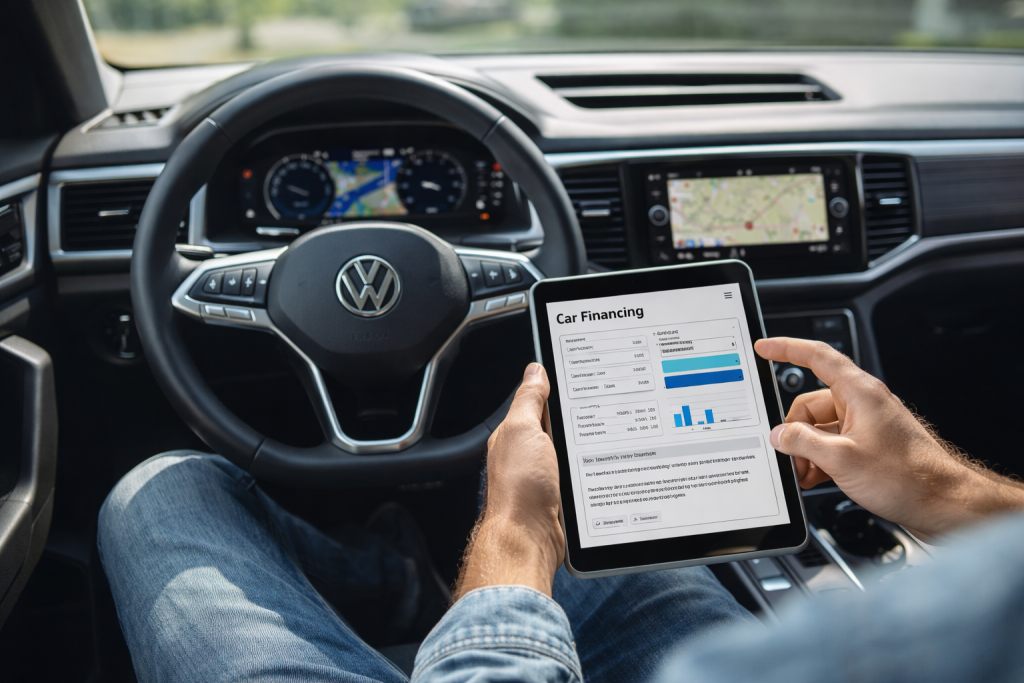
Volkswagen financing programs are designed to make vehicle ownership accessible and transparent, reflecting the brand’s commitment to practical innovation and dependable mobility for everyday drivers. Financing structures such as APR loans and lease programs allow buyers to select an approach that aligns with their driving habits, budget goals, and long term vehicle plans.
Learning how APR, residual value, incentives, and lease structures work provides clarity when evaluating Volkswagen financing choices.
How Volkswagen APR Financing Works
Many drivers researching Volkswagen APR offers ask how interest rates influence the total cost of financing a vehicle.
Annual Percentage Rate, or APR, is the interest rate applied to an auto loan that determines the cost of borrowing money to purchase the vehicle. The APR represents the yearly interest charged on the remaining loan balance over the life of the loan.
With Volkswagen APR financing programs, buyers borrow the cost of the vehicle and repay the loan through monthly installments over a set period, often between 36 and 72 months. Each monthly payment includes two components: repayment of the loan principal and interest charged by the lender.
The loan term plays a major role in how APR affects the total cost of financing. A shorter loan term results in higher monthly payments but reduces the total interest paid over time. A longer loan term lowers monthly payments but increases the amount of interest paid across the life of the loan.
When evaluating Volkswagen APR financing offers, drivers often compare several factors:
• the promotional APR rate being offered
• the length of the loan term
• the total interest paid over the life of the loan
Understanding these variables helps buyers determine whether a promotional APR program provides meaningful savings compared with standard financing rates.
How Volkswagen Lease Payments Are Calculated
Shoppers comparing vehicle financing options frequently ask why lease payments are often lower than loan payments.
A vehicle lease is structured differently from a traditional auto loan. Instead of paying for the entire cost of the vehicle, lease payments cover only the portion of the vehicle’s value that is expected to be used during the lease period.
This portion of the vehicle’s value is known as depreciation. Because the driver is essentially paying for the vehicle’s depreciation rather than its full purchase price, lease payments are often lower than traditional loan payments.
The monthly lease payment for a Volkswagen vehicle is typically determined by several variables:
• the negotiated price of the vehicle
• the length of the lease term
• the predicted value of the vehicle at the end of the lease
• the financing factor used by the leasing company
These factors combine to determine how much of the vehicle’s value is consumed during the lease and therefore how much the driver pays each month.
For drivers who prefer driving newer vehicles every few years, leasing can provide access to the latest Volkswagen technology and design updates without committing to long term ownership.
Understanding Residual Value in Volkswagen Lease Programs
Buyers considering a lease often ask what residual value means and why it has such a large influence on lease payments.
Residual value is the projected value of a vehicle at the end of the lease term. Leasing companies estimate how much the vehicle will be worth after several years of use based on historical depreciation patterns and market demand.
The higher the predicted residual value of the vehicle, the less depreciation occurs during the lease period. Because the driver only pays for the depreciation portion of the vehicle’s value, a higher residual value generally results in lower monthly lease payments.
For example, if a vehicle is expected to retain a large portion of its value after three years, the leasing company only charges the driver for the difference between the original price and the predicted future value.
Residual value plays a major role in determining whether leasing is an attractive financial option. Vehicles that maintain strong resale value often produce more competitive lease payments.
How Volkswagen Incentives Influence Financing Costs
Vehicle manufacturers frequently offer incentives designed to make financing or leasing more affordable. These incentives may appear as promotional APR offers, lease support programs, or purchase rebates.
Volkswagen incentives can influence financing in several ways depending on how they are structured. Some incentives lower the interest rate on financing programs, while others reduce the purchase price of the vehicle before financing calculations begin.
Common types of incentives that may appear in Volkswagen financing programs include:
• promotional APR offers that reduce borrowing costs
• manufacturer rebates applied to the vehicle purchase price
• lease support programs that reduce monthly payments
Because incentives change throughout the year based on market conditions and vehicle availability, shoppers often evaluate multiple financing structures to determine which program provides the greatest overall value.
Choosing Between Leasing and Financing a Volkswagen
One of the most common questions shoppers ask is whether leasing or financing a vehicle is the better choice.
The answer depends largely on driving habits and long term ownership goals. Financing a Volkswagen through an auto loan allows drivers to build ownership equity in the vehicle. Once the loan is paid off, the vehicle belongs entirely to the owner and can be driven without monthly payments.
Leasing, on the other hand, allows drivers to pay for the portion of the vehicle they use during a defined time period. At the end of the lease, drivers may choose to return the vehicle, begin a new lease, or purchase the vehicle for its residual value.
Drivers evaluating these two options often consider several decision factors:
• how many miles they drive each year
• whether they prefer long term ownership or newer vehicles more frequently
• how important lower monthly payments are compared with long term vehicle ownership
By understanding how Volkswagen APR financing, lease payments, residual value, and incentives work together, shoppers can evaluate which financing structure best fits their financial goals and driving lifestyle.
Connect with us


Recent Blog Entries
- Volkswagen Maintenance Plan Cost Guide — Coverage, Value, and Long Term Ownership Benefits
- 2026 Volkswagen Golf GTI Performance Guide — Power, Handling, and Engineered VW Precision
- Volkswagen APR & Lease Options for 2026: Understanding Rates, Residual Value, and Smart VW Financing Choices
- 2026 Volkswagen Atlas Cross Sport Buyer’s Guide – Style, Comfort, and VW Performance Engineering
- Volkswagen Maintenance Plan Cost Guide – Coverage, Value, and Long-Term Ownership Benefits