

Volkswagen Oil Change Cost vs Independent Shops – What Jacksonville Drivers Should Know
Oil changes are often treated as a commodity service, but for modern Volkswagen engines, oil selection, service procedure, and diagnostic checks play a critical role in long term performance and reliability. Many Jacksonville drivers compare dealership oil change pricing to independent shops without fully understanding how modern VW engines are engineered or why factory specified service matters beyond the receipt total.
This guide explains what goes into a Volkswagen oil change, how costs differ between VW service centers and independent shops, and what drivers should evaluate when deciding where to maintain their vehicle.

Why Volkswagen Oil Change Costs Vary
Volkswagen engines are designed around specific oil formulations, service intervals, and internal tolerances. The cost of an oil change is influenced by more than labor time.
Key cost drivers include:
- Oil type and certification standard
- Engine oil capacity
- Oil filter design and quality
- Labor procedure and inspection steps
- Diagnostic scan and system resets
Many Volkswagen engines use fully synthetic oil that meets strict VW approval standards rather than generic viscosity ratings. These oils are formulated to handle turbocharged heat, extended service intervals, and tight internal clearances.
Volkswagen Oil Specifications and Why They Matter
Volkswagen does not approve oil based solely on viscosity. Oils must meet specific VW standards such as 502 00, 504 00, or newer specifications depending on engine design.
VW approved oil requirements account for:
- Turbocharger heat management
- Sludge resistance under high temperature operation
- Proper lubrication of timing components
- Compatibility with emissions systems
Using oil that does not meet these standards can lead to accelerated wear, reduced efficiency, and potential warranty issues. Independent shops may offer lower priced oil changes by using non certified oils that meet general viscosity ratings but not Volkswagen approval requirements.
What a Volkswagen Dealership Oil Change Includes
A Volkswagen oil change involves more than draining and refilling oil. Factory service procedures include system level checks that are often skipped or simplified elsewhere.
A typical VW oil change includes:
- Drain and refill with VW approved synthetic oil
- OEM oil filter replacement
- Oil level verification using electronic monitoring
- Reset of service interval indicators
- Visual inspection of belts, hoses, and seals
- Multi point inspection tied to VW service schedules
These steps are designed to catch early signs of wear or leaks before they develop into costly repairs.
Independent Shops and Cost Differences
Independent shops often advertise lower oil change prices due to reduced overhead or simplified service packages. While this can be appealing, it is important to understand where cost savings come from.
Common differences at independent shops include:
- Use of non VW approved synthetic oil
- Generic oil filters with different filtration efficiency
- Limited diagnostic scanning
- No software or service interval updates
- Fewer vehicle specific inspections
For older vehicles outside of warranty, some drivers may accept these tradeoffs. For newer Volkswagens or vehicles with turbocharged engines, these differences can impact long term engine health.
Turbocharged Engines and Oil Quality
Many modern Volkswagen vehicles use turbocharged engines to balance performance and efficiency. Turbochargers place additional stress on engine oil due to high operating temperatures and rotational speeds.
High quality oil is critical for:
- Cooling turbocharger bearings
- Preventing oil breakdown under heat
- Maintaining consistent lubrication pressure
- Reducing carbon buildup
Lower quality oils may degrade faster, leading to reduced protection between service intervals.
Service Intervals and Long Term Cost Considerations
Volkswagen designs oil change intervals around engine architecture and oil chemistry rather than arbitrary mileage numbers. Extending intervals or using improper oil can increase long term ownership costs even if short term service pricing appears lower.
Long term considerations include:
- Engine cleanliness over high mileage
- Timing system longevity
- Turbocharger lifespan
- Fuel efficiency consistency
An oil change that costs less today but accelerates wear can lead to significantly higher repair costs later.
Warranty and Maintenance Documentation
For vehicles under warranty, proper maintenance documentation matters. Volkswagen requires that services meet factory specifications to maintain warranty coverage.
Dealership service records provide:
- Verified oil specification compliance
- Digital service history tracking
- Proof of maintenance if warranty claims arise
Independent shops may not document oil specifications or procedures at the same level of detail.
Jacksonville Driving Conditions and Oil Change Importance
Jacksonville driving conditions place unique demands on engine oil. Heat, humidity, stop and go traffic, and short trips all accelerate oil degradation.
These conditions increase the importance of:
- Oil that resists thermal breakdown
- Proper service intervals
- Consistent inspection routines
Volkswagen service procedures account for these real world factors.
How to Decide Where to Get Your Volkswagen Oil Changed
Rather than comparing price alone, Jacksonville drivers should evaluate:
- Whether VW approved oil is used
- Whether service interval systems are reset correctly
- The level of inspection included
- Vehicle age and warranty status
- Long term ownership plans
For many drivers, dealership service offers transparency and consistency that aligns with how Volkswagen engines are engineered to operate.
Final Perspective on Volkswagen Oil Change Cost Comparison
Volkswagen oil change costs reflect more than oil and labor. They reflect an engine specific service process designed to protect performance, efficiency, and longevity. Independent shops may offer lower upfront pricing, but that difference often comes from reduced procedures or non certified materials.
For Jacksonville drivers who plan to keep their Volkswagen long term or want to protect warranty coverage and engine health, understanding what is included in a VW oil change provides clarity that price alone cannot. Maintenance done correctly supports the engineering that makes a Volkswagen perform the way it was designed to.
The 2025 Volkswagen Atlas is engineered first and foremost around interior usability. In the three row SUV segment, many vehicles advertise passenger capacity but struggle to deliver real space, long distance comfort, and intuitive technology once families begin using all three rows at the same time. The Atlas approaches this differently by prioritizing physical room, seating ergonomics, and system simplicity rather than overcomplicated design.
This guide breaks down how the Atlas interior is engineered, how its technology systems function in real world use, and what Jacksonville drivers should evaluate when comparing three row SUVs for daily driving, family travel, and long term ownership.
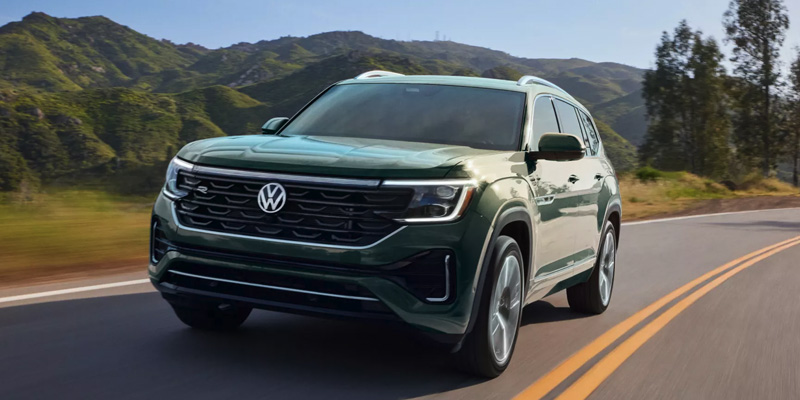
Interior Space and Seating Design in the 2025 Volkswagen Atlas
Interior volume is the Atlas’s defining strength, but the value comes from how that space is shaped and supported structurally. The Atlas rides on a long wheelbase platform that allows engineers to spread passenger space evenly across all three rows instead of concentrating it in the front cabin.
Key interior space characteristics include:
- Seating for up to seven passengers with a usable third row
- Wide door openings for easier entry and exit
- Flat floor architecture that improves foot room
- Upright seating posture that supports long drives
Unlike many midsize three row SUVs where the third row is best suited for children, the Atlas is designed to accommodate adults in all seating positions. Second row seats slide forward smoothly without collapsing the seatback, which maintains comfort for passengers already seated in the third row.
Third Row Comfort and Real World Usability
Third row comfort is where many competitors fall short. Volkswagen addresses this by balancing seat height, cushion depth, and roofline clearance rather than focusing on headline measurements alone.
In the Atlas, third row passengers benefit from:
- Adequate knee room due to the extended wheelbase
- Proper seatback angle for upright posture
- Sufficient headroom even for taller occupants
- Dedicated air vents for climate circulation
This matters in Jacksonville driving conditions where heat and humidity amplify discomfort. Proper airflow and seating posture reduce fatigue during longer drives or traffic congestion.
Cargo Space Without Compromising Passenger Comfort
Cargo capacity is another area where the Atlas stands out, but the design philosophy is focused on flexibility rather than raw volume alone.
Cargo considerations include:
- Usable cargo space behind the third row for daily errands
- Substantial cargo area with the third row folded flat
- Low load floor height for easier lifting
- Wide rear opening that supports bulky items
The Atlas avoids steep seatback angles that cause cargo to slide forward, making it more practical for groceries, sports equipment, or luggage without constant repositioning.
Cabin Comfort and Material Engineering
Volkswagen designs interiors with an emphasis on consistency rather than visual overload. Materials are selected for durability, temperature stability, and long term wear rather than novelty.
Interior comfort engineering includes:
- Supportive seat foam density that resists compression over time
- Wide seat bases for balanced weight distribution
- Thoughtful placement of armrests and storage
- Cabin insulation that reduces road and wind noise
This approach supports the Atlas as a true daily driver rather than a vehicle optimized only for occasional road trips.
Volkswagen Digital Cockpit and Driver Interface
Technology in the 2025 Atlas is designed to inform the driver without distraction. Volkswagen’s Digital Cockpit replaces traditional analog gauges with a configurable digital display that presents information clearly and predictably.
Digital Cockpit functions include:
- Navigation display within the instrument cluster
- Vehicle status and driver assistance indicators
- Customizable information layouts
- Clear visual hierarchy that prioritizes speed and alerts
By placing critical data directly in the driver’s line of sight, Volkswagen reduces the need for eye movement between screens.
Infotainment System and Physical Controls
The Atlas infotainment system is engineered around ease of use rather than menu depth. Touchscreen interaction is supported by physical controls for volume and climate, which remains important for real world driving.
Technology features include:
- Apple CarPlay and Android Auto integration
- Clear screen responsiveness without excessive animations
- Climate controls that remain usable without navigating menus
- Logical menu structure that minimizes learning curve
This balance matters for families and commuters who need systems to respond quickly without demanding attention.
Safety and Driver Assistance Technology Integration
Driver assistance systems in the Atlas are designed to work cohesively rather than as isolated features. Sensors, cameras, and control modules communicate continuously to support the driver.
Core systems include:
- Adaptive cruise control
- Lane keeping assistance
- Forward collision warning with automatic braking
- Blind spot monitoring
Volkswagen calibrates these systems conservatively to support awareness without aggressive intervention, which aligns with its engineering focused philosophy.
How Atlas Interior Engineering Supports Long Term Ownership
Interior engineering impacts more than comfort. It affects resale value, maintenance satisfaction, and long term usability. Materials that resist wear, systems that remain intuitive, and layouts that age well contribute to sustained ownership confidence.
Volkswagen emphasizes:
- Functional design over trend driven styling
- Technology that remains usable as software evolves
- Space planning that adapts to changing family needs
This results in an interior that feels intentional rather than experimental.
What Jacksonville Drivers Should Evaluate When Choosing a Three Row SUV
When comparing the Atlas to other three row SUVs, buyers should evaluate:
- Third row comfort for adult passengers
- Climate performance in hot weather
- Ease of daily entry and exit
- Cargo flexibility without folding multiple rows
- Technology usability without distraction
The Atlas excels where space and simplicity matter most.
Final Perspective on the 2025 Volkswagen Atlas Interior and Technology
The 2025 Volkswagen Atlas delivers interior space and technology through disciplined engineering rather than overdesigned complexity. Its long wheelbase, thoughtful seating geometry, and intuitive systems make it a practical choice for families and drivers who value real usability over marketing claims.
For Jacksonville drivers navigating daily commutes, family schedules, and longer coastal drives, the Atlas offers a cabin that works with you rather than demanding attention. That balance is what defines Volkswagen’s approach to interior and technology engineering.
A small SUV like the 2025 Volkswagen Atlas Cross Sport is an excellent option for urban driving and long-range adventures. This two-row model is a smaller version of the flagship Atlas and comes with tons of practical features for active lifestyles.
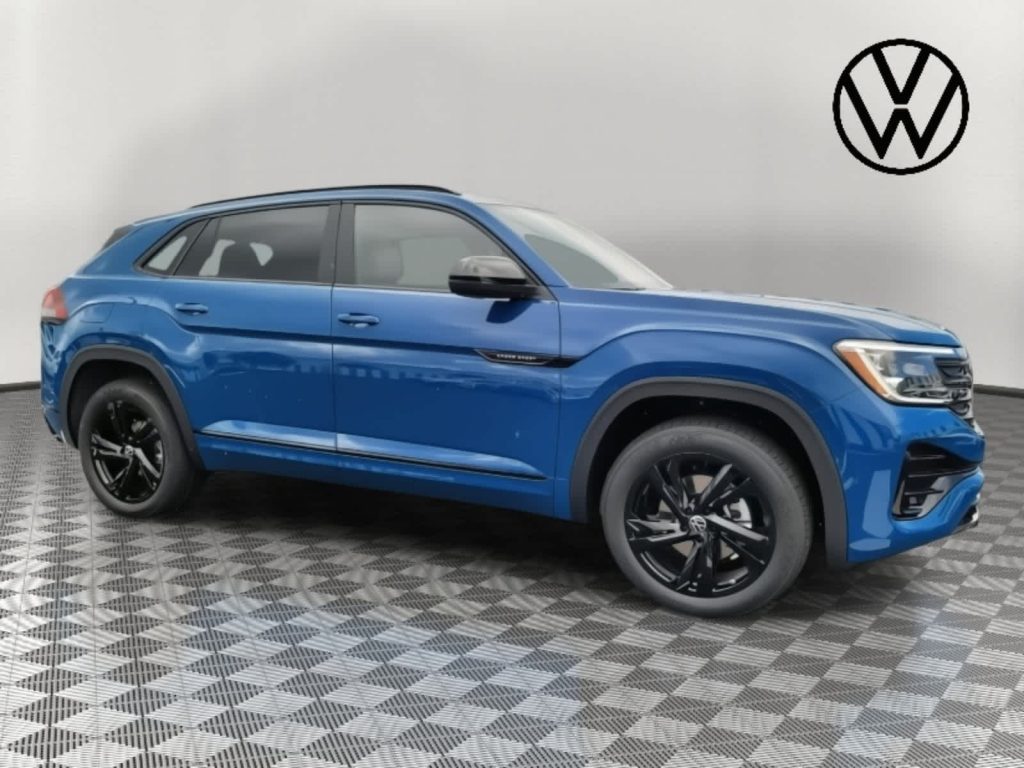
1. Turbocharged Engine
The Atlas Cross Sport is outfitted with a 2.0-liter turbocharged I4 motor that produces 269 horsepower and 273 lb-ft of torque. The powertrain has a 2,000-lb towing capacity to haul a small boat or trailer when properly equipped. An eight-speed transmission with selectable drive modes and a front-wheel drivetrain are standard.
With a turbocharged motor optimizing fuel consumption, drivers can expect a gas mileage of 20 MPG in the city, 26 MPG on the freeway, and 23 MPG combined.
2. Intuitive Infotainment
This model comes with a 12-inch multifunctional touchscreen to manage connected apps for media streaming, Bluetooth-connected devices for pass-through phone calls, and smartphones wirelessly integrated via App-Connect. Smartphone integration is the key to tailoring your entertainment experience with your favorite apps for podcasts, news, sports, weather, audiobooks, and music. A three-month trial for satellite radio services is also standard.
Read the rest of this entry »Explore the 2025 VW ID. Buzz: Features by Trim Level
Vintage vibes and modern technology collide in the groovy 2025 Volkswagen ID. Buzz. Five electrifying trim levels are filled to the brim with cutting-edge characteristics, wrapped in an exterior that pays homage to the original VW bus.

Pro S
The base model of the Volkswagen ID. Buzz is powered by a single rear-mounted motor and a 91-kWh lithium-ion battery pack, which grants the Pro S 282 horsepower. Inside the Pro S, you will find an assortment of creature comforts such as triple-zone automatic climate control, a heated steering wheel, and a heated 60/40-split second-row bench seat.
The Pro S also comes standard with Volkswagen’s IQ.Drive, which is a suite of driver-assist technologies to help make every drive a safe one. This suite includes adaptive cruise control, lane-keeping assistance, and a blind-spot warning system.
Pro S Plus
Next in the Volkswagen ID. Buzz lineup is the vibrant Pro S Plus, which comes with more fun exterior paint choices and a few extra convenience features. Loading up the crew and their gear is a breeze with the Pro S Plus’s hands-free access sliding side doors and rear liftgate.
A head-up display projects important vehicle information onto the windshield in the driver’s line of sight. The Pro S Plus also comes with a surround-view camera system that gives a top-down view of the vehicle and its surroundings to help navigate tricky parking scenarios.
Read the rest of this entry »Differences Between OEM and Aftermarket Parts
Original Equipment Manufacturer (OEM) and aftermarket parts may look similar, but they’re very different in reality. As your VW dealership in Jacksonville, we want to tell you about some of these differences and why OEM parts are the best choice for you and your VW.
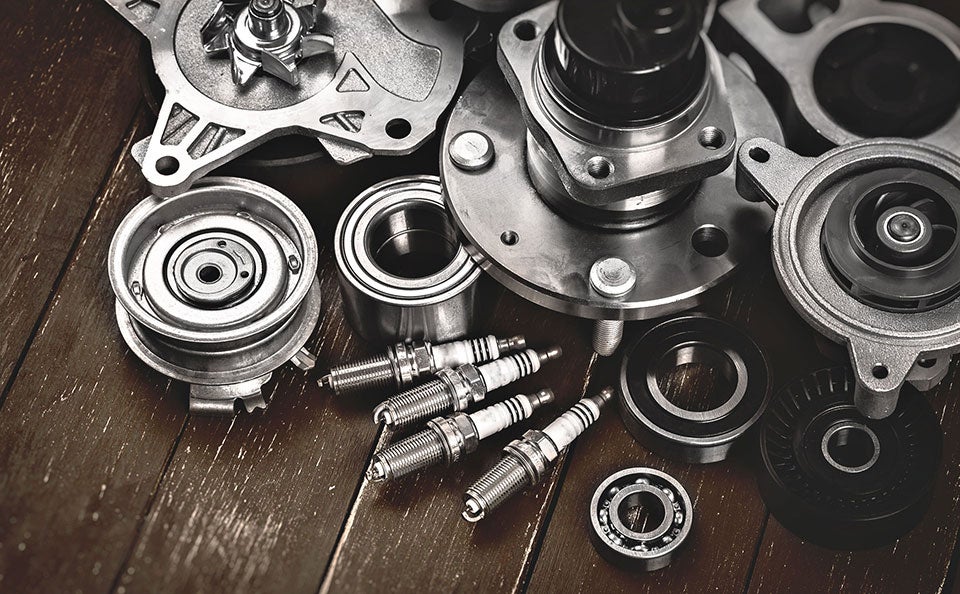
Recognized Quality
OEM parts are manufactured by the same companies to the same high-quality standards as the original parts on your vehicle. They’re the products of countless hours of design and engineering and have been rigorously tested to meet or exceed recognized national and international standards. They’re also fully endorsed by Volkswagen as the correct parts for your vehicle.
Aftermarket parts, in contrast, are made by many different companies that have no connection to VW or your vehicle. They’re cheaper than OEM parts as they use lower-grade materials and haven’t been tested to ensure they work correctly on your VW. Lowering material quality means they won’t last as long as OEM parts. This makes them more expensive in the long run as they have to be replaced more frequently.
Read the rest of this entry »When you picture a super reliable sedan with a spacious cabin and an easy ride feel, a timeless model like the 2025 VW Jetta might come to mind. This flagship sedan has a long-standing reputation for being a driver-friendly economy vehicle for families and first-time drivers.
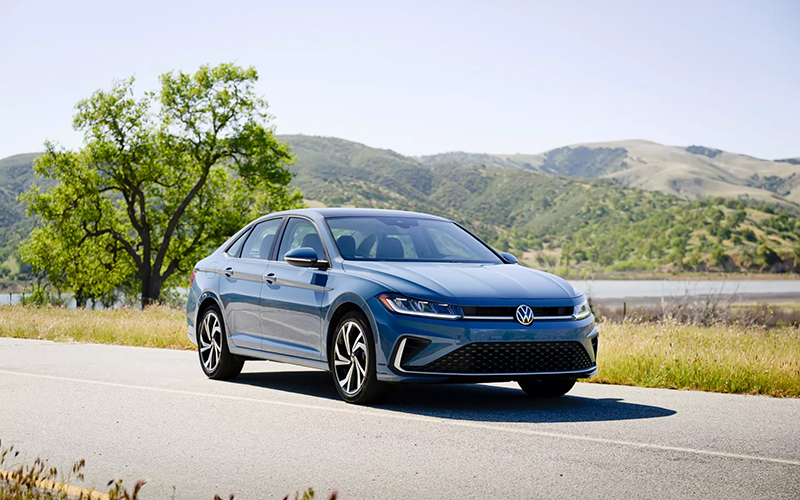
The Jetta is built for efficient travel with a lightweight 1.5-liter turbocharged I4 gas engine and a front-wheel driveline. The gas motor provides 158 horsepower and 184 lb-ft of torque for gentle acceleration in urban environments and effortless speed maintenance on the highway. An eight-speed automatic transmission is standard, along with mechanical features like
The Jetta has a trunk space that holds 14.1 cubic feet, which is enough space for a full set of golf clubs. The five-passenger model has a total passenger volume of 94.7 cubic feet, with a front-row legroom of 41.1 cubic feet and second-row legroom of 37.4 cubic feet, meaning even tall passengers can ride comfortably.
Technology
The Jetta is equipped with an eight-inch full-color center stack with integrated radio and a four-speaker audio system. Drivers can use App-Connect to mirror smartphone apps from Android Auto and Apple CarPlay on the central display via USB connection. Wireless connectivity via Bluetooth for compatible devices is also standard. A mobile hotspot supports on-the-go internet access.
Technology is also part of the Jetta’s mechanical features, such as the electronic power-assisted steering system, which adjusts the level of steering assistance based on the sedan’s driving speed. The engine has automatic start-stop technology that senses when the vehicle is idle to cut down on gas consumption.
Read the rest of this entry »5 Reasons Drivers Choose the 2025 Volkswagen Tiguan
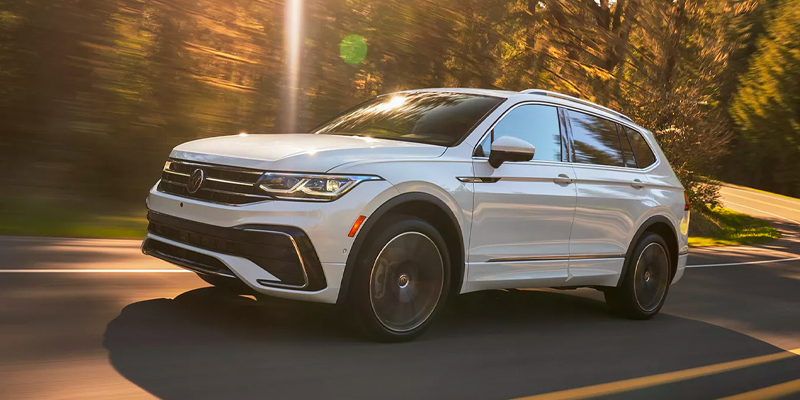
With its bold design, outstanding power, and advanced tech, the 2025 Volkswagen Tiguan is a standout compact SUV. We look at just a few reasons drivers can’t wait to get their hands on the new VW Tiguan.
5 Reasons Drivers Choose the 2025 Volkswagen Tiguan
1. Enhanced Performance
The third-generation Tiguan takes performance to a whole new level. At its heart is a turbocharged 2.0-liter engine, front-wheel drive, and an eight-speed automatic transmission. This impressive powertrain kicks out 201 horsepower, which is a 17-pony increase over the 2024 Tiguan.
To enhance performance even further, VW has incorporated high-strength hot-formed steel and aluminum in the new Tiguan’s construction. These upgrades have reduced the vehicle’s overall weight by 170 pounds, resulting in better fuel efficiency and quicker acceleration.
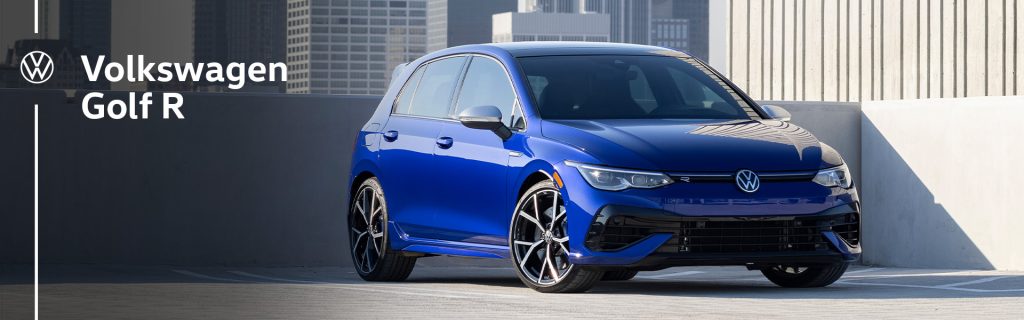
The 2025 Volkswagen Golf R sets a new standard for sporty hatchbacks. Here’s a detailed look at the two trims available and what each offers for performance, comfort, and style.
Trim Levels of the 2025 Volkswagen Golf R
1. Golf R – Precision Performance
The base Golf R is Volkswagen’s peak-performance hatchback, powered by a 2.0-liter turbocharged engine paired with a seven-speed automatic transmission and all-wheel drive. With 328 horsepower and 295 lb-ft of torque, it delivers a thrilling driving experience, supported by adaptive sport suspension that balances agility and comfort.
Read the rest of this entry »Understanding the Trim Levels of the 2025 Volkswagen Golf GTI: Performance Options Explained
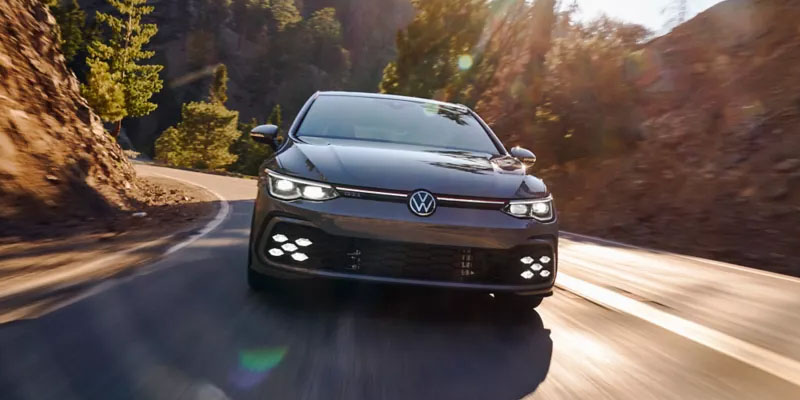
A compact and sporty hatchback like the 2025 Volkswagen Golf GTI provides a fun driving experience each time you hit the road. Whether you’re loading up the trunk with golf clubs, commuting to work, or taking a day trip, this spunky hot hatch comes with all the practical amenities you need to enjoy your time behind the wheel. Explore all three trim levels to find the Golf GTI model that’s right for your lifestyle.
Understanding the Trim Levels of the 2025 Volkswagen Golf GTI: Performance Options Explained
All Golf GTI models are powered by a 2.0-liter TSI motor that generates 241 horsepower and 273 lb-ft of torque. This urban-tuned hatchback has a standard front-wheel drivetrain, which directs powertrain output to the front drive axle for responsive and stable acceleration. A seven-speed automatic transmission with selectable drive modes, sport suspension, and progressive steering is also standard.
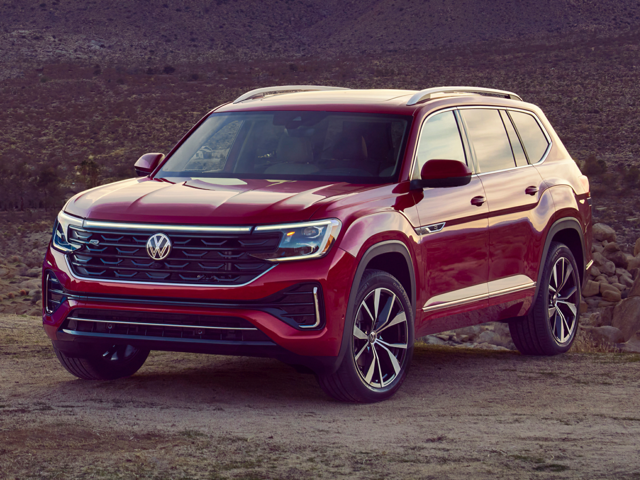
Read the rest of this entry »Are Volkswagen certified pre-owned vehicles worth it? We think so, but to give you the full picture, here are a few reasons why this program stands out.
Benefits of Volkswagen Certified Pre-Owned Vehicles
Multipoint Inspection
One of the best things you can do when buying a pre-owned car is to get it inspected before signing anything. And sure, you probably planned to do that already, but here’s something most people don’t think about: some places just send out whoever is available, so the whole thing ends up feeling like a box-ticking exercise.
With a Volkswagen CPO car, though, that’s not the case. These cars go through a comprehensive 100-plus point inspection by factory-trained and certified technicians. They check everything: how the engine runs, how the brakes stop, and even small details like time on the clock. Any necessary updates are done with genuine VW parts. When you drive off the lot, you can trust that every inch of your vehicle is truly up to Volkswagen’s standards.
Connect with us


Recent Blog Entries
- Volkswagen Maintenance Plan Cost Guide – Coverage, Value, and Long-Term Ownership Benefits
- 2026 Volkswagen Golf GTI Performance Guide – Power, Handling, and Engineered VW Precision
- Volkswagen APR in 2026: What Jacksonville Buyers Should Know About Rates, Incentives, and Value
- 2026 Volkswagen Atlas Cross Sport Buyer’s Guide – Style, Comfort, and VW Performance Engineering
- Volkswagen Maintenance Plan Cost Guide – Coverage, Value, and Long-Term Ownership Benefits