

Leasing a vehicle is a financial decision built on how value changes over time, not just on finding the lowest monthly payment. For Jacksonville drivers considering a 2025 Volkswagen Tiguan, understanding how lease structure works and how Volkswagen engineering influences long term value is essential to deciding whether leasing aligns with real driving habits and ownership goals.
This guide explains how Tiguan lease payments are calculated, how mileage limits affect cost, why residual value matters, and what shoppers should evaluate when comparing leasing versus financing.
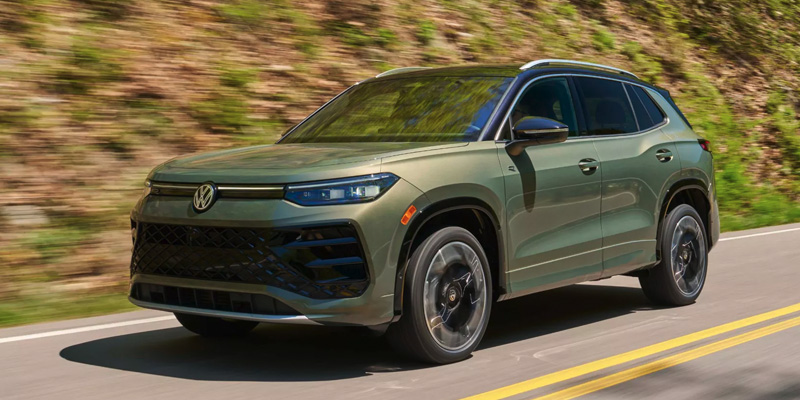
How a Volkswagen Tiguan Lease Payment Is Built
A lease payment is determined by several interconnected components that work together to define how much of the vehicle’s value is used during the lease term.
Core lease variables include:
- Capitalized cost, which is the negotiated vehicle price
- Residual value, the estimated value at lease end
- Money factor, which represents the cost of borrowing
- Lease term length, commonly 24 or 36 months
- Taxes and fees based on local regulations
The difference between the capitalized cost and the residual value represents depreciation. Lease payments cover this depreciation over time rather than paying for the entire vehicle.
Why Residual Value Is Critical for the Tiguan
Residual value has a direct impact on monthly lease cost. A higher residual value means less depreciation is paid during the lease term.
The Volkswagen Tiguan benefits from:
- Consistent demand in the compact and midsize SUV crossover space
- Conservative exterior design that ages predictably
- Interior layouts that remain functional over multiple model years
- Balanced powertrain tuning that supports durability
Volkswagen’s design philosophy prioritizes evolutionary updates rather than rapid styling changes. This helps protect resale value, which improves lease affordability.
Mileage Limits and Real World Driving Patterns
Mileage limits are built into leases because usage directly affects vehicle value. Choosing the correct allowance is one of the most important lease decisions.
Typical mileage options include:
- 10,000 miles per year
- 12,000 miles per year
- 15,000 miles per year
Exceeding the agreed mileage results in a per mile charge at lease end. Jacksonville drivers should consider commuting distance, daily errands, and seasonal travel rather than choosing the lowest mileage option purely to reduce monthly payments.
The Tiguan’s role as a daily driver often makes moderate mileage allowances the most realistic choice.
Lease Term Length and Monthly Cost Tradeoffs
Lease term length influences both payment size and flexibility.
Shorter lease terms generally offer:
- Higher monthly payments
- Faster access to updated technology
- Lower exposure to wear over time
Longer lease terms typically provide:
- Lower monthly payments
- Longer commitment to the same vehicle
- Greater importance placed on durability and interior wear resistance
Volkswagen engineers the Tiguan interior and chassis to handle long term use without rapid degradation, making standard 36 month leases a practical balance for many drivers.
How Tiguan Engineering Supports Lease Value
The Tiguan’s engineering directly supports lease performance. Its turbocharged engine is tuned for usable torque rather than aggressive peak output, reducing stress on internal components during everyday driving.
Engineering factors that influence lease value include:
- Smooth power delivery that limits drivetrain wear
- Transmission calibration focused on efficiency and consistency
- Suspension tuning that balances comfort with tire longevity
- Interior materials selected for durability and temperature stability
Vehicles returned at lease end are evaluated for condition. Engineering that supports predictable wear helps maintain value across lease cycles.
Leasing Versus Financing a Volkswagen Tiguan
The decision to lease or finance should be based on ownership priorities rather than monthly payment alone.
Leasing may be well suited for drivers who:
- Prefer driving newer vehicles every few years
- Want warranty coverage throughout ownership
- Value predictable costs
- Drive within defined mileage limits
Financing may be a better fit for drivers who:
- Plan to keep the vehicle long term
- Drive high annual mileage
- Want to eliminate monthly payments eventually
- Prioritize long term ownership value over flexibility
The Tiguan performs well in both scenarios, but leasing highlights its balanced depreciation profile and consistent market demand.
What Happens at the End of a Tiguan Lease
At lease end, drivers typically have multiple options depending on vehicle condition and market value.
Common options include:
- Returning the vehicle and leasing a new Volkswagen
- Purchasing the Tiguan at the predetermined residual value
- Transitioning to financing on a different vehicle
Because the buyout price is established at lease signing, drivers can make informed decisions without relying on market fluctuations.
Credit Considerations and Lease Qualification
Lease approval and pricing are influenced by credit profile. Prequalification helps drivers understand eligibility and expected payment ranges before selecting a vehicle.
Leasing generally favors:
- Stable credit history
- Predictable income
- Lower risk profiles
Volkswagen lease programs are structured to balance accessibility with realistic residual values that protect both the driver and lender.
Jacksonville Driving Conditions and Lease Planning
Jacksonville driving conditions play a role in lease planning. Heat, humidity, and traffic patterns influence vehicle wear and mileage accumulation.
Important considerations include:
- Consistent highway speeds versus stop and go traffic
- Air conditioning usage in warm climates
- Road conditions and tire wear
- Seasonal travel patterns
The Tiguan’s cooling systems, interior climate design, and chassis tuning are built to handle these conditions without accelerating depreciation.
What Jacksonville Drivers Should Evaluate Before Leasing
Before committing to a Tiguan lease, drivers should evaluate:
- Realistic annual mileage
- Lease term length that fits usage patterns
- Monthly payment comfort beyond promotional pricing
- Long term flexibility at lease end
- How vehicle size and efficiency align with daily needs
Leasing works best when aligned with actual driving behavior rather than short term incentives.
Final Perspective on Leasing a 2025 Volkswagen Tiguan
Leasing a 2025 Volkswagen Tiguan is a structured way to match modern SUV usability with predictable ownership costs. The Tiguan’s disciplined engineering, consistent design, and stable market position support strong lease fundamentals when mileage and term length are chosen thoughtfully.
For Jacksonville drivers who value flexibility, warranty backed ownership, and clarity around long term costs, understanding how Tiguan leases work provides confidence that the decision is grounded in both financial logic and Volkswagen engineering principles.
Connect with us


Recent Blog Entries
- Volkswagen Maintenance Plan Cost Guide – Coverage, Value, and Long-Term Ownership Benefits
- 2026 Volkswagen Golf GTI Performance Guide – Power, Handling, and Engineered VW Precision
- Volkswagen APR in 2026: What Jacksonville Buyers Should Know About Rates, Incentives, and Value
- 2026 Volkswagen Atlas Cross Sport Buyer’s Guide – Style, Comfort, and VW Performance Engineering
- Volkswagen Maintenance Plan Cost Guide – Coverage, Value, and Long-Term Ownership Benefits