

The 2025 Volkswagen Atlas is engineered first and foremost around interior usability. In the three row SUV segment, many vehicles advertise passenger capacity but struggle to deliver real space, long distance comfort, and intuitive technology once families begin using all three rows at the same time. The Atlas approaches this differently by prioritizing physical room, seating ergonomics, and system simplicity rather than overcomplicated design.
This guide breaks down how the Atlas interior is engineered, how its technology systems function in real world use, and what Jacksonville drivers should evaluate when comparing three row SUVs for daily driving, family travel, and long term ownership.
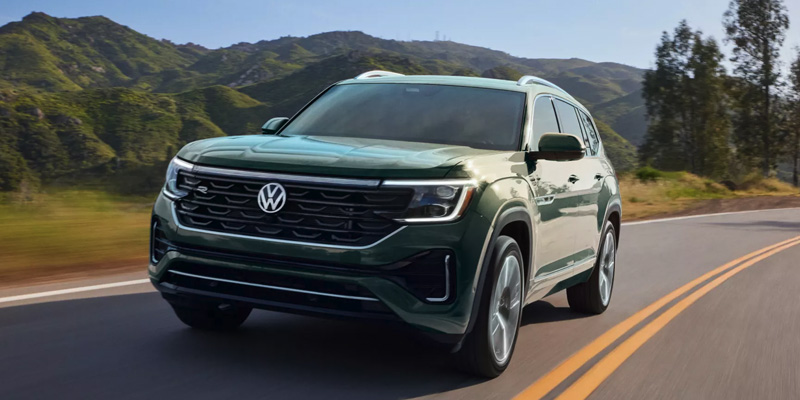
Interior Space and Seating Design in the 2025 Volkswagen Atlas
Interior volume is the Atlas’s defining strength, but the value comes from how that space is shaped and supported structurally. The Atlas rides on a long wheelbase platform that allows engineers to spread passenger space evenly across all three rows instead of concentrating it in the front cabin.
Key interior space characteristics include:
- Seating for up to seven passengers with a usable third row
- Wide door openings for easier entry and exit
- Flat floor architecture that improves foot room
- Upright seating posture that supports long drives
Unlike many midsize three row SUVs where the third row is best suited for children, the Atlas is designed to accommodate adults in all seating positions. Second row seats slide forward smoothly without collapsing the seatback, which maintains comfort for passengers already seated in the third row.
Third Row Comfort and Real World Usability
Third row comfort is where many competitors fall short. Volkswagen addresses this by balancing seat height, cushion depth, and roofline clearance rather than focusing on headline measurements alone.
In the Atlas, third row passengers benefit from:
- Adequate knee room due to the extended wheelbase
- Proper seatback angle for upright posture
- Sufficient headroom even for taller occupants
- Dedicated air vents for climate circulation
This matters in Jacksonville driving conditions where heat and humidity amplify discomfort. Proper airflow and seating posture reduce fatigue during longer drives or traffic congestion.
Cargo Space Without Compromising Passenger Comfort
Cargo capacity is another area where the Atlas stands out, but the design philosophy is focused on flexibility rather than raw volume alone.
Cargo considerations include:
- Usable cargo space behind the third row for daily errands
- Substantial cargo area with the third row folded flat
- Low load floor height for easier lifting
- Wide rear opening that supports bulky items
The Atlas avoids steep seatback angles that cause cargo to slide forward, making it more practical for groceries, sports equipment, or luggage without constant repositioning.
Cabin Comfort and Material Engineering
Volkswagen designs interiors with an emphasis on consistency rather than visual overload. Materials are selected for durability, temperature stability, and long term wear rather than novelty.
Interior comfort engineering includes:
- Supportive seat foam density that resists compression over time
- Wide seat bases for balanced weight distribution
- Thoughtful placement of armrests and storage
- Cabin insulation that reduces road and wind noise
This approach supports the Atlas as a true daily driver rather than a vehicle optimized only for occasional road trips.
Volkswagen Digital Cockpit and Driver Interface
Technology in the 2025 Atlas is designed to inform the driver without distraction. Volkswagen’s Digital Cockpit replaces traditional analog gauges with a configurable digital display that presents information clearly and predictably.
Digital Cockpit functions include:
- Navigation display within the instrument cluster
- Vehicle status and driver assistance indicators
- Customizable information layouts
- Clear visual hierarchy that prioritizes speed and alerts
By placing critical data directly in the driver’s line of sight, Volkswagen reduces the need for eye movement between screens.
Infotainment System and Physical Controls
The Atlas infotainment system is engineered around ease of use rather than menu depth. Touchscreen interaction is supported by physical controls for volume and climate, which remains important for real world driving.
Technology features include:
- Apple CarPlay and Android Auto integration
- Clear screen responsiveness without excessive animations
- Climate controls that remain usable without navigating menus
- Logical menu structure that minimizes learning curve
This balance matters for families and commuters who need systems to respond quickly without demanding attention.
Safety and Driver Assistance Technology Integration
Driver assistance systems in the Atlas are designed to work cohesively rather than as isolated features. Sensors, cameras, and control modules communicate continuously to support the driver.
Core systems include:
- Adaptive cruise control
- Lane keeping assistance
- Forward collision warning with automatic braking
- Blind spot monitoring
Volkswagen calibrates these systems conservatively to support awareness without aggressive intervention, which aligns with its engineering focused philosophy.
How Atlas Interior Engineering Supports Long Term Ownership
Interior engineering impacts more than comfort. It affects resale value, maintenance satisfaction, and long term usability. Materials that resist wear, systems that remain intuitive, and layouts that age well contribute to sustained ownership confidence.
Volkswagen emphasizes:
- Functional design over trend driven styling
- Technology that remains usable as software evolves
- Space planning that adapts to changing family needs
This results in an interior that feels intentional rather than experimental.
What Jacksonville Drivers Should Evaluate When Choosing a Three Row SUV
When comparing the Atlas to other three row SUVs, buyers should evaluate:
- Third row comfort for adult passengers
- Climate performance in hot weather
- Ease of daily entry and exit
- Cargo flexibility without folding multiple rows
- Technology usability without distraction
The Atlas excels where space and simplicity matter most.
Final Perspective on the 2025 Volkswagen Atlas Interior and Technology
The 2025 Volkswagen Atlas delivers interior space and technology through disciplined engineering rather than overdesigned complexity. Its long wheelbase, thoughtful seating geometry, and intuitive systems make it a practical choice for families and drivers who value real usability over marketing claims.
For Jacksonville drivers navigating daily commutes, family schedules, and longer coastal drives, the Atlas offers a cabin that works with you rather than demanding attention. That balance is what defines Volkswagen’s approach to interior and technology engineering.
Connect with us


Recent Blog Entries
- Volkswagen Maintenance Plan Cost Guide – Coverage, Value, and Long-Term Ownership Benefits
- 2026 Volkswagen Golf GTI Performance Guide – Power, Handling, and Engineered VW Precision
- Volkswagen APR in 2026: What Jacksonville Buyers Should Know About Rates, Incentives, and Value
- 2026 Volkswagen Atlas Cross Sport Buyer’s Guide – Style, Comfort, and VW Performance Engineering
- Volkswagen Maintenance Plan Cost Guide – Coverage, Value, and Long-Term Ownership Benefits