

Volkswagen Maintenance Plan Cost Guide – Coverage, Value, and Long-Term Ownership Benefits
Planning for vehicle ownership costs is as important as choosing the right model. Volkswagen maintenance plans are built to remove uncertainty by bundling factory scheduled service into a predictable structure that aligns with how modern Volkswagen vehicles are engineered to operate. Rather than reacting to service needs as they arise, these plans support consistent care that protects performance, reliability, and long-term value.

This guide explains what Volkswagen maintenance plans typically cover, how costs compare to pay-as-you-go service, and why OEM-backed maintenance matters over years of ownership.
What Volkswagen Maintenance Plans Typically Cover
Volkswagen maintenance plans focus on scheduled services required at specific mileage or time intervals. These intervals are determined by engineering requirements tied to lubrication cycles, component wear patterns, and system calibration.
Common coverage areas include:
- Oil and filter changes using Volkswagen-approved oil specifications
- Tire rotations designed to maintain even wear and handling balance
- Multi-point inspections covering brakes, suspension, steering, and cooling systems
- Cabin air filter replacement tied to HVAC efficiency and air quality
- Factory scheduled service checks outlined in the owner’s manual
These services are designed to keep critical systems operating within intended tolerances rather than addressing issues after wear has occurred.
Read the rest of this entry »2026 Volkswagen Golf GTI Performance Guide – Power, Handling, and Engineered VW Precision
The 2026 Volkswagen Golf GTI continues a performance formula built on precision rather than excess. It is engineered for drivers who value control, responsiveness, and repeatable performance in real world conditions. Rather than chasing headline numbers, the GTI focuses on how power is delivered, how the chassis communicates, and how the car behaves when driven every day as well as when pushed.
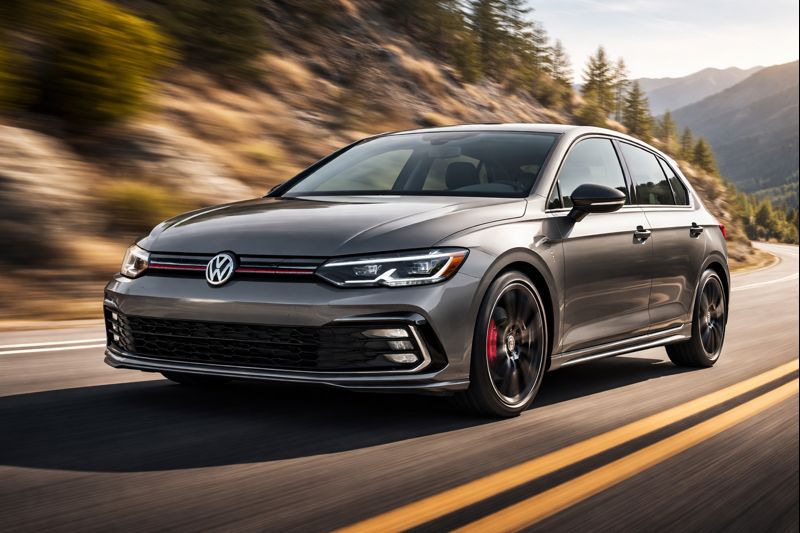
This guide explains how the GTI is engineered, why it feels balanced behind the wheel, and what performance minded shoppers should evaluate when considering it in the modern hot hatch landscape.
Engine Design and Power Delivery
At the heart of the GTI is a turbocharged engine tuned to deliver usable performance across a wide operating range. Volkswagen engineers prioritize mid range torque and throttle response rather than peak horsepower alone.
Key engine characteristics include:
- Strong torque delivery at everyday driving speeds
- Linear power build that supports smooth acceleration
- Throttle calibration designed for precision rather than abrupt response
- Power output that remains accessible without constant high revs
This tuning allows the GTI to feel quick in normal driving while remaining composed under sustained load.
Read the rest of this entry »Volkswagen APR in 2026: What Jacksonville Buyers Should Know About Rates, Incentives, and Value
Financing a vehicle in 2026 requires more than scanning a headline APR. For Jacksonville buyers considering a new Volkswagen, understanding how APR, incentives, credit qualification, and loan structure work together is what determines real value over time. Volkswagen financing is designed to offer stability and transparency, but knowing how to evaluate the options puts buyers in control of the decision rather than reacting to short term promotions.

This guide explains how Volkswagen APR works, how incentives affect financing outcomes, and what shoppers should evaluate before choosing a loan structure.
What APR Really Represents
APR is the total cost of borrowing expressed as an annual rate. It reflects interest over time rather than just a monthly payment. Two loans with similar payments can produce very different total costs depending on APR and term length.
Key APR fundamentals include:
- Lower APR reduces total interest paid over the life of the loan
- Longer loan terms lower monthly payments but increase total interest
- Shorter terms raise payments but reduce borrowing cost
- APR applies to the financed balance, not the vehicle price alone
Understanding APR means looking beyond payment and evaluating what the loan costs in full.
Read the rest of this entry »2026 Volkswagen Atlas Cross Sport Buyer’s Guide – Style, Comfort, and VW Performance Engineering
The 2026 Volkswagen Atlas Cross Sport is designed for buyers who want midsize SUV capability without the visual bulk of a traditional three row layout. Its appeal is rooted in proportion, interior focus, and driving confidence rather than exaggerated sport tuning. For style driven shoppers who still expect substance, the Cross Sport blends purposeful design with Volkswagen’s emphasis on stability, comfort, and predictable performance.
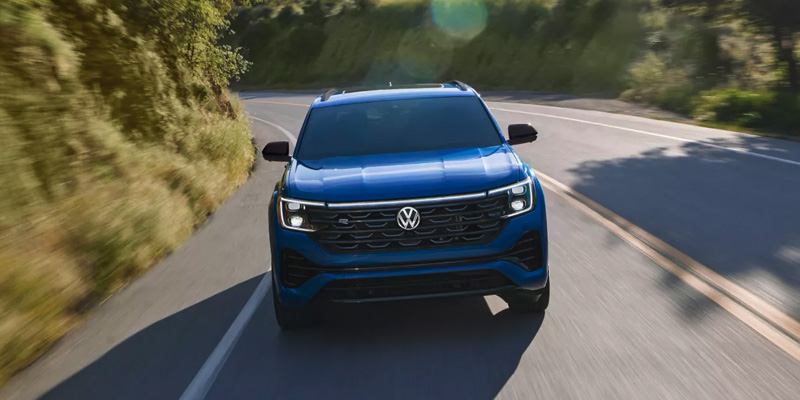
This buyer’s guide breaks down how the Atlas Cross Sport is engineered, how it feels to live with, and what shoppers should evaluate before choosing it over more conventional midsize SUVs.
Design Intent and Exterior Identity
The Atlas Cross Sport is not simply an Atlas with a shorter roof. Its exterior proportions are intentionally rebalanced to create a lower, wider stance that emphasizes presence without sacrificing usability.
Key design characteristics include:
- Coupe inspired roofline that reduces visual height
- Wider body proportions that enhance road presence
- Shortened rear overhang for a cleaner profile
- Athletic styling that differentiates it from family focused three row SUVs
The result is an SUV that looks composed and modern without relying on aggressive styling cues.
Read the rest of this entry »Volkswagen Maintenance Plan Cost Guide – Coverage, Value, and Long-Term Ownership Benefits
Long-term ownership costs are often where vehicle value is truly determined. For many Volkswagen owners, maintenance planning plays a central role in keeping those costs predictable and manageable. Volkswagen maintenance plans are designed to simplify routine service by bundling scheduled maintenance into a prepaid structure that follows factory service logic rather than guesswork.

Understanding what these plans cover, how costs compare over time, and who benefits most helps buyers decide whether a maintenance plan aligns with their ownership goals.
What a Volkswagen Maintenance Plan Is and Is Not
A Volkswagen maintenance plan is a prepaid service program that covers scheduled maintenance over a defined period or mileage range. It is important to distinguish maintenance coverage from warranty coverage.
Maintenance plans apply to:
- Routine, scheduled services
- Preventive maintenance tasks
- Factory-recommended inspections
- Service intervals based on Volkswagen engineering standards
Warranty coverage applies to:
- Repairs related to defects
- Mechanical or electrical component failures
- Issues outside normal wear and service
Maintenance plans address predictable service needs. Warranties address unexpected problems.
Read the rest of this entry »2026 Volkswagen Golf GTI Performance Guide – Power, Handling, and Engineered VW Precision
The 2026 Volkswagen Golf GTI continues a long tradition built on a simple principle: performance should be usable, balanced, and repeatable in the real world. Rather than chasing extremes, Volkswagen engineers the GTI to deliver confidence through precision. Power delivery, chassis tuning, and steering response are designed to work together so the car feels composed at everyday speeds and rewarding when driven with intent.
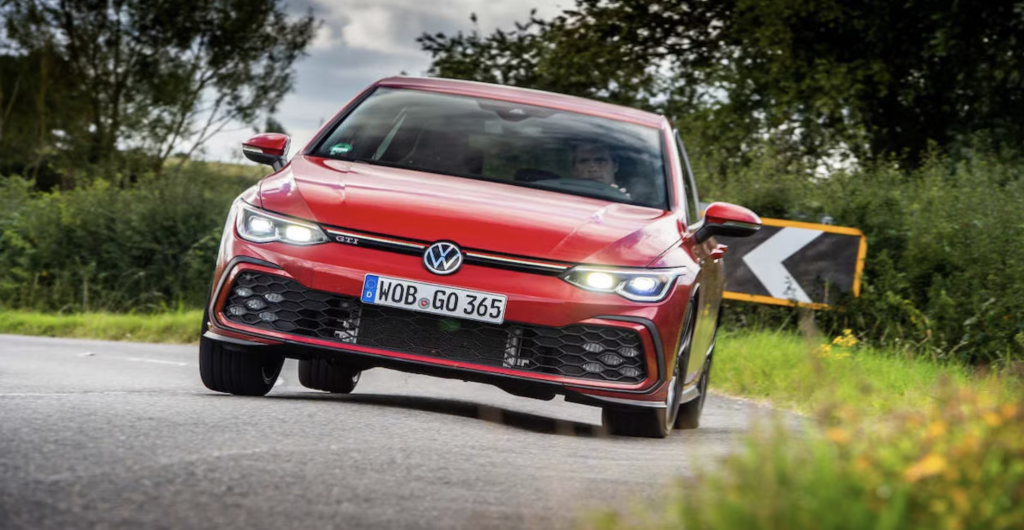
This guide breaks down how the GTI achieves that balance and why it remains a benchmark in the hot hatch segment.
Turbocharged Power Built for Usable Performance
At the heart of the GTI is a turbocharged engine tuned for strong mid range torque rather than peak output numbers. This philosophy prioritizes responsiveness where drivers actually use it.
Key engine characteristics include:
- Early torque availability for quick acceleration
- Smooth, linear power delivery across the rev range
- Predictable throttle response in city and highway driving
- Power that feels accessible rather than overwhelming
This approach allows the GTI to feel energetic without demanding constant high rpm driving, which supports both spirited runs and daily commuting.
Read the rest of this entry »Volkswagen APR in 2026: What Jacksonville Buyers Should Know About Rates, Incentives, and Value
Financing behavior has shifted over the last several years, and by 2026 many Jacksonville buyers are paying closer attention to interest rates, manufacturer incentives, and total ownership cost rather than just monthly payments. Volkswagen APR programs are designed to bring clarity to that decision by offering structured financing options through the manufacturer. Understanding how these programs work and how they interact with incentives helps buyers evaluate real value instead of headline offers.
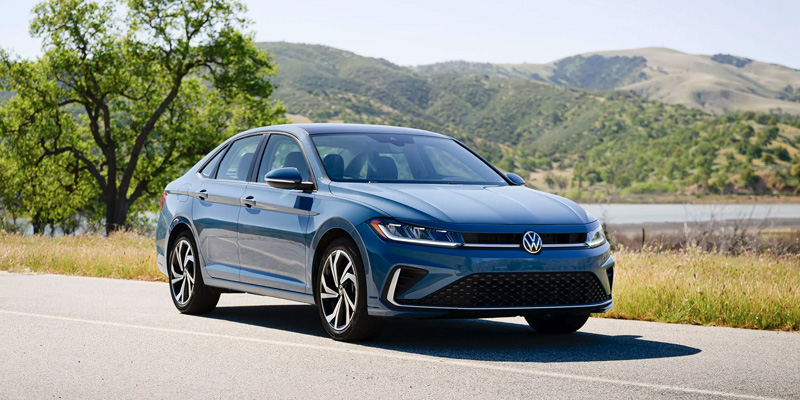
This guide explains how Volkswagen APR financing functions, what affects available rates, and how to assess value beyond advertised numbers.
What APR Actually Means in Auto Financing
APR represents the annual percentage rate charged on a vehicle loan. It reflects the cost of borrowing money over time and directly impacts how much interest is paid across the full loan term.
Key points buyers should understand:
- A lower APR reduces total interest paid
- APR affects total cost more than the sticker price alone
- Longer loan terms increase total interest even at low rates
- Monthly payment alone does not reflect total financing cost
APR should always be evaluated alongside loan length and purchase price to understand the full financial picture.
Read the rest of this entry »2026 Volkswagen Atlas Cross Sport Buyer’s Guide – Style, Comfort, and VW Performance Engineering
The 2026 Volkswagen Atlas Cross Sport is designed for buyers who want midsize SUV presence without the third row footprint. It blends athletic styling with everyday comfort and Volkswagen’s methodical performance engineering. For shoppers prioritizing interior space, ride quality, and confident road manners, the Cross Sport delivers a balance that feels intentional rather than compromised.
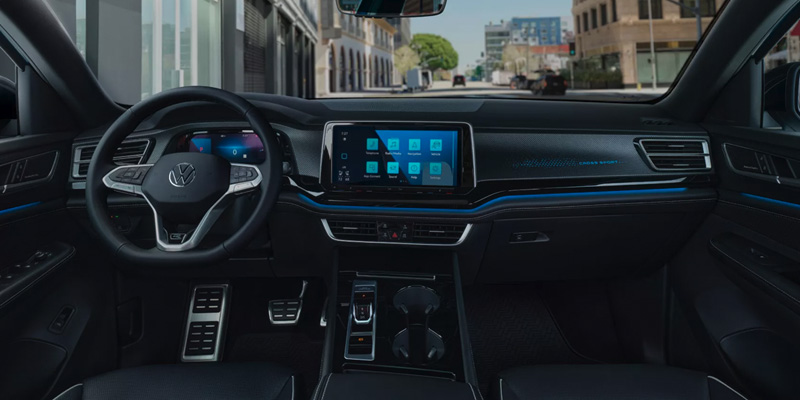
This guide breaks down how the Atlas Cross Sport is engineered, how it behaves on the road, and what buyers should evaluate to determine if it fits their daily needs.
Atlas Cross Sport Positioning Within the VW SUV Lineup
The Atlas Cross Sport shares its platform with the Atlas but takes a distinct approach to packaging and design.
Key positioning differences include:
- Two row seating that prioritizes passenger space and cargo flexibility
- A lower, more athletic roofline for a sportier stance
- Emphasis on design forward proportions without sacrificing comfort
- A driving experience tuned for daily usability rather than maximum capacity
For buyers who do not need a third row, the Cross Sport offers a cleaner, more focused midsize SUV experience.
Read the rest of this entry »2025 Volkswagen Tiguan Lease Guide for Jacksonville Drivers: Monthly Payments, Mileage, and Real Value
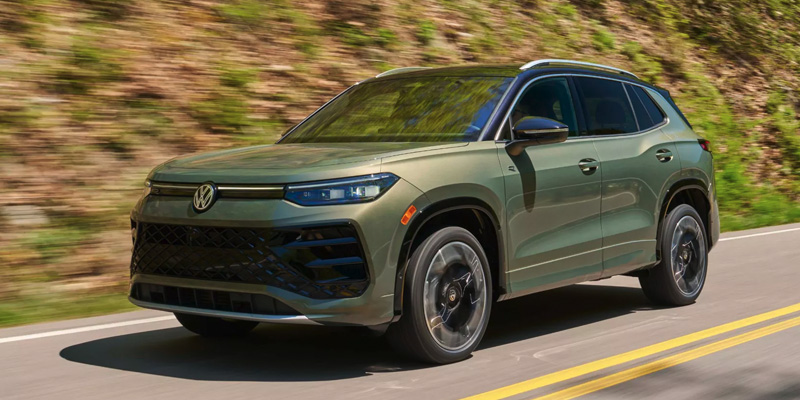
Leasing a vehicle is a financial decision built on how value changes over time, not just on finding the lowest monthly payment. For Jacksonville drivers considering a 2025 Volkswagen Tiguan, understanding how lease structure works and how Volkswagen engineering influences long term value is essential to deciding whether leasing aligns with real driving habits and ownership goals.
This guide explains how Tiguan lease payments are calculated, how mileage limits affect cost, why residual value matters, and what shoppers should evaluate when comparing leasing versus financing.
How a Volkswagen Tiguan Lease Payment Is Built
A lease payment is determined by several interconnected components that work together to define how much of the vehicle’s value is used during the lease term.
Core lease variables include:
- Capitalized cost, which is the negotiated vehicle price
- Residual value, the estimated value at lease end
- Money factor, which represents the cost of borrowing
- Lease term length, commonly 24 or 36 months
- Taxes and fees based on local regulations
The difference between the capitalized cost and the residual value represents depreciation. Lease payments cover this depreciation over time rather than paying for the entire vehicle.
Why Residual Value Is Critical for the Tiguan
Residual value has a direct impact on monthly lease cost. A higher residual value means less depreciation is paid during the lease term.
The Volkswagen Tiguan benefits from:
- Consistent demand in the compact and midsize SUV crossover space
- Conservative exterior design that ages predictably
- Interior layouts that remain functional over multiple model years
- Balanced powertrain tuning that supports durability
Volkswagen’s design philosophy prioritizes evolutionary updates rather than rapid styling changes. This helps protect resale value, which improves lease affordability.
Mileage Limits and Real World Driving Patterns
Mileage limits are built into leases because usage directly affects vehicle value. Choosing the correct allowance is one of the most important lease decisions.
Typical mileage options include:
- 10,000 miles per year
- 12,000 miles per year
- 15,000 miles per year
Exceeding the agreed mileage results in a per mile charge at lease end. Jacksonville drivers should consider commuting distance, daily errands, and seasonal travel rather than choosing the lowest mileage option purely to reduce monthly payments.
The Tiguan’s role as a daily driver often makes moderate mileage allowances the most realistic choice.
Lease Term Length and Monthly Cost Tradeoffs
Lease term length influences both payment size and flexibility.
Shorter lease terms generally offer:
- Higher monthly payments
- Faster access to updated technology
- Lower exposure to wear over time
Longer lease terms typically provide:
- Lower monthly payments
- Longer commitment to the same vehicle
- Greater importance placed on durability and interior wear resistance
Volkswagen engineers the Tiguan interior and chassis to handle long term use without rapid degradation, making standard 36 month leases a practical balance for many drivers.
How Tiguan Engineering Supports Lease Value
The Tiguan’s engineering directly supports lease performance. Its turbocharged engine is tuned for usable torque rather than aggressive peak output, reducing stress on internal components during everyday driving.
Engineering factors that influence lease value include:
- Smooth power delivery that limits drivetrain wear
- Transmission calibration focused on efficiency and consistency
- Suspension tuning that balances comfort with tire longevity
- Interior materials selected for durability and temperature stability
Vehicles returned at lease end are evaluated for condition. Engineering that supports predictable wear helps maintain value across lease cycles.
Leasing Versus Financing a Volkswagen Tiguan
The decision to lease or finance should be based on ownership priorities rather than monthly payment alone.
Leasing may be well suited for drivers who:
- Prefer driving newer vehicles every few years
- Want warranty coverage throughout ownership
- Value predictable costs
- Drive within defined mileage limits
Financing may be a better fit for drivers who:
- Plan to keep the vehicle long term
- Drive high annual mileage
- Want to eliminate monthly payments eventually
- Prioritize long term ownership value over flexibility
The Tiguan performs well in both scenarios, but leasing highlights its balanced depreciation profile and consistent market demand.
What Happens at the End of a Tiguan Lease
At lease end, drivers typically have multiple options depending on vehicle condition and market value.
Common options include:
- Returning the vehicle and leasing a new Volkswagen
- Purchasing the Tiguan at the predetermined residual value
- Transitioning to financing on a different vehicle
Because the buyout price is established at lease signing, drivers can make informed decisions without relying on market fluctuations.
Credit Considerations and Lease Qualification
Lease approval and pricing are influenced by credit profile. Prequalification helps drivers understand eligibility and expected payment ranges before selecting a vehicle.
Leasing generally favors:
- Stable credit history
- Predictable income
- Lower risk profiles
Volkswagen lease programs are structured to balance accessibility with realistic residual values that protect both the driver and lender.
Jacksonville Driving Conditions and Lease Planning
Jacksonville driving conditions play a role in lease planning. Heat, humidity, and traffic patterns influence vehicle wear and mileage accumulation.
Important considerations include:
- Consistent highway speeds versus stop and go traffic
- Air conditioning usage in warm climates
- Road conditions and tire wear
- Seasonal travel patterns
The Tiguan’s cooling systems, interior climate design, and chassis tuning are built to handle these conditions without accelerating depreciation.
What Jacksonville Drivers Should Evaluate Before Leasing
Before committing to a Tiguan lease, drivers should evaluate:
- Realistic annual mileage
- Lease term length that fits usage patterns
- Monthly payment comfort beyond promotional pricing
- Long term flexibility at lease end
- How vehicle size and efficiency align with daily needs
Leasing works best when aligned with actual driving behavior rather than short term incentives.
Final Perspective on Leasing a 2025 Volkswagen Tiguan
Leasing a 2025 Volkswagen Tiguan is a structured way to match modern SUV usability with predictable ownership costs. The Tiguan’s disciplined engineering, consistent design, and stable market position support strong lease fundamentals when mileage and term length are chosen thoughtfully.
For Jacksonville drivers who value flexibility, warranty backed ownership, and clarity around long term costs, understanding how Tiguan leases work provides confidence that the decision is grounded in both financial logic and Volkswagen engineering principles.
2025 Volkswagen Taos Buyer’s Guide – Jacksonville, FL: Efficient Design Meets VW Engineering
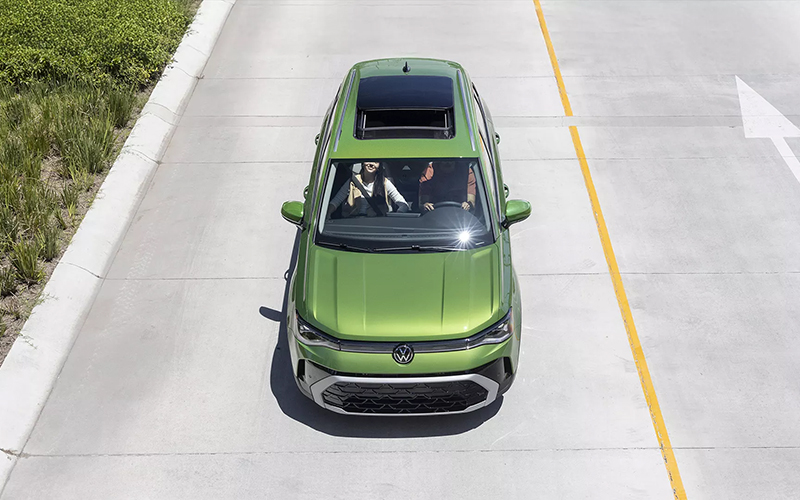
The 2025 Volkswagen Taos is engineered for drivers who want efficiency without sacrificing refinement, structure, or long term usability. In the compact SUV segment, many vehicles chase fuel economy numbers at the expense of driving stability, cabin quality, or powertrain durability. The Taos takes a more balanced approach, pairing compact exterior dimensions with a thoughtfully engineered platform that supports daily commuting, urban maneuverability, and highway confidence.
This guide breaks down how the Taos is built, how its systems work in real world driving, and what Jacksonville shoppers should evaluate when deciding if a compact SUV aligns with their needs.
Platform Design and Compact SUV Proportions
The Taos is built on Volkswagen’s MQB architecture, a modular platform engineered to balance weight distribution, structural rigidity, and interior efficiency. This platform allows Volkswagen to maximize cabin space while keeping the exterior footprint manageable for city driving and parking.
Platform characteristics include:
- Transverse engine layout for efficient packaging
- High strength steel in critical load bearing areas
- Optimized crash structure without excess weight
- Balanced front to rear weight distribution for predictable handling
For Jacksonville drivers navigating dense traffic, tight parking areas, and frequent stop and go driving, this platform design supports both agility and comfort.
Powertrain Engineering and Real World Efficiency
The 2025 Taos is powered by a turbocharged 1.5 liter four cylinder engine designed to deliver usable torque at low and mid range speeds. Rather than focusing on peak horsepower figures, Volkswagen engineers tuned this engine for responsiveness in everyday driving.
Powertrain highlights include:
- Turbocharged design for strong low rpm torque
- Direct fuel injection for improved combustion efficiency
- Engine management systems calibrated for smooth throttle response
- Automatic transmission tuning focused on fuel economy and drivability
This setup supports confident merging, steady highway cruising, and efficient urban driving without requiring aggressive throttle input.
Fuel Economy and Driving Behavior
Efficiency in the Taos is achieved through system integration rather than a single technology. Engine tuning, transmission behavior, and vehicle weight all contribute to real world fuel economy.
Efficiency supporting factors include:
- Lightweight platform construction
- Optimized gear ratios for cruising speeds
- Aerodynamic body shaping
- Engine start stop technology where equipped
For drivers with daily commutes or frequent highway travel, the Taos delivers fuel efficiency without the tradeoff of sluggish response that often accompanies economy focused vehicles.
Interior Design and Passenger Comfort
Despite its compact classification, the Taos offers an interior designed around usable space rather than minimal dimensions. Seat positioning, roofline height, and window placement all contribute to an open cabin feel.
Interior design considerations include:
- Upright seating posture for improved visibility
- Ample rear legroom for a compact SUV
- Wide door openings for easy entry and exit
- Cargo space that supports groceries, gear, and luggage
This balance makes the Taos suitable for small families, professionals, and drivers downsizing from larger vehicles without feeling constrained.
Technology and Driver Interface
Volkswagen integrates technology in the Taos with an emphasis on clarity and consistency. Systems are designed to support the driver rather than distract from the driving experience.
Technology features include:
- Digital Cockpit display for vehicle and navigation data
- Central infotainment screen with logical menu structure
- Apple CarPlay and Android Auto integration
- Physical controls for core functions like volume and climate
This hybrid approach ensures usability in real world conditions where touchscreens alone can become cumbersome.
Safety and Driver Assistance Systems
The Taos incorporates driver assistance systems that operate cohesively rather than independently. Sensors and cameras are calibrated to provide support without abrupt or intrusive behavior.
Available systems include:
- Forward collision warning with automatic braking
- Blind spot monitoring
- Rear traffic alert
- Adaptive cruise control
These systems are designed to enhance awareness while allowing the driver to remain in control.
How the Taos Fits the Compact SUV Segment
The compact SUV segment is crowded, but the Taos differentiates itself through engineering discipline rather than feature overload.
The Taos appeals to drivers who value:
- Efficient daily transportation
- Refined ride quality
- Predictable handling
- Long term ownership confidence
It is particularly well suited for drivers who want SUV versatility without stepping into larger, less efficient vehicles.
What Jacksonville Buyers Should Evaluate
When deciding if the Taos is the right fit, Jacksonville buyers should consider:
- Daily commute length and traffic conditions
- Parking and maneuverability needs
- Fuel efficiency priorities
- Interior space requirements
- Technology usability preferences
The Taos is optimized for drivers who spend most of their time on paved roads and want a vehicle that feels composed in both urban and highway settings.
Final Perspective on the 2025 Volkswagen Taos
The 2025 Volkswagen Taos delivers compact SUV practicality through thoughtful engineering rather than compromise. Its efficient powertrain, balanced platform, and intuitive interior design make it a strong choice for drivers seeking dependable transportation with modern refinement.
For Jacksonville drivers looking to balance efficiency, comfort, and long term value, the Taos represents Volkswagen’s disciplined approach to compact SUV design, focused on how vehicles are actually used every day.
Connect with us


Recent Blog Entries
- Volkswagen Maintenance Plan Cost Guide – Coverage, Value, and Long-Term Ownership Benefits
- 2026 Volkswagen Golf GTI Performance Guide – Power, Handling, and Engineered VW Precision
- Volkswagen APR in 2026: What Jacksonville Buyers Should Know About Rates, Incentives, and Value
- 2026 Volkswagen Atlas Cross Sport Buyer’s Guide – Style, Comfort, and VW Performance Engineering
- Volkswagen Maintenance Plan Cost Guide – Coverage, Value, and Long-Term Ownership Benefits